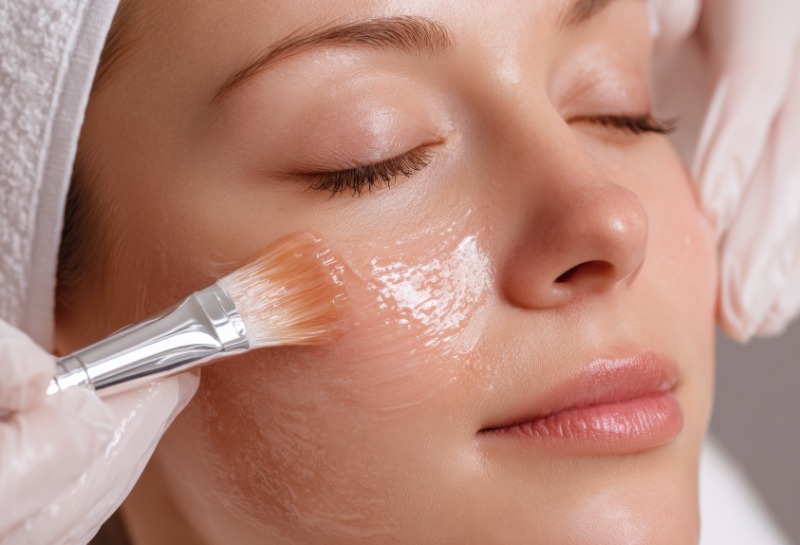
The most common type of dermal filler is hyaluronic acid, a natural substance that already exists in the skin and has the ability to retain over 1000 times its weight in water. Hyaluronic acid fillers are used to maintain shape, even out depressions, and provide hydration. Another popular filler is polycaprolactone (PCI) or
Ellanse’, which when injected into strategic areas causes the body to produce more collagen and triggers a much longer-lasting result.
Why people get dermal fillers
The most common reason that people get fillers is to treat their visible signs of ageing. As you age, there’s a decline in the amount of collagen, elastin and hyaluronic acid in your body, leading to skin that wrinkles, sags and loses bounce. Dermal fillers are used to restore this lost volume and bounce, leaving skin looking more smooth and youthful.
Furthermore, people are starting treatments younger than ever as a preventative measure against wrinkles, but also just to enhance how they look. As celebrities and social media stars open up about the ‘work’ they’ve had done, and even share their favourite practitioners, it’s becoming more common to make small tweaks to your lips, cheeks and jawline with filler. Additionally, the temporary nature of fillers allows for the come and go of beauty trends.
Ultimately, fillers have skyrocketed in popularity in recent years, not only due to celebrity endorsement, but because they are so much more convenient and accessible than surgery, with short recovery times and near-instant results.
Filler has changed a lot over the years
In the past, dermal fillers were synonymous with over-done cheekbones and the so-called ‘trout pout’. However, today’s doctors find that most patients want to forgo this over-volumised look in favour of a more natural and believable appearance. Consequently, filler techniques have evolved to prioritise more natural-looking, believable, and long-lasting results.
Unlike a decade ago when filler was used directly to fill wrinkles, today the goal is often to plump and lift strategic areas of the face to smooth wrinkles much more effectively. For instance, injections near the cheekbone can be used to help lift the face and reduce smile lines around the mouth. Furthermore, filler can now be used to treat areas that were previously hard to reach, such as crepey skin on the cheeks, or folds that run between the nose and mouth.
Another big difference in how filler is used today, is that it is used more as a corrective tool to tweak, touch-up and rebalance the face. Some patients come into the clinic asking for larger lips yet leave surprised by how much a small amount of lip filler can transform their whole face to look more balanced and symmetrical. It may sometimes be hard to accept that less is more, but most doctors agree that dermal fillers are best used minimally and with care. Even a 75 year-old patient doesn’t need to be pumped full of filler, all it takes is a few small tweaks and adjustments to leave their skin looking tighter, fuller and rejuvenated,
What the ‘natural look’ really means
Many patients hear the ‘natural look’ and think that it means they won’t have significant results and won’t be able to achieve the look that they want. However, the ‘natural look’ doesn’t mean that you won’t see a difference, it just means that you’ll still look like you.
There’s a reason that so many celebrities are now forgoing the false look in favour of more natural-looking treatments - they were all starting to look the same! Dermal fillers, when done right, can help you maintain a plump and smooth complexion as you age, without looking pumped up.
The natural look really means that tiny adjustments are used to produce believable yet entirely transformative results. Some may be under the impression that bigger is better, but experts agree that when filler is injected it should look invisible. So, the first thing someone notices about you isn’t that you have had ‘work done’, but that you look great!