


What Is a Backlink, and Why Does Google Care?
If you have ever wondered why some clinic websites consistently appear at the top of Google while others struggle to get noticed, backlinks are a significant part of the answer. Understanding what they are, and why search engines treat them as important, is a useful starting point before thinking about your own clinic's online visibility.
How Backlinks Work in Practice
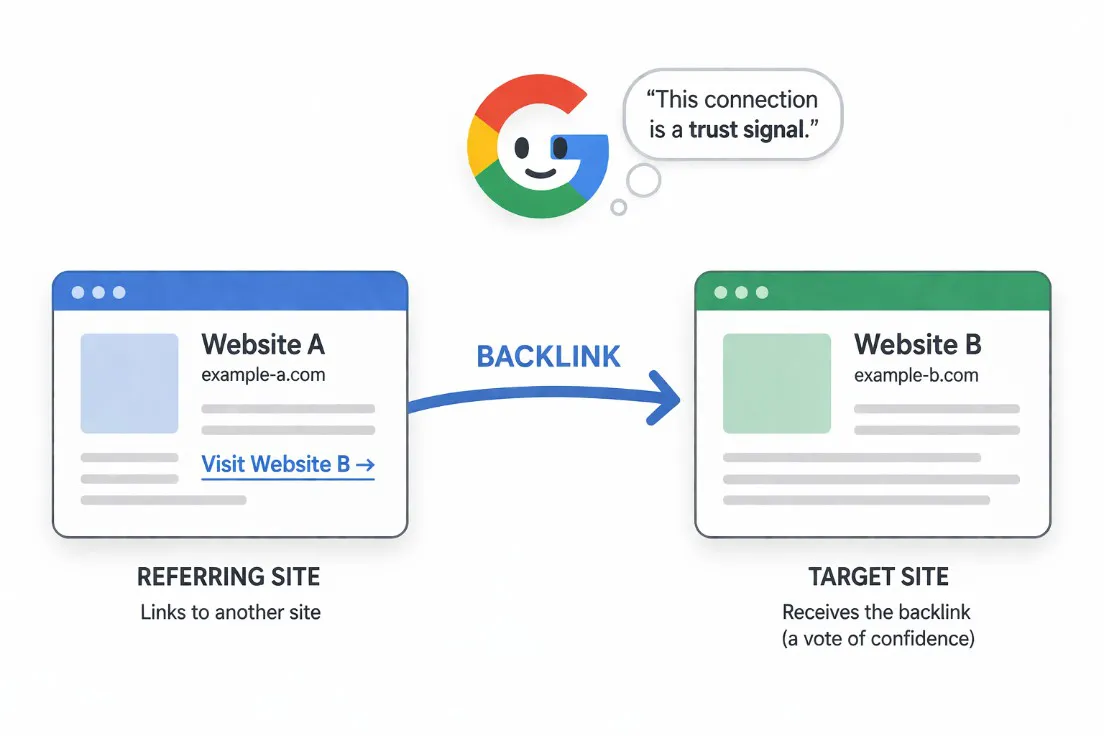
A backlink is simply a link from one website to another. When a website links to your clinic's site, it is essentially telling search engines, "This is a resource worth pointing people towards." Google interprets these links as signals of trust and relevance. The more credible and relevant the sites linking to you, the stronger that signal becomes.
Think of it in familiar terms. If a respected colleague recommends your clinic to a patient, that recommendation carries weight because it comes from someone with relevant knowledge and standing. A backlink works in much the same way, except the recommendation is between websites rather than people, and Google is the one paying attention.
The Role of PageRank
This concept has been central to how Google operates since its earliest days. The company's original algorithm, known as PageRank, was built on a straightforward idea: pages that attract links from other trusted pages are likely to be valuable. Google's own documentation still describes PageRank as one of its fundamental algorithms for serving relevant search results.
The system has evolved considerably since then. Google now uses hundreds of additional signals to rank pages, from content quality to page speed. But the underlying logic of link-based authority has remained a consistent thread throughout those changes.
What the Data Shows
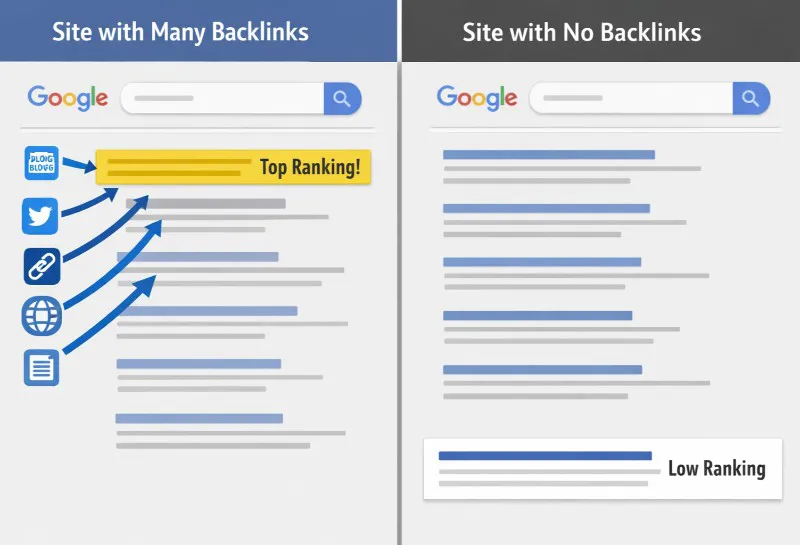
Research consistently supports the relationship between backlinks and search performance. A large-scale analysis of 11.8 million Google search results found a strong correlation between a site's overall link authority and its position in search rankings. Pages in the number one position had, on average, 3.8 times more backlinks than pages ranking in positions two through ten.
That said, correlation is not the same as causation. Backlinks alone do not guarantee high rankings. They work alongside other factors, including content relevance, technical performance, and how well a page matches what someone is actually searching for. Still, the pattern is clear: sites with stronger backlink profiles tend to perform better in organic search.
Why This Matters for Clinic Owners
For aesthetic clinic owners, the practical takeaway is straightforward. Your website does not exist in isolation. The links pointing to it from other sites influence how Google assesses your credibility and, ultimately, where your pages appear in search results. This is not a technical detail best left to web developers. It is a core part of how your clinic gets found online.
The good news is that building a stronger backlink profile does not require technical expertise or an enormous budget. It starts with understanding what makes a link valuable, which is where relevance comes in.
 Website Referall
Why Relevance Now Matters More Than Volume
For a long time, the prevailing approach to backlinks was simple: get as many as possible. That logic has shifted considerably. Google now places far greater emphasis on where a link comes from and how closely it relates to your site's subject matter. For aesthetic clinics, this shift is worth understanding, because it changes what counts as a genuinely useful backlink.
The Move Away from Quantity
In the earlier days of search engine optimisation, websites could improve their rankings by accumulating large numbers of links, often from directories, comment sections, or link exchange networks with little relevance to their actual content. Google's algorithms were less sophisticated at distinguishing between a meaningful editorial link and one that had been placed purely to manipulate rankings.
That is no longer the case. Over successive algorithm updates, Google has become increasingly effective at evaluating not just how many sites link to you, but whether those sites have a genuine connection to your topic. Links from unrelated or low-quality sources now carry minimal weight, and in some cases, can actively work against you.
What Google's Own Systems Reveal
Leaked internal Google documents have confirmed what many in the SEO industry had long suspected: Google uses a proprietary scoring system to assess site authority, and link relevance plays a central role in that assessment. The documents showed that the search engine gives significantly more weight to links from domains that are topically aligned with the site they point to, rather than treating all links equally regardless of context.
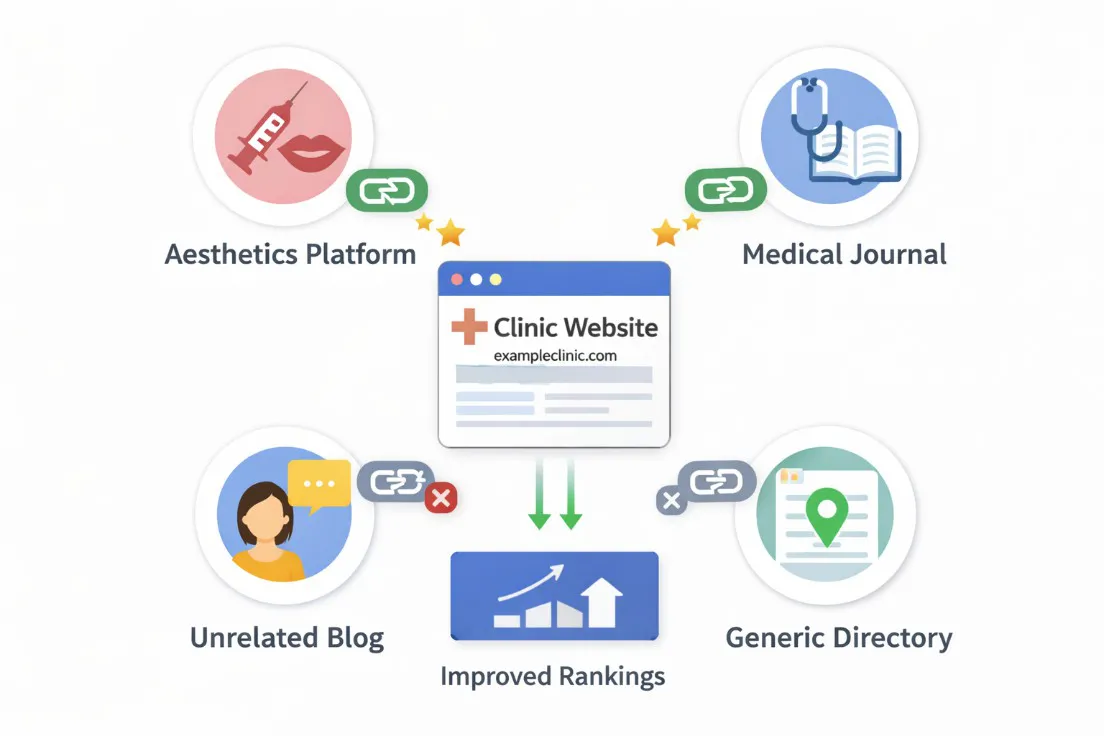
In practical terms, this means a link from a well-established aesthetics platform carries considerably more value for a clinic website than a link from, say, a general business listing or an unrelated blog. Google is not just counting links. It is evaluating whether they make sense.
 Clinic website and its linked platforms
Why Niche Alignment Outperforms Generic Authority
Research supports this shift. A study cited by Moz found that backlinks from niche-relevant sources were roughly three times more likely to improve rankings for competitive search terms than links from high-authority but unrelated websites. The relevance of the linking site, in other words, often matters more than its overall size or reputation.
This finding has particular implications for aesthetic clinics. A link from a trusted UK aesthetics directory, a professional body, or a specialist industry publication signals to Google that your clinic operates within a credible, recognised ecosystem. A link from a generic international directory, even one with a high domain authority score, does not send the same signal.
How Google Assesses Relevance
Several factors contribute to how Google evaluates the relevance of a backlink. These include the overall topic of the linking website, the content surrounding the link on the specific page, the anchor text used, and whether the link appears within meaningful editorial content or is tucked away in a sidebar, footer, or unrelated list.
Contextual links, those placed naturally within a piece of relevant content, tend to carry the most weight. A link to your clinic's website from within an article about aesthetic treatments on a recognised industry site, for example, sends a much stronger relevance signal than the same link appearing in a generic business directory with no editorial context.
What This Means in Practice
The practical implication is encouraging, particularly for clinic owners who may have assumed that competing on backlinks means outspending larger competitors. It does not. Focusing on a smaller number of genuinely relevant, high-quality links from sites within the aesthetics and healthcare space is a more effective strategy than chasing volume from unrelated sources.
That focus on relevance also aligns with how patients search. Someone researching aesthetic treatments is far more likely to trust information from a specialist source than from a generic website. The links that matter most to Google, in many cases, are also the ones that matter most to your potential patients.
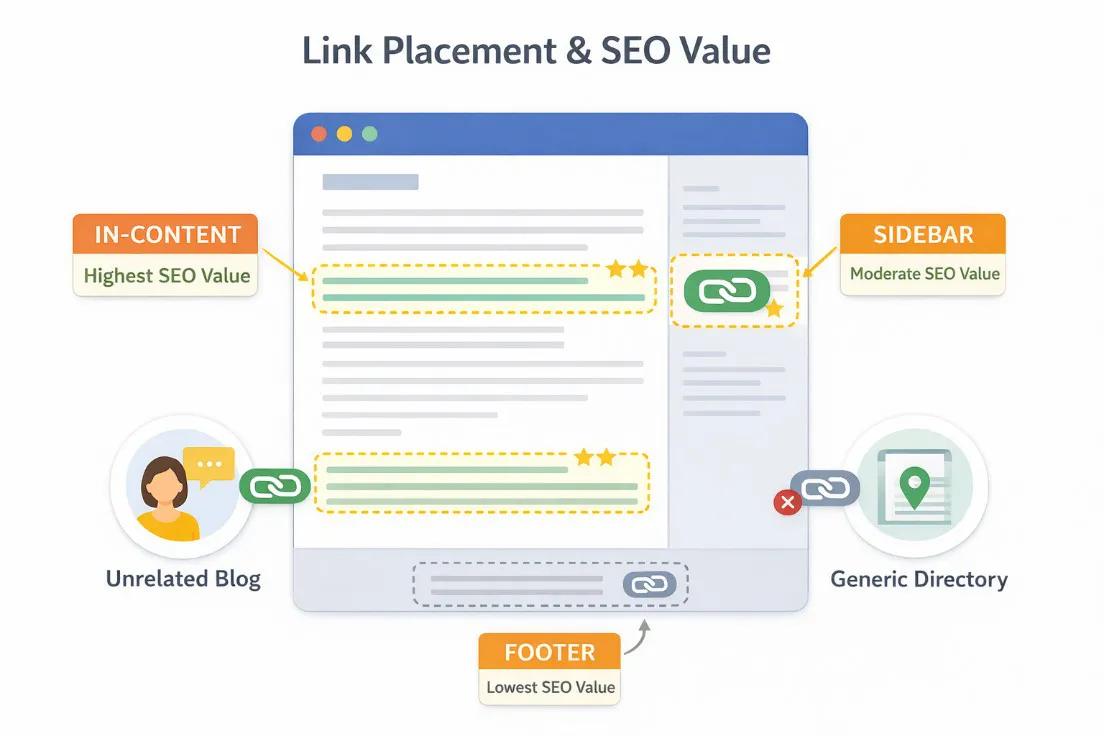 Link placement and SEO value diagram
What Makes a Backlink Genuinely Valuable?
Not all backlinks are created equal, and understanding what separates a valuable link from a forgettable one can save clinic owners both time and money. Several specific factors determine how much weight Google assigns to any given backlink, and being aware of them helps you make better decisions about where to invest your effort.
Authority of the Linking Domain
The overall authority of the website linking to you plays a significant role. A link from an established, well-regarded site carries more influence than one from a newly created or little-known domain. Search engines assess this based on factors including the site's own backlink profile, its content history, and how widely it is referenced across the web.
For aesthetic clinics, this means a link from a recognised industry platform, a professional association, or a respected health publication will typically be worth considerably more than a link from a low-traffic blog or an obscure directory. The linking site's standing in the eyes of Google directly affects how much of that standing it passes on to you.
Niche Alignment and Topical Relevance
As covered in the previous section, relevance is now one of the strongest indicators of link value. Google does not just look at whether a site is authoritative in general terms. It evaluates whether the linking site operates within a related field. A backlink from a trusted UK aesthetics resource signals to search engines that your clinic belongs within that professional ecosystem, reinforcing your topical authority in a way that an unrelated link simply cannot.
This is one reason why industry-specific directories and platforms continue to hold genuine SEO value, while generic web directories have largely lost theirs.
Where the Link Sits on the Page
Link placement matters more than many clinic owners realise. A backlink embedded naturally within the body of a relevant article, sometimes referred to as a contextual or editorial link, carries significantly more weight than one placed in a footer, sidebar, or author biography. Google treats in-content links as stronger endorsements because they appear within meaningful editorial context, suggesting the linking site considers your content genuinely useful to its readers.
In practice, this means a profile or listing on an aesthetics platform that includes a link within a content-rich, indexed page is more valuable than a bare URL tucked into a generic list with no surrounding context.
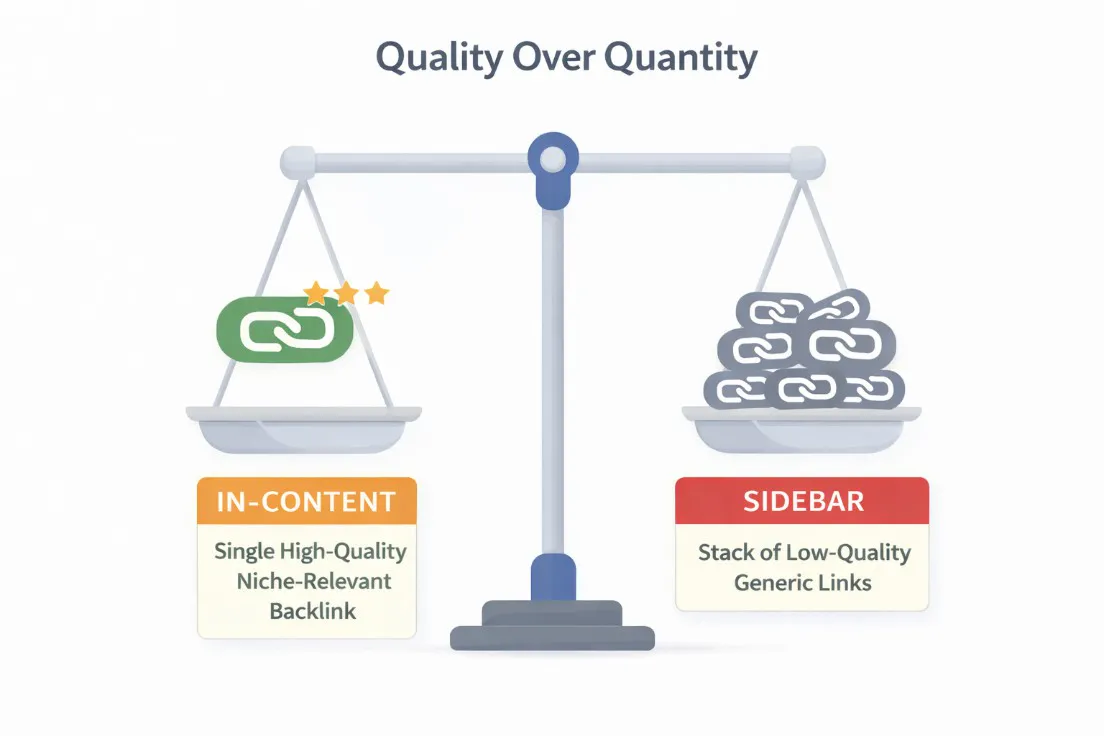 Quality Links
Diversity of Linking Domains
Google also considers how many different websites link to you, not just the total number of links. Ten links from ten separate, relevant domains will generally carry more value than ten links from a single source. This principle, known as domain diversity, reflects the idea that endorsements from a wider range of independent sites represent a more natural and credible backlink profile.
For clinics, this underscores the importance of building visibility across multiple relevant platforms and not relying on a single source, however authoritative, for all of your inbound links.
The Cost of Acquiring Quality Links Independently
It is worth putting the value of a quality backlink into financial context. Survey data from 2026 found that companies spend, on average, over one thousand pounds to secure a single high-quality backlink through outreach, content creation, or digital PR. SEO agencies typically allocate around a third of their total SEO budget specifically to link building. For smaller clinics without dedicated marketing teams, these costs can be prohibitive.
This is where membership-based industry platforms offer a practical advantage. A listing on a trusted, niche-relevant site such as ConsultingRoom.com provides a built-in backlink from an authoritative aesthetics domain, included as a standard part of membership, at a fraction of what it would cost to acquire a comparable link independently.
Spotting Low-Value Links
Understanding what makes a link valuable also means recognising what does not. Links from sites with no real traffic, no editorial standards, or no connection to your industry offer little benefit and can, in some cases, raise red flags with Google's spam detection systems. Common signs of a low-value link include placement on pages stuffed with outbound links to unrelated sites, links from domains that appear to exist solely for link-selling purposes, and links with unnaturally keyword-heavy anchor text.
If a backlink opportunity seems too easy or too cheap, it is usually worth questioning whether it will help or hinder your clinic's search performance in the longer term.
Bringing It Together
The value of a backlink comes down to a combination of factors working together: the authority of the site it comes from, how relevant that site is to your field, where the link appears on the page, and whether it forms part of a diverse, natural-looking profile. Clinics that focus on earning links from credible, niche-aligned sources are far better positioned than those chasing volume from unrelated corners of the internet.
How ConsultingRoom.com Membership Delivers Backlinks That Actually Work
Everything covered in this guide, relevance, authority, niche alignment, domain diversity, points to the same conclusion: the backlinks that matter most for aesthetic clinics are those from trusted, treatment-specific sources within the sector. This is exactly what ConsultingRoom.com membership is designed to provide.
Your Clinic Profile as a Backlink Source
When you become a ConsultingRoom.com member, your clinic receives a dedicated, consumer-facing profile on the platform. This is not a basic directory entry. It is a fully indexed, content-rich page that includes your clinic details, treatment listings, team information, FAQs, reviews, and direct links through to the specific treatment pages on your own website.
Each treatment listed on your profile links back to your site, meaning you are not receiving a single generic backlink. You are gaining multiple contextual links, each one connecting your clinic to a specific, relevant treatment page. In SEO terms, this is precisely the kind of niche-relevant, in-content linking that search engines value most highly.
You can see how this works in practice by viewing a sample clinic profile at consultingroom.com/clinic/consulting-room-test-clinic.
Links from Multiple Treatment-Specific Domains
ConsultingRoom.com membership now extends well beyond a single platform. As a member, your clinic also receives backlinks from a growing network of dedicated, treatment-specific websites, each one focused on a particular area of aesthetics. These currently include:
- botox-clinics.co.uk for clinics offering Botox treatments
- dermalfillertreatment.co.uk for dermal filler providers
- prptreatment.co.uk for PRP therapy clinics
- skin-rejuvenation.co.uk for skin rejuvenation services
- treatingacne.co.uk for acne treatment providers
- skin-tags.co.uk for skin tag removal clinics
- polynucleotide-treatment.co.uk for polynucleotide therapy providers
Further treatment-specific sites are in development, with more being added over time.
Why This Matters for Your SEO
This network approach addresses several of the key ranking factors outlined throughout this guide, all at once.
Niche relevance. Every linking site is dedicated to aesthetics or a specific aesthetic treatment. There are no generic directories or unrelated domains in the mix. Google can see clearly that these links come from within your professional ecosystem.
Domain diversity. Rather than receiving multiple links from a single source, your clinic gains backlinks from several independent, treatment-focused domains. As the research shows, links from a wider range of relevant sites carry more cumulative weight than repeated links from one.
Contextual placement. Your clinic is listed within content that is directly relevant to the treatments you offer. These are not footer links or sidebar entries. They sit within treatment-specific pages, surrounded by related information, which is the placement type that search engines give the most weight to.
Topical authority. Each additional treatment-specific domain reinforces your clinic's connection to the broader aesthetics topic. Over time, this signals to Google that your site is a credible, well-referenced resource within the sector.
The Value in Perspective
As this guide has outlined, the average cost of securing a single high-quality backlink through independent outreach or digital PR now exceeds £1,000. ConsultingRoom.com membership, starting at just twenty pounds per month for single-speciality practitioners or thirty-two pounds per month for a full membership, includes multiple niche-relevant backlinks from several authoritative domains as a standard feature.
That is before considering the other membership benefits: lead generation, clinic statistics, CPD-certified training, business support resources, and a consumer-facing profile that is actively searched by patients looking for treatments in their area.
Take the Next Step
If your clinic is not yet benefiting from the SEO value of a ConsultingRoom.com membership, now is a good time to review what is included. The backlinks alone represent significant value, but they are part of a much broader package designed to help UK aesthetic clinics grow their visibility, their credibility, and their patient base.
To find out more about membership go here: www.consultingroom.com/industry/register/