


Aesthetic medicine continues to evolve, with increasing emphasis on skin quality, tissue function, and long-term outcomes rather than overt correction or volume-driven change. This shift has driven growing interest in regenerative aesthetics, a field focused on supporting the skin’s intrinsic repair mechanisms rather than masking signs of ageing.
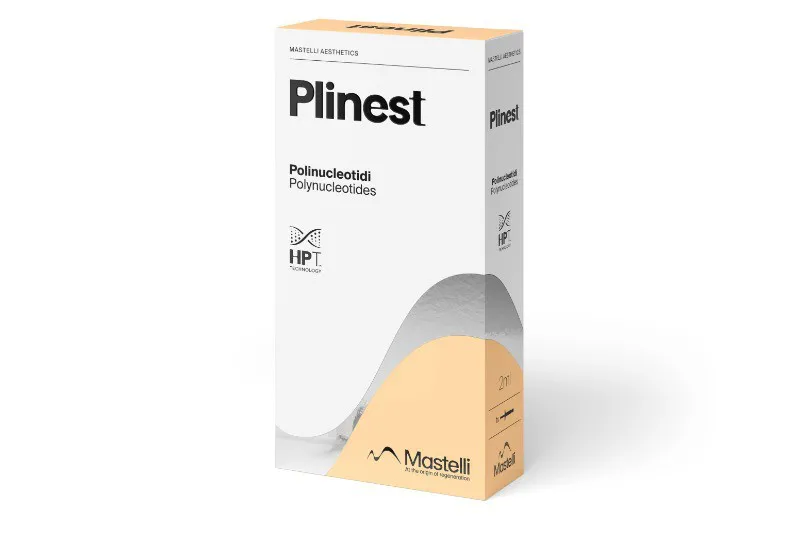
Within this context, Plinest® has become established as a polynucleotide-based injectable used in regenerative treatment protocols. Manufactured by Mastelli using PN-HPT (Polynucleotides High Purification Technology), Plinest® is positioned as a regenerative option for clinicians seeking non-volumising approaches to improving tissue quality.
This article explores how Plinest® fits within the evolving landscape of regenerative aesthetic practice.
Supporting skin function rather than cosmetic correction
Many traditional aesthetic treatments act on the skin by adding volume, relaxing muscle activity, or resurfacing the epidermis. Regenerative injectables such as Plinest® are instead designed to support biological repair processes within the dermis.
Plinest® is used clinically to support:
- Cellular repair processes
- Collagen and elastin organisation
- Dermal hydration dynamics
- Overall tissue resilience
Rather than creating an immediate aesthetic effect, treatment outcomes are typically gradual and subtle, reflecting changes in tissue behaviour over time. This makes Plinest® suitable for practitioners prioritising natural-looking improvement and long-term skin quality.
Purification and biocompatibility
Plinest® and Newest® are produced by Mastelli using a patented purification system developed for medical applications.
The polynucleotides are derived from trout bred in controlled freshwater conditions, with a manufacturing approach designed to ensure full utilisation of raw materials and no waste. This reflects a structured and responsible production model.
Throughout the manufacturing process, the extracted polynucleotides undergo multiple purification stages to remove residual proteins and other impurities. The resulting formulations are highly purified and biocompatible, making them suitable for use in delicate tissues and within repeat treatment protocols.
When used in line with recommended guidance, Plinest® and Newest® demonstrate a favourable tolerability profile, with no adverse events reported in the available literature.
Together, the emphasis on controlled sourcing, waste-free production, and rigorous purification supports their consistent use within regenerative aesthetic practice.
Clinical versatility across indications
In regenerative aesthetic practice, versatility is important where treatments are expected to address a range of tissue concerns. Plinest® is incorporated into protocols for:
- Reduced elasticity and dermal thinning
- Fine lines and crepiness
- Dull or uneven skin texture
- Periocular skin quality
- Mild textural irregularities or scarring
Plinest® Hair extends the application of polynucleotides to the scalp and eyebrows, where it is used to support follicle health and early-stage hair thinning as part of broader treatment strategies.
Alignment with contemporary patient expectations
From a clinical perspective, patient expectations are increasingly centred on:
- Natural-looking outcomes
- Preservation of facial identity
- Minimal downtime
- Treatments that support long-term skin health
- Evidence-informed approaches
Plinest® aligns with these expectations by offering a regenerative, non-volumising option that can be positioned as part of a broader skin health strategy rather than a standalone cosmetic intervention.
Integration with other modalities
Plinest® is frequently incorporated into combination treatment plans. In clinical practice, it may be used to support skin quality before or alongside:
- Laser and light-based treatments
- Microneedling
- Radiofrequency
- Surgical procedures
- Injectable treatments
Optimising tissue condition can support recovery and response to subsequent interventions, making regenerative injectables a useful adjunct within multimodal aesthetic plans.
Regenerative aesthetics as a long-term strategy
As regenerative aesthetics continues to develop, there is increasing focus on treatments that support tissue health over time rather than delivering short-lived cosmetic effects. Plinest® reflects this approach, offering clinicians a regenerative injectable grounded in purification, biocompatibility, and established biological mechanisms.
For practices developing or expanding regenerative protocols, Plinest® represents one option within a growing category of treatments aimed at improving how skin functions, not just how it appears.
Plinest® is distributed exclusively in the UK and Ireland by DermaFocus, which provides practitioner access, training, and clinical support.