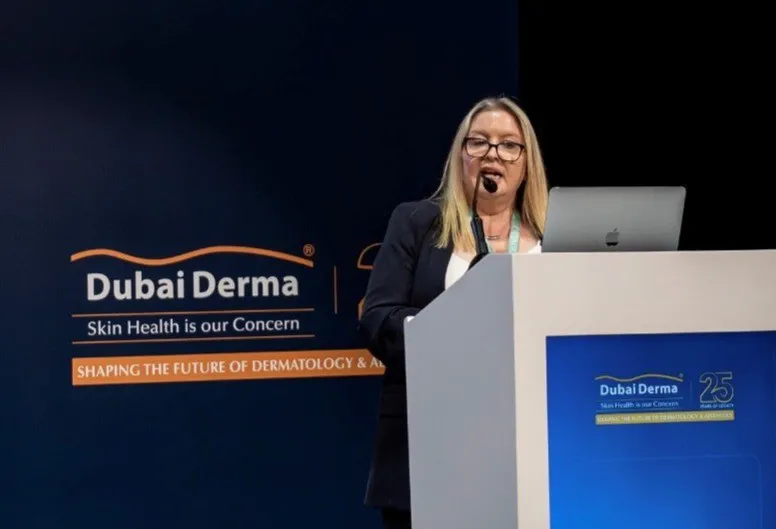

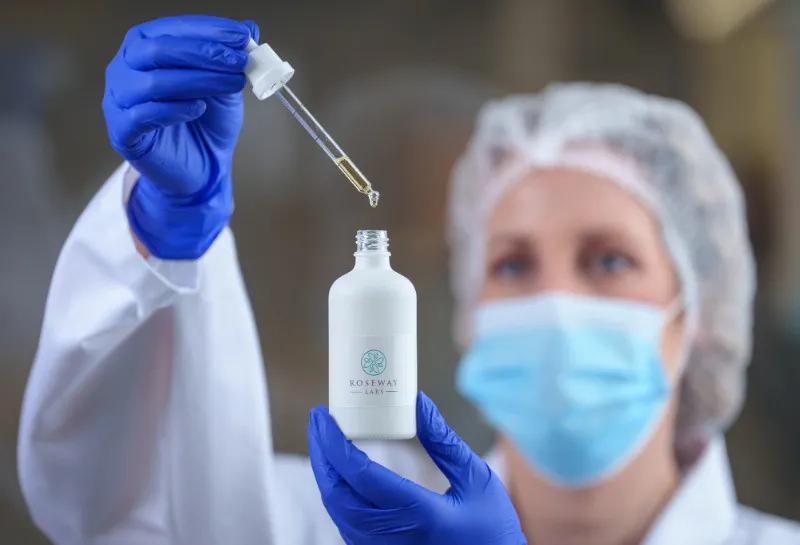


Roseway Labs’ CEO Elizabeth Philp has commented on the growing interest in peptides, describing a significant surge in both public awareness and search behaviour across the UK. Recent analysis of Google data suggests searches relating to peptides have increased by nearly tenfold in 2025 compared to 2020, highlighting a rapidly evolving area of interest for both consumers and healthcare professionals.
But what is driving this surge, and what does it mean in practice for clinicians and patients?
A growing public interest in peptides
Elizabeth Philp, CEO and Founder of Roseway Labs, an award-winning private compounding pharmacy in the UK, explains:
“Peptides have become a prominent topic in recent months. Most consumers are aware of topical peptides, which have been around since the early 1970s2,, but gained significant traction in the early 2000s with the introduction of palmitoyl pentapeptide-4 (Matrixyl) to specifically address ageing concerns.3 However, the medical application of injectable peptides began approximately a century ago with the advent of insulin therapy in the 1920s4-5.”
Why interest is increasing now
This latest surge in interest is being driven by a combination of skincare familiarity, therapeutic exploration, and wider wellness trends.
Elizabeth Philp explains:
“This latest surge in interest can be partly attributed to the continued popularity of topical peptides alongside an increased awareness of using peptides for therapeutic purposes such as weight-loss and injury recovery, as well as trends such as ‘biohacking’. One class of peptides that consumers may have heard of without realising it are GLP-1 receptor agonists, such as semaglutide and tirzepatide, which are now widely prescribed for weight management and type 2 diabetes.
The US Food and Drug Administration (FDA) has recently announced that it is considering reversing restrictions on several peptide compounds, and interest has surged globally. Compounds like BPC-157, widely used in the US for inflammation and tissue healing, are generating significant attention. The science is genuinely compelling, and clinicians are increasingly being asked about them. The issue is that demand has outpaced regulation, with many peptides on the market not undergoing the strict regulatory processes like those used in medications, including clinical trials.”
Are peptides legal in the UK?
Elizabeth continues:
“In the UK, peptides such as BPC-157 cannot be sold for use in humans. At Roseway Labs, we are asked regularly to supply peptides, and our position is clear.
The MHRA will not permit them for human use because the active ingredients are not manufactured at sites regulated by a recognised authority such as the MHRA or FDA or equivalent. Ingredients that are not approved for human use cannot be present in facilities that make human medication. Roseway Labs has engaged with multiple manufacturers globally, and the answer is consistently the same; no suitable certifications exist.
Without that regulatory infrastructure, these ingredients cannot and should not move through legitimate pharmaceutical channels. What fills the void instead is a grey market, where products are labelled "for research use only," sold with unknown purity, and consumed with no clinical oversight or industry-wide protocols.
We have seen this pattern before. It looks very much like the early steroid market.”
The real risk isn't the science - it's the supply chain
Elizabeth comments:
“The peptide molecules themselves are worth taking seriously. The issue is the absence of the infrastructure needed to use them safely. There is no recognised analysis and quality control of the active pharmaceutical ingredient, no requirement to manage the temperature of the product during transit and storage, no adverse event tracking and ultimately, no way to verify what is in the vial.
For patients, this matters enormously. Purchasing peptides through grey market channels means you have no assurance of purity, dosage accuracy, or safety. Any UK clinician currently prescribing these compounds is taking on significant personal and professional risk.”
A cautious future for peptide medicine
Elizabeth continues:
“For those patients curious about peptides, the science is worth exploring, but the black market is not the appropriate route, and we recommend strongly that the advice given to patients is that they wait until regulations for peptides in the UK are introduced. By July 2026, seven peptides may become FDA approved for human use with a further five considered by February 2027. If this happens, it will be a gamechanger. However, should appropriate ingredients be accepted into the UK market, there still needs to be agreement about clinical protocols, dosage forms, expiry dates, storage conditions and temperature control during transit. Any of these peptides offered in the UK would be prescribed as unlicensed medication and should be packed in a sterile facility rather than a compounding pharmacy.
At Roseway Labs, our commitment is always patient safety first. We care about protecting our patients’ health, and when compliant, regulated peptide options become available, we will be quick to offer them.”
Clinicians wishing to find out more can contact the Roseway Labs team at info@rosewaylabs.com.
References
- https://www.independent.co.uk/news/uk/home-news/influencers-selling-peptides-tiktok-b2859168.html
- Pickart L, Vasquez-Soltero JM, Margolina A. GHK Peptide as a Natural Modulator of Multiple Cellular Pathways in Skin Regeneration. Biomed Res Int. 2015;2015:648108. doi:10.1155/2015/648108
- Robinson LR et al. Topical palmitoyl pentapeptide provides improvement in photoaged human facial skin. Int J Cosmet Sci. 2005. doi:10.1111/j.1467-2494.2005.00261.x
- Almeida JR. The Century-Long Journey of Peptide-Based Drugs. Antibiotics (Basel). 2024. doi:10.3390/antibiotics13030196
- Lau JL, Dunn MK. Therapeutic peptides: Historical perspectives and future directions. Bioorg Med Chem. 2018. doi:10.1016/j.bmc.2017.06.052