
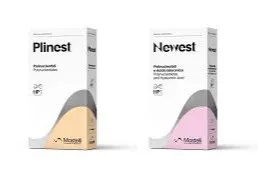


Polynucleotide injectables are now well established within regenerative aesthetic practice. Among available options, Plinest® and Newest® – both developed by Mastelli using PN-HPT (Polynucleotides High Purification Technology) – are widely used by medical practitioners seeking regenerative, non-volumising approaches to skin quality improvement.
For practitioners, the choice between Plinest® and Newest® is not about superiority, but about clinical indication, tissue behaviour, and protocol design.
Shared scientific foundation
Both Plinest® and Newest® are injectable medical devices based on highly purified polynucleotides. Their shared characteristics include:
- PN-HPT purification to remove residual proteins and impurities
- High biocompatibility and tolerability in clinical use
- Support of fibroblast activity and extracellular matrix function
- A regenerative, non-volumising mechanism of action
As such, both treatments are positioned to support improvements in skin quality, texture, hydration dynamics, and overall dermal function rather than immediate structural change.
Key formulation difference
The primary distinction between the two products lies in their composition:
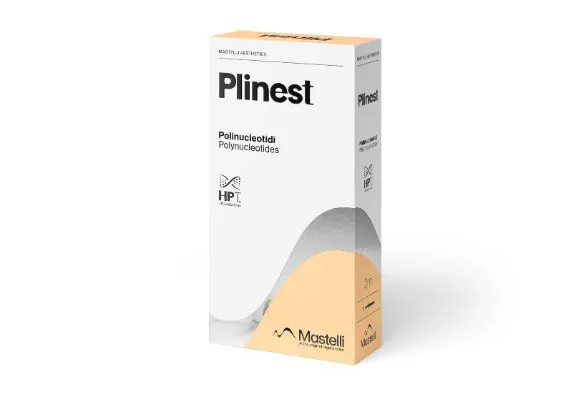
Plinest®
- Contains pure PN-HPT polynucleotides
- Focuses on dermal regeneration, elasticity, and tissue resilience
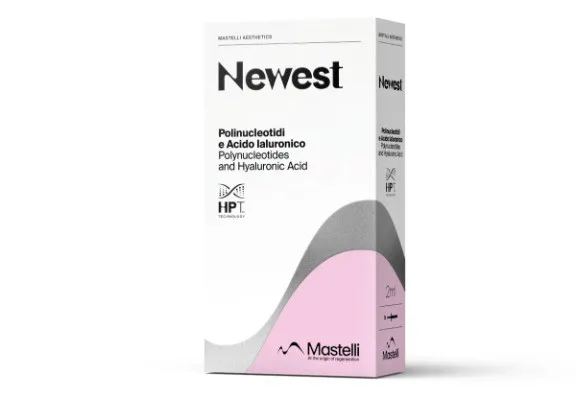
Newest®
- Combines PN-HPT polynucleotides with hyaluronic acid
- Adds hydration support alongside regenerative signalling
This difference informs how each product is selected and positioned clinically.
Clinical selection in practice
Plinest® is commonly selected for:
- General skin ageing
- Crepey skin of the periocular area, neck, décolleté, or arms
- Skin priming prior to energy-based devices, injectables, or surgery
- Patients prioritising long-term tissue quality and gradual improvement
Newest® is often chosen for:
- Dehydrated or compromised skin
- Patients seeking combined hydration and regenerative support
- Early regenerative treatment plans where skin comfort and luminosity are key considerations
Both products can be used across a broad age range, with selection guided by tissue assessment rather than chronological age.
Can Plinest® and Newest® be used together?
In practice, many clinicians incorporate both products within the same patient journey, applying them to different anatomical areas or at different stages of treatment.
Common strategies include:
- Plinest® for areas requiring structural dermal support
- Newest® for regions where hydration and barrier support are prioritised
This approach allows for tailored regenerative protocols without overlap or redundancy.
Safety, purity and tolerability
Plinest® and Newest® are manufactured by renowned pharmaceutical company Mastelli using a patented multi-step purification process.
The polynucleotides are sourced from trout bred in controlled freshwater environments. Mastelli’s production process is designed to be fully utilised with no waste, ensuring responsible use of raw materials.
During manufacture, the polynucleotides undergo repeated purification steps to remove residual proteins and other impurities. This results in highly purified, biocompatible polynucleotides suitable for use in delicate tissues and for repeat treatment protocols.
They have a favourable tolerability profile, with no adverse events reported when used in accordance with recommended protocols.
This focus on controlled sourcing and rigorous purification supports the consistent integration of Plinest® and Newest® into regenerative aesthetic practice.
Portfolio positioning for clinics
From a clinical and business perspective, Plinest® and Newest® serve complementary roles within a regenerative injectable offering.
Clinics introducing one or both products often value that they:
- Integrate easily with existing aesthetic modalities
- Support long-term skin quality strategies
- Respond to patient demand for regenerative, non-volumising treatments
- Allow protocol customisation across multiple indications
Rather than competing products, they function as adjacent tools within a regenerative framework.
The role of governance and training
While Mastelli develops and manufactures both formulations, distribution and clinical support in the UK and Ireland are provided exclusively by DermaFocus.
This ensures:
- Medical-only supply
- Structured practitioner education
- Product traceability and correct handling
- Ongoing clinical guidance and governance
Such a structure supports safe, responsible adoption within medical practice.
Clinical takeaway
Plinest® and Newest® offer two distinct but complementary approaches to polynucleotide-based regeneration. Understanding their formulation differences allows practitioners to make informed choices based on tissue need, patient expectations, and protocol design.
For clinics developing or expanding a regenerative injectable portfolio, both products can play a valuable role when used thoughtfully and within appropriate clinical frameworks.