


The Quiet Problem Most Clinic Owners Underestimate
Most aesthetic clinic owners know that missed calls happen. What many do not realise is how often they happen, or how much revenue quietly slips out the door each time the phone rings unanswered.
How many calls are UK businesses actually missing?
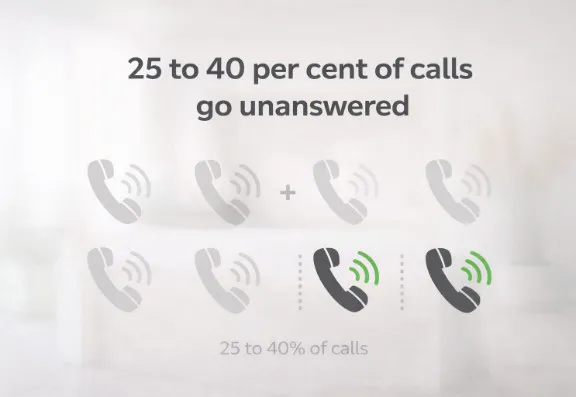
The numbers are surprisingly consistent across multiple studies. UK businesses miss between 25 and 40 per cent of incoming calls, depending on the sector and team size. For smaller operations, the figure tends to sit at the higher end. One UK-based study of small businesses found that 47 per cent of initial calls went unanswered.
At a national level, the picture is even more striking. Industry research estimates that UK businesses collectively lose around £30 billion each year as a direct result of missed calls, amounting to roughly £5,500 per business. For aesthetic clinics, where average treatment values are significantly higher than in most consumer-facing businesses, that per-business figure is likely to be conservative.
Healthcare-adjacent businesses face particular pressure. Benchmark data from multi-location clinic management research places the average missed inbound call rate for healthcare settings at between 29 and 32 per cent, with performance worsening noticeably during peak hours.
Why aesthetic clinics are especially vulnerable
Aesthetic clinics are not call centres. The people best placed to answer patient enquiries are often the same people performing treatments behind closed doors.
In practice, this creates a perfect storm for missed calls:
- Practitioners are mid-treatment. A Botox appointment or filler session cannot be paused to answer the phone. In a solo or small-team clinic, there may be nobody else available to pick up.
- Reception cover is limited or shared. Many aesthetic clinics operate without a full-time receptionist. Where reception staff do exist, they are often managing check-ins, payments, and in-person queries simultaneously.
- Peak enquiry times overlap with peak treatment times. The busiest periods for patient calls (lunchtime, late afternoon, Monday mornings) often coincide with the clinic diary being at its fullest.
- Out-of-hours enquiries are common. Patients researching treatments tend to do so in the evening or at weekends, often after seeing results on social media or hearing about a treatment from someone they know. A clinic that closes at 5pm or 6pm will miss a significant share of these calls entirely.
That last point matters more than many clinic owners appreciate. In aesthetics, the decision to enquire is often emotional and time-sensitive. A patient who has spent an evening researching dermal fillers and feels ready to book a consultation is unlikely to leave a voicemail and wait until Tuesday morning for a callback. They will call the next clinic on their list.
The calls you do not know about
Perhaps the most difficult aspect of this problem is its invisibility. A clinic that is already busy with treatments and generating healthy revenue may have no idea how many additional enquiries are going unanswered. Missed calls rarely appear in a CRM or patient management system because the lead never enters the pipeline in the first place.
Without call tracking or an answering service feeding data back, the gap between incoming interest and booked appointments remains hidden. The clinic feels busy. The diary looks full enough. But the revenue that could have been captured simply never materialises, and there is no alert to say it was there.
For a sector where a single new patient enquiry can be worth hundreds of pounds on the first visit alone, and considerably more over time, that invisible loss adds up faster than most clinic owners would expect.
What a Single Missed Call Really Costs
When a phone call goes unanswered in an aesthetic clinic, the immediate loss is not just a conversation. It is a potential booking, a potential relationship, and, in many cases, a significant amount of revenue that quietly moves to a competitor.
Average treatment values in UK aesthetics
To understand what a missed call actually costs, it helps to look at what patients are typically spending when they do book.
UK aesthetic treatment pricing varies by region, practitioner experience, and product used, but broadly:
- Botulinum toxin (Botox): £150 to £350 per treatment area, with many patients treating two or three areas in a single session.
- Dermal fillers: £250 to £600 per syringe, or more, depending on the brand and the area being treated. Lip, cheek, and jawline treatments often involve multiple syringes.
- Skin treatments such as chemical peels, microneedling, and skin-boosting treatments like Profhilo typically range from £150 to £400 per session, often sold as courses.
- Body contouring and advanced treatments: Fat dissolving injections, radiofrequency, and energy-based devices can range from £250 to £1,500 per session.
Even at the lower end, a single new patient booking is rarely worth less than £200. For many clinics, the average first-visit spend is closer to £300-£500.
A worked example: what five missed calls per week look like
The maths here is not complicated, but the result often surprises clinic owners.
Take a modest and deliberately conservative set of assumptions:
- The clinic misses 5 calls per week (well within the range suggested by the data).
- Of those, 60 per cent are genuine new patient enquiries (the remainder being existing patients, suppliers, or non-relevant calls). Research suggests the proportion of new business enquiries among inbound calls can be even higher, with some studies placing it above 90 per cent.
- Of those genuine enquiries, 30 per cent would have converted to a booking if answered promptly. This is a cautious estimate. Speed-to-response research suggests that businesses answering first capture a disproportionate share of bookings.
- The average initial treatment value is £350.
That gives us:
5 missed calls x 60% new enquiries = 3 potential patients per week 3 potential patients x 30% conversion = roughly 1 lost booking per week 1 lost booking x £350 = £350 per week in lost revenue
Over a year, that is approximately £18,200 in lost first-visit revenue alone.
Adjust any of those inputs upward, which many clinics could reasonably do, and the figure climbs quickly. A clinic missing 10 calls per week, with a higher average treatment value, could be looking at £40,000 to £50,000, or more, in annual losses before patient lifetime value is even considered.
Why Voicemail Is Not the Safety Net You Think It Is
Many clinic owners assume that voicemail provides a reasonable fallback. If a patient reaches voicemail, the thinking goes, they will leave a message and the clinic can call them back.
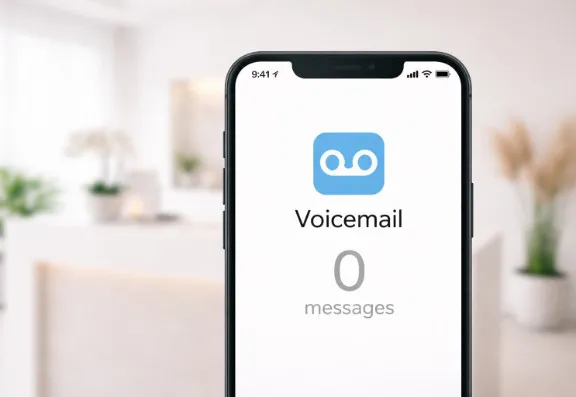
The evidence suggests otherwise. Research consistently indicates that around 80 to 85 per cent of callers who are directed to voicemail will not leave a message. They simply hang up. Among younger callers, the figure is likely even higher, and the 25 to 40 age group now represents one of the fastest-growing demographics in UK aesthetics.
There are several reasons voicemail fails in this context:
- Patients often compare providers. Someone researching aesthetic treatments will typically contact more than one clinic. The first clinic to respond helpfully and professionally tends to win the booking.
- The moment passes. A patient who calls on a Tuesday evening, feeling motivated, may not feel the same urgency when the clinic returns the call on Wednesday afternoon. Decision momentum matters in aesthetics.
- Voicemail creates uncertainty. Callers do not know when, or whether, they will receive a callback. That uncertainty alone is enough to push many toward a clinic that answers immediately.
- Trust is harder to build through voicemail. Aesthetic treatments are personal and often involve a degree of anxiety. A warm, informed first conversation builds confidence. A recorded message does not.
In short, voicemail may catch the occasional message, but it is not a reliable mechanism for capturing new patient enquiries. For a clinic investing in marketing to generate those enquiries in the first place, treating voicemail as adequate cover means accepting that a large share of that investment will not convert.
The Lifetime Value of the Patient You Never Met
The worked example in the previous section focused on what a clinic loses at the point of a single missed booking. In practice, the real cost is far higher, because aesthetic patients rarely visit just once.
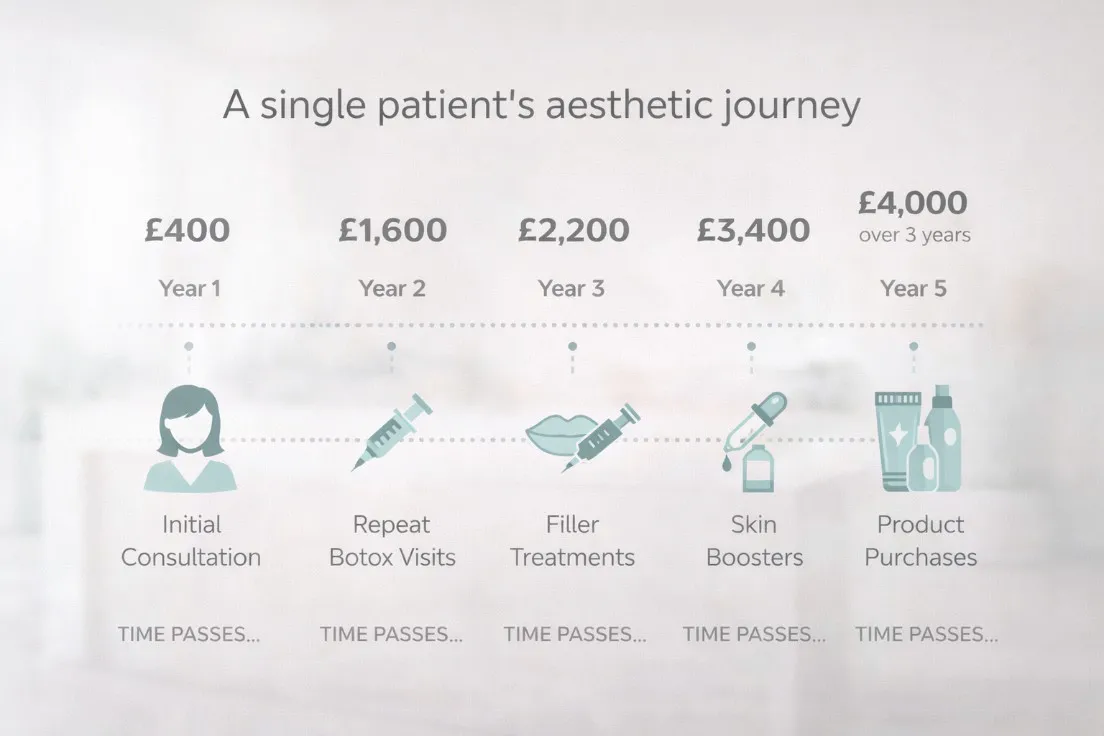 Patient Lifetime
Why one missed call is never just one treatment
Aesthetic treatments are, by their nature, maintenance-based. Botulinum toxin typically lasts three to four months before a top-up is needed. Dermal fillers may last six to eighteen months depending on the product and treatment area, but most patients return well within that window for adjustments or additional work. Skin treatments are frequently delivered as courses of three to six sessions, with ongoing maintenance thereafter.
A patient who books an initial Botox appointment and has a positive experience is likely to return two to four times per year. Over time, many patients expand into other treatments: fillers, skin boosters, polynucleotides, or energy-based skin tightening. Some will also purchase recommended skincare products through the clinic.
This pattern of repeat visits, expanded treatment menus, and product purchases is what makes patient lifetime value such an important metric in aesthetics, and what makes a single missed call so much more costly than it first appears.
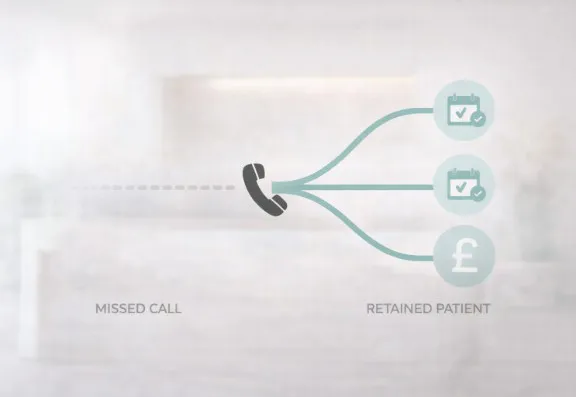
Putting a figure on patient lifetime value
Calculating an exact lifetime value for an aesthetic patient depends on several variables: the treatments offered, pricing, how often the patient returns, and how long the relationship lasts. That said, industry benchmarks provide a useful range.
A patient spending £800 to £1,200 per year on a combination of injectable treatments and skin maintenance, who remains with the clinic for three to five years, represents a lifetime value of roughly £2,400 to £6,000. For patients who also invest in higher-value treatments such as body contouring, thread lifts, or advanced skin rejuvenation, or who refer friends and family, that figure can climb to £10,000 or more.
Even using conservative assumptions:
- Average annual patient spend: £1,000
- Average retention period: 3 years
- Lifetime value per patient: £3,000
If a clinic loses just one potential patient per week to a missed call (using the same conservative model from the previous section), that translates to roughly 50 lost patients per year. At £3,000 per patient in lifetime value, the annual cost becomes £150,000 in revenue that will never materialise.
That figure will not appear on any balance sheet. It will not show up in a monthly report. But it represents the cumulative value of relationships that never had the chance to begin.
The compounding effect over 12 months
Patient lifetime value does not only reflect the individual's own spending. Satisfied aesthetic patients are among the most reliable sources of word-of-mouth referrals in any healthcare-adjacent sector. A retained patient who refers even one friend or family member effectively doubles their value to the clinic.
Research into client retention in aesthetics consistently finds that retaining existing patients costs five to seven times less than acquiring new ones. A strong referral rate, typically above 20 per cent among loyal patients, is one of the clearest indicators of a healthy, growing clinic.
When a call goes unanswered and the patient books elsewhere, the clinic does not just lose that patient's future spending. It loses the referrals they would have generated, the reviews they might have left, and the broader reputational benefit of a growing, satisfied patient base.
Over 12 months, the effect compounds. Each missed patient reduces the pool of future referrers, which in turn slows organic growth and increases dependence on paid marketing to maintain patient volume. The clinic works harder and spends more to stay in the same place.
Why this reframe matters
Most clinic owners think of a missed call as a missed appointment. In reality, it is a missed relationship, one that could have generated thousands of pounds in revenue over several years and introduced new patients through referral.
Understanding this distinction does not require complex financial modelling. It simply requires recognising that in aesthetics, the first phone call is rarely about a single treatment. It is the beginning of an ongoing commitment to appearance and self-care, and the clinic that answers that call is the one most likely to benefit from it.
Stop Losing Patients Before They Even Walk Through the Door
If anything in this guide has felt familiar, the phones ringing while you are mid-treatment, the voicemails that never get left, the enquiries you suspect are slipping through but cannot quite quantify, then the problem is not your clinical skill, your marketing, or your team. It is simply that no one can be in two places at once.
The reality for most UK aesthetic clinics is straightforward. You are investing time and money to generate patient interest, and a meaningful share of that interest is being lost at the point of first contact. Not because the enquiry was not good enough, but because nobody was available to answer.
What you can do about it
Understanding the scale of the problem is the first step. The second is putting something in place that ensures every call is handled, whether it comes in at 10am on a Monday or 8pm on a Saturday.
An AI telephone answering service designed specifically for aesthetic clinics can bridge that gap. It does not replace your team. It supports them, picking up the calls they cannot get to, capturing enquiry details, answering common questions about treatments and availability, and booking consultations directly into your diary. It works around the clock, costs a fraction of additional reception staff, and means that no patient enquiry goes unanswered simply because the timing was not right.
See how it works for your clinic
If you would like to understand how an AI answering service could work alongside your existing setup, and what it might recover in lost revenue, it is worth taking a closer look.
Find out how Aesthetics Telephone AI works for clinics like yours
No obligation. No pressure. Just a clear explanation of how it works and whether it is the right fit for your clinic with a FREE 7 day trial through ConsultingRoom.com, plus a monthly discount on all plans.