

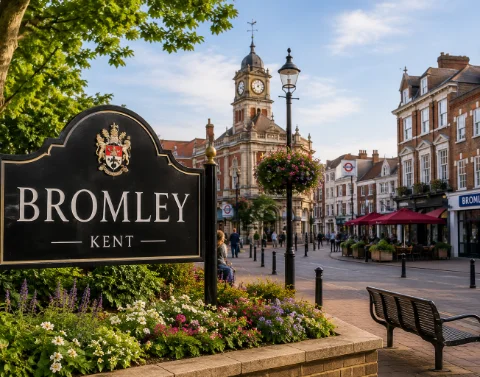
Dermal Fillers in Bromley: What to Know Before You Book
Bromley sits at the edge of South East London, and its aesthetics market reflects that position. There are established clinics in the town itself, as well as options across the wider borough and into neighbouring areas of Kent. For anyone considering dermal fillers locally, the range of providers available is genuinely useful, but so is knowing what separates a clinic worth booking from one that simply looks the part.
Dermal fillers are injectable treatments designed to restore lost volume, soften lines, and refine facial contours without surgery. Most are formulated with hyaluronic acid, a substance the body produces naturally, which makes them generally well tolerated and reversible should you ever want them dissolved. Common treatment areas include the lips, cheeks, jawline, chin, nasolabial folds, and the delicate tear trough region beneath the eyes. Each of those areas requires a different technique, a different product formulation, and a practitioner with the experience to make those distinctions confidently.
That clinical judgement is what a good consultation should demonstrate. Before any filler is administered, a qualified practitioner should take a thorough medical history, assess your facial anatomy, discuss your goals honestly, and give you a clear picture of what is and is not achievable. If a clinic skips that step, or makes treatment feel transactional rather than considered, that is a signal worth paying attention to.
Bromley's proximity to central London means patients here have access to a strong pool of aesthetics professionals, including practitioners with significant clinical experience and recognised accreditations. Whether you are new to fillers or looking to switch providers, the clinics listed on this page have been verified against UK safety and professional standards, giving you a solid, trustworthy starting point for your search.
Find A Verified Clinic
Trusted Dermal Fillers Experts, Local to You
Easily connect with qualified, verified professionals for safe, reliable treatment.

Bromley (House of Aesthetics)
House of Aesthetics is a London-based centre of excellence offering the work of beauty industry leaders a hub to perform medically graded treatments with superior service and guaranteed results. A host for renown Doctors to perform their work and a one stop shop for every customer.


Dr Liesel Holler
Dr Liesel Holler specialises in Advanced Medical Aesthetic procedures such as Non-surgical facelifts, nose-reshaping and tear- trough treatments, with natural results. She holds busy clinics in Mayfair (Ouronyx) and Chislehurst. She is also a trainer and KOL for Allergan, training other doctors.
 (2).jpg "Royal College of Anaesthetists")
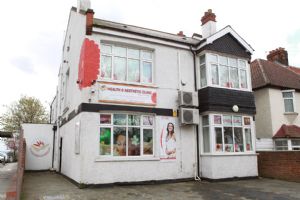
Health and Aesthetic Clinic
Cosmetic Medicine & Skin Care Clinic in Royal Borough Of Greenwich & is ideally situated to serve the towns of Blackheath, Lewisham, Bromley, Bexley & Sidcup. Experienced doctors provide Dermal Fillers, PRP, Thread lift & many advanced treatments in a clinical, infection free environment



 +2 more

GSN Aesthetics
An experienced Aesthetic Specialist Nurse, based in Sidcup, with a great reputation. I offer a wide variety of anti-ageing and skin transformative treatments as well as medical skin care. Book your free consultation to discuss your concerns & the solutions. I can offer. See you soon!


Dr Home Aesthetics
Dr Home ensures she provides a thorough consultation, to find out what her clients hopes and expectations are, whilst giving an honest assessment of outcomes, to tailor treatment to their goal. Her aim is to provide natural, results through the safest techniques.


Aesthetics by Lauren Turner
Lauren Turner is an Advanced Aesthetic Nurse Practitioner and Independent Prescriber, she is a member of both the Aesthetic Complications Expert Group and also the British Association of Cosmetic Nurses. Aesthetics by Lauren Turner's brand new clinic in the prestigious Lordship Lane is now open.

Brigstock Skin and Laser
Brigstock Skin & Laser is located in Croydon & specialises in Laser & Dermatology services. The clinic is run by Dr Vajpeyi & is situated to serve the towns of Croydon, Beckenham & Bromley. The clinic offers a revolutionary laser hair removal treatment which is suitable for dark skin.
Dr Botoxo
Dr Botoxo Clinic provides professional non-surgical aesthetic treatments, including anti-wrinkle injections, dermal fillers, and skin rejuvenation, with a focus on safe, natural-looking results.

Persona Medical Aesthetics Skin and Laser Clinic
Persona Medical Aesthetics & Minor skin surgery clinic are based in Bexleyheath. We are regulated by CQC and are accredited with SAVE FACE. Specialist in all areas of non surgical anti ageing.

 +6 more
Doctor Rejuvenate
I have been an NHS doctor for over 10 years and graduated from Imperial College School of Medicine with a distinction in surgery and medicine. I am an NHS GP and trainer and have a specialist interest in aesthetics, offering anti-wrinkle reduction treatment and dermal fillers.

Melior Clinics Sevenoaks
Melior Clinics are experts in medical aesthetics, specialising in non-surgical aesthetic procedures. Their portfolio includes traditional and popular anti- wrinkle and rejuvenation procedures, such as wrinkle relaxing injections and dermal filler treatments.
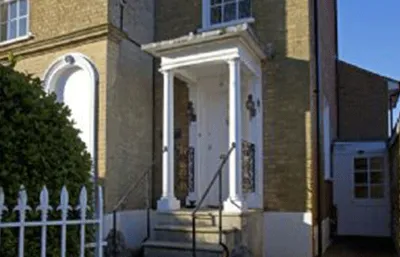
TLC Studio Limited
Cheralyn Lumley qualified as a dental surgeon at Guys Hospital in 1976, where she then worked as surgical house officer. As a dentist and award winning medical aesthetics practitioner, she has nurtured her enthusiasm for facial aesthetics treatments.



 +1 more
Elite Aesthetics
Elite Aesthetics, located in Greenhithe, Kent offers specialist non-surgical aesthetic treatments led by Dr Shirin Lakhani.
 +2 more
Adexcel Aesthetics Clinic
Adexcel Aesthetics Clinic is your one-stop clinic for all your aesthetics needs. Our services includes treatments of aging, wrinkles, acne, stretch marks, weight issues, fatigue and lethargy and rejuvenation. We offer a complimentary consultation by appointment only, please call us on 07405503752.
Stradbrook Skin
Stradbrook Skin is an expansion of the long-established and highly regarded Stradbrook Dental Centre renowned for its dental implant expertise and voted best Dental Practice 2010 in the South East. The clinic provides a range of proven solutions for skin problems both cosmetic and medical.
Illuminate Skin Clinic
Illuminate Skin Clinic was founded by Dr Sophie Shotter, and is based in King’s Hill in Kent. Illuminate offers a comprehensive range of treatments to help you look and feel your best. We believe in following an inside out approach, and will help you be the best version of yourself.
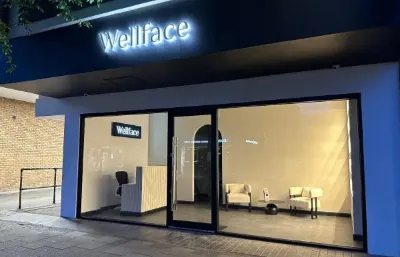
Wellface
Wellface is a facial aesthetics clinic run by Dr Yasmin Tayeb, specialising in anti-wrinkle treatments, dermal fillers, Profhilo, PRP, Secret RF and more. Based in Cobham, Surrey.
Explore Clinics Near You on the Map
See exactly where verified Dermal Fillers clinics are located across Bromley.
Zoom in, pan around, and click any marker to view each clinic’s profile, read reviews, and check their credentials before you book.

Your Dermal Fillers Questions
Real Questions from Real People, Answered
Straightforward answers to the questions people like you are asking right now about Dermal Fillers.

Radiesse.
Hi, I’m looking for radiesse. Can I have prices ? Thanks
chin treatment with dermal fillers
I am really self conscious of my bum chin
To view all the Dermal Fillers questions, please click here.
Or click here to ask your own question.
Why Patients In Bromley Choose Dermal Fillers
The reasons people look into dermal fillers are rarely dramatic. More often, it starts with something quiet: a photograph where you look more tired than you feel, a slight flattening in the cheeks that wasn't there a few years ago, or a sense that your face doesn't quite match your energy any more.

That's certainly the pattern across Bromley's clinics. The majority of patients aren't seeking transformation. They're looking to restore something subtle that's shifted.
What Brings People In
The most common concerns Bromley practitioners see include:
- Volume loss in the cheeks and mid-face, which can make the face look drawn or hollow
- Deepening nasolabial folds (the lines that run from the nose to the corners of the mouth)
- Lips that have thinned or lost definition over time
- Jawline softening or early jowling
- Tear trough hollowing, creating shadows or a permanently tired appearance
- Marionette lines pulling the corners of the mouth downward
For younger patients (typically mid-20s to mid-30s), the focus tends to be different. Lip enhancement is the most popular request in this group, usually for shape and proportion rather than dramatic volume. Jawline and chin definition is also growing in demand, including among male patients, though that's still a smaller segment locally.
What Most Patients Actually Want
Bromley's patient demographic tends to be well-informed. Many will have spent weeks or months researching before they pick up the phone, watching videos, reading reviews, and comparing practitioners. They're not impulse buyers.
What they consistently ask for is natural. Not "done." Not frozen. Just a version of themselves that looks fresher, more rested, and more like they feel on a good day.
This is worth saying, because it shapes the kind of treatment that works well here. Bromley practitioners who do well tend to favour a conservative, build-gradually approach over high-volume, single-session transformation. Several local clinics have moved towards full-face assessment as standard, looking at facial balance as a whole rather than treating one area in isolation.
There's also growing local interest in combining fillers with other treatments (Profhilo for skin quality, polynucleotides for texture, and skin boosters for hydration) rather than relying on fillers alone. It reflects a broader industry shift, but it's particularly visible in this part of London.
If you're at the stage where you're noticing changes but aren't sure what would actually help, a consultation is the best starting point. It doesn't commit you to treatment, and a good practitioner will tell you honestly whether filler is the right option or whether something else would serve you better.
Treatment Options Available In Bromley
Dermal fillers aren't a single treatment. The product, the volume, the technique and the treatment area all vary depending on what you're trying to achieve. Understanding what's available locally helps you have a better conversation with your practitioner and makes it easier to compare what different clinics are actually offering.
Here's a breakdown of the main treatment areas Bromley clinics cover, along with what each typically involves.
Lip Fillers in Bromley
Lip enhancement is comfortably the most requested filler treatment across the borough. It covers everything from subtle definition work (restoring a lip border that's softened with age) to fuller-volume enhancement for younger patients.
Most clinics use 0.5ml to 1ml per session. Starting with 0.5ml is common for first-time patients, allowing a conservative approach that can be built on later. The treatment takes around 15 to 30 minutes, and results are immediate, though expect some swelling for the first couple of days.
Expect to pay between £250 and £350 at a mid-range Bromley clinic. Budget options start around £150, while premium doctor-led practices may charge up to £500 for 1ml.
Cheek and Mid-Face Fillers
Volume loss in the cheeks is one of the earliest visible signs of facial ageing. The fat pads that sit high on the cheekbones gradually descend and thin, which can create a flatter, more hollow appearance across the mid-face.
Cheek filler restores volume and can create a subtle lifting effect, also improving the appearance of nasolabial folds below. Most patients need 1 to 2ml, sometimes split across both cheeks and the mid-face area.
Results tend to last longer here than on the lips, typically 12 to 18 months. Pricing at mid-range clinics in Bromley ranges from £300 to £700, depending on volume.
Jawline and Chin Enhancement
Jawline and chin fillers have grown significantly in popularity over the past few years, both among women seeking a more defined lower face and among an increasing number of male patients seeking a stronger, more structured profile.
This is a higher-volume treatment area. A well-defined jawline usually requires 2 to 3ml of a firm, structured filler (products like Juvéderm Volux or Restylane Lyft are commonly used), placed along the mandible and sometimes combined with chin projection.
Because of the volume involved, this is one of the pricier treatments. Expect £550 to £900 at a mid-range Bromley clinic. Results are typically long-lasting, around 12 to 18 months.
Tear Trough Treatment
The tear trough (the hollow that runs beneath the lower eyelid) is one of the most delicate treatment areas. When volume is lost here, shadows form that make you look tired, even if you've had plenty of sleep.
This is an area where practitioner experience matters enormously. The skin is thin, the anatomy is complex, and the margin for error is smaller than in other areas. Not all clinics offer tear trough treatment, and those that do should ideally be led by a doctor or highly experienced nurse prescriber.
Typically, 0.5 to 1ml is used. Bruising is more common here than in other areas, and results can take a week or two to settle fully. Pricing in Bromley generally ranges from £350 to £450. Some clinics use a cannula (a blunt-tipped instrument) rather than a needle for this area, which can reduce bruising.
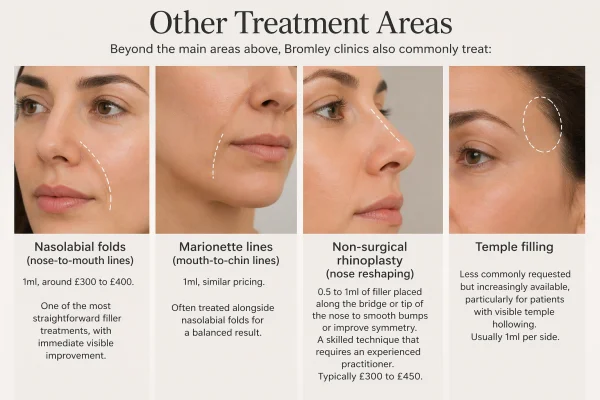
Other Treatment Areas
Beyond the main areas above, Bromley clinics also commonly treat:
- Nasolabial folds (nose-to-mouth lines): 1ml, around £300 to £400. One of the most straightforward filler treatments, with immediate visible improvement.
- Marionette lines (mouth-to-chin lines): 1ml, similar pricing. Often treated alongside nasolabial folds for a balanced result.
- Non-surgical rhinoplasty (nose reshaping): 0.5 to 1ml of filler placed along the bridge or tip of the nose to smooth bumps or improve symmetry. A skilled technique that requires an experienced practitioner. Typically £300 to £450.
- Temple filling: less commonly requested but increasingly available, particularly for patients with visible temple hollowing. Usually 1ml per side.
Types of Dermal Filler Used in Bromley Clinics
The vast majority of Bromley clinics use hyaluronic acid (HA) based fillers. These are the industry standard for good reason: they integrate naturally with the skin, produce predictable results, and can be dissolved with hyaluronidase if needed.
The most commonly used brands locally include:
- Juvéderm (Allergan): the Vycross range (Voluma, Volift, Volbella, Volux) is widely regarded as a premium option. Smooth, long-lasting, and versatile across treatment areas. Used by clinics like Elite Aesthetics and several doctor-led practices in the area.
- Restylane (Galderma): a well-established range including Lyft, Kysse and Defyne. Slightly firmer in texture than Juvéderm, which some practitioners prefer for structural work like the jawline and chin.
- Teosyal RHA (Teoxane): a resilient HA range designed to adapt to facial movement and used by some premium clinics in the Bromley area, including the Artemis Clinic in West Wickham.
- Ellansé: a biostimulatory filler (not HA-based) that provides immediate volume and stimulates your own collagen production over time. Longer-lasting than HA fillers (up to 2 to 4 years, depending on the formulation), but not reversible. Available at selected clinics locally.
Your practitioner should always tell you which product they plan to use and why. If they don't, or won't, that's worth noting.
At a Glance: Treatment Areas Compared
| Treatment Area | Typical Volume | Approximate Cost (Bromley Mid-Range) | How Long Do Results Last | Downtime |
|---|---|---|---|---|
| Lips | 0.5–1ml | £250–£350 | 6–12 months | 1–3 days swelling |
| Cheeks | 1–2ml | £300–£700 | 12–18 months | Minimal |
| Jawline | 2–3ml | £550–£900 | 12–18 months | Minimal |
| Chin | 1–2ml | £300–£600 | 12–18 months | Minimal |
| Nasolabial folds | 1ml | £300–£400 | 9–12 months | Minimal |
| Marionette lines | 1ml | £300–£400 | 9–12 months | Minimal |
| Tear trough | 0.5–1ml | £350–£450 | 9–12 months | 3–5 days (bruising common) |
| Non-surgical rhinoplasty | 0.5–1ml | £300–£450 | 9–12 months | Minimal |
If you're unsure which area or approach is right for you, that's exactly what a consultation is for. A good practitioner will assess your face as a whole and recommend what will make the most meaningful difference, which isn't always where you'd expect.
How Much Do Dermal Fillers Cost In Bromley?
Cost is one of the first things people want to know, and one of the hardest things to get a straight answer on. Most clinic websites either bury their pricing, list a vague "from" figure, or ask you to call for a quote. That makes it difficult to compare options or set a realistic budget before you've even booked a consultation.
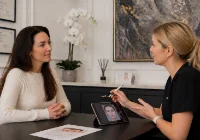
Here's what dermal fillers actually cost across the Bromley area, based on current local clinic pricing.
Dermal Filler Prices by Treatment Area
| Treatment Area | Budget | Mid-Range | Premium (Doctor-Led) |
|---|---|---|---|
| Lip filler (1ml) | £150–£220 | £250–£350 | £350–£500 |
| Cheek filler (1ml) | £200–£250 | £300–£400 | £400–£550 |
| Jawline filler (2ml) | £350–£500 | £550–£700 | £700–£900 |
| Chin filler (1ml) | £200–£280 | £300–£400 | £400–£550 |
| Tear trough (1ml) | £250–£300 | £350–£450 | £450–£550 |
| Nasolabial folds (1ml) | £200–£250 | £300–£400 | £400–£500 |
| Marionette lines (1ml) | £200–£250 | £300–£400 | £400–£500 |
| Non-surgical rhinoplasty | £250–£300 | £300–£450 | £450–£550 |
| Full face rejuvenation (3–4ml) | £600–£800 | £900–£1,200 | £1,200–£1,800 |
These figures reflect the Bromley market specifically. Prices in central London tend to run 20 to 40 percent higher for comparable treatment, which is one reason many patients in south east London choose to stay local.
What Affects the Price You Pay
Filler pricing isn't arbitrary, even when it feels opaque. Several things drive the number you're quoted.
Volume. This is the most straightforward factor. Fillers are sold by the millilitre, and different areas need different amounts. A subtle lip enhancement might use 0.5ml. A structured jawline could need 3ml. More product means a higher total cost, but many clinics offer a reduced per-ml rate when you're having multiple syringes in one session.
Product brand. Not all fillers are priced equally. Juvéderm and Restylane sit at the premium end. Teosyal occupies a similar tier. Less well-known HA brands can cost significantly less per syringe, though their clinical data and track record may also be thinner. Ellansé, as a biostimulatory filler, tends to cost more per ml but lasts considerably longer.
Practitioner qualifications. A doctor or dentist with specific facial aesthetics training will typically charge more than a nurse prescriber, who in turn will charge more than a beauty therapist with an injectable qualification. That premium isn't arbitrary either. It reflects higher insurance costs, the ability to prescribe and manage complications, and (usually) deeper anatomical training.
Clinic setting. A purpose-built clinical environment in Bromley town centre carries different overheads to a treatment room in a home-based practice in Orpington. Neither is inherently better or worse, but it's part of the equation.
Consultation model. Some clinics include the consultation in the treatment price. Others charge separately, typically £35 to £120, sometimes redeemable against treatment. A paid consultation isn't a red flag. In fact, it often signals a clinic that takes the assessment process seriously rather than treating it as a sales step.
Budget vs Premium: What's the Real Difference?
This is where it gets important. The gap between a £150 lip filler and a £450 one isn't just about the postcode or the decor.
| Budget Clinic | Premium / Doctor-Led Clinic | |
|---|---|---|
| Practitioner | Beauty therapist or junior nurse | Doctor, dentist, or advanced nurse prescriber |
| Consultation | Free, often same-day treatment | Paid, separate from treatment, thorough assessment |
| Products | Lesser-known HA brands | Juvéderm, Restylane, Teosyal, Ellansé, Neauvia |
| Complication management | May not hold hyaluronidase on-site | Prescribing access, emergency protocols in place |
| Follow-up | May not be included | Typically included at 2 weeks |
| Insurance & indemnity | Variable | Comprehensive clinical indemnity |
None of this means budget clinics are universally bad, or that expensive always means excellent. But it does mean the price you pay is buying more than just the product in the syringe. It's buying the training behind the hands, holding it, and the safety net if something doesn't go to plan.
The most practical approach is to understand what you're comparing. When a clinic quotes you £200 for lip filler, and another quotes £400, they're not offering the same thing. Ask what product they use, who will be treating you, what happens if you're not happy with the result, and whether follow-up is included. Those answers matter more than the headline number.
Consultation Fees in Bromley
Consultation fees across the Bromley area vary:
- Free consultations are offered by some clinics, particularly those with a retail or beauty-led background. These can be perfectly fine, but be aware that a free consultation can sometimes subtly pressure you to commit to treatment on the same day.
- £35–£50 is a common fee for clinics that want to cover their time without creating a financial barrier. Often redeemable against treatment if you proceed.
- £100–£120 is charged by some doctor-led clinics that treat the consultation as a standalone clinical service. At this level, you're paying for a detailed facial assessment, a personalised treatment plan, and honest advice on whether filler is actually the right option for you. Dr Kim Booysen's practice in Bromley, for example, charges £120 for a comprehensive 60-minute initial consultation.
Whichever model you encounter, a consultation should never feel like a sales pitch. If it does, that tells you something.
How Dermal Fillers Compare To Other Treatments In Bromley
One thing that can make this process confusing is that dermal fillers aren't the only option. Depending on what's bothering you, a different treatment might be more effective or work better in combination with filler than on its own.
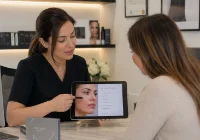
Bromley clinics increasingly offer a range of injectable treatments beyond traditional fillers, and a good practitioner will talk you through what's most appropriate rather than defaulting to whatever you've asked for. But it helps to walk into that conversation with some understanding of what each treatment does and where it sits.
Dermal Fillers vs Profhilo
This is probably the most common point of confusion. Both are injectable, both use hyaluronic acid, and both improve the way your face looks. But they do fundamentally different things.
Dermal fillers add volume and structure. They're placed in specific areas to lift, contour, or fill. Profhilo doesn't add volume at all. Instead, it disperses across the skin to improve hydration, elasticity and overall skin quality from within. It stimulates your own collagen and elastin production, making it particularly effective for crepey, thinning skin on the face, neck, and hands.
If your concern is primarily about skin texture, fine lines or a general loss of firmness rather than specific volume loss, Profhilo might be the better starting point. Many Bromley clinics now recommend it as a foundation treatment, sometimes before fillers, sometimes alongside them. The two work well together, but they're addressing different problems.
Profhilo typically involves two sessions, four weeks apart, and costs around £300 to £500 for the course locally. Results develop gradually over several weeks and last roughly six to nine months.
Dermal Fillers vs Botox
These two are frequently mentioned together, but they're not interchangeable. Botox (botulinum toxin) works by temporarily relaxing the muscles that cause dynamic wrinkles, the lines that appear when you frown, squint or raise your eyebrows. Fillers work by adding physical volume beneath the skin.
In simple terms: if the line disappears when your face is at rest, it's probably a Botox issue. If it's visible even when you're not making an expression, filler is more likely to help.
The most common Botox areas are the forehead, frown lines (between the brows) and crow's feet. The most common filler areas are lips, cheeks, jawline and nasolabial folds. There's very little overlap. Many patients have both, treating the upper face with Botox and the lower face with filler.
Botox is generally less expensive per session (typically £180 to £300 in Bromley), but it needs to be repeated every 3 to 4 months. Filler lasts longer per treatment, which can make it more cost-effective over a year, depending on the area.
Dermal Fillers vs Polynucleotides and Skin Boosters
This is the newer category, and it's one that's gaining ground quickly in the Bromley area.
Polynucleotides (brands like Plinest, Nucleofill) are bio-regenerative injections derived from salmon or trout DNA. That sounds unusual, but the science is well-established. They work by stimulating cellular repair, improving skin elasticity, and encouraging collagen production. They don't add volume. Instead, they improve the quality of the skin itself over two to four sessions.
Skin boosters (such as Seventy Hyal, Redensity I, or the Juvéderm Volite range) sit somewhere between Profhilo and fillers. They're micro-injections of HA designed to hydrate the skin at a deeper level, improving radiance and fine lines without adding structure or volume.
Both are increasingly popular with Bromley patients in their 30s and 40s who aren't ready for (or don't need) traditional filler but want to invest in long-term skin quality. Several local clinics now offer them as part of a staged treatment plan: skin boosters or polynucleotides first, followed by filler if and when volume restoration becomes appropriate.
When Dermal Fillers Might Not Be the Best Option
It's worth being honest about this. Fillers are excellent at what they do, but they're not the answer to everything.
If your main concern is skin texture, dullness or surface-level fine lines, a skin booster, Profhilo, or polynucleotide treatment is likely to give you more noticeable improvement than filler would.
If you're bothered by lines across your forehead or between your brows that deepen when you make expressions, Botox In Bromley is the more appropriate treatment. Filling dynamic lines with dermal filler usually produces an unsatisfying result.
If you have significant skin laxity (loose, sagging skin rather than volume loss), fillers can help to a point, but they won't replicate the effect of a surgical facelift or even a non-surgical skin tightening treatment like Ultherapy or radiofrequency. A practitioner who tells you otherwise is overselling.
And if you're under 25 with naturally full features and no visible volume loss, the honest answer is that you probably don't need filler at all, even if social media suggests otherwise. A good Bromley practitioner will tell you that.
At a Glance: How the Options Compare
| Dermal Fillers (HA) | Profhilo | Polynucleotides | Botox | |
|---|---|---|---|---|
| What it does | Adds volume, structure, contour | Improves skin quality, hydration, firmness | Regenerates skin, improves elasticity and texture | Relaxes muscles to reduce dynamic lines |
| Best for | Volume loss, facial shaping, lines at rest | Crepey skin, overall glow, laxity | Skin quality, fine lines, long-term regeneration | Forehead lines, frown lines, crow's feet |
| Results visible | Immediately | 2–4 weeks | 4–6 weeks | 3–7 days |
| How long it lasts | 6–18 months | 6–9 months | 6–12 months | 3–4 months |
| Sessions needed | Usually 1 (with optional top-up) | 2 sessions, 4 weeks apart | 2–4 sessions, 2–4 weeks apart | 1 session |
| Can be dissolved? | Yes (hyaluronidase) | Yes | No | No (wears off naturally) |
| Typical Bromley cost | £250–£500 per ml | £300–£500 per course | £150–£400 per session | £180–£300 per area |
The reality is that most patients benefit from a combination rather than a single treatment. The question isn't always "which one?" but "which ones, and in what order?" That's where a thorough consultation pays for itself.
What To Expect From Dermal Filler Treatment
Knowing what actually happens, from the consultation through to the weeks afterwards, removes a lot of the uncertainty. Most of what people worry about beforehand turns out to be more manageable than they'd imagined. But it helps to have a clear picture before you walk through the door.
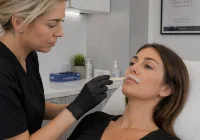
Your Consultation
A good consultation is the foundation of a good result. It should feel like a clinical assessment, not a sales conversation.
In most Bromley clinics, a first consultation will last between 20 minutes and a full hour, depending on the practice. During that time, your practitioner should assess your facial structure, ask about your concerns and goals, take a medical history, and explain what they'd recommend and why. Some practitioners use photography or digital imaging as part of this process. Others prefer a hands-on assessment with a mirror.
This is also your opportunity to ask questions. Good ones to have ready include:
- What product do you plan to use, and why?
- How many ml do you think I'll need?
- What are the risks for this specific area?
- Do you carry hyaluronidase on-site?
- What does follow-up look like?
At some clinics, particularly those with a paid consultation model, the assessment and treatment happen on separate days. This gives you time to think without any pressure to commit in the moment. At others, you can proceed on the same day if you and your practitioner are both comfortable. Neither approach is inherently better, but having space to reflect is never a bad thing, especially if it's your first treatment.
During Treatment
The procedure itself is quicker than most people expect.
A single area (such as the lips) typically takes 15 to 20 minutes. A multi-area session covering cheeks, jawline and chin might take 30 to 45 minutes. Your practitioner will clean the skin, apply topical numbing cream (usually left on for 10 to 15 minutes), and then inject the filler using either a fine needle or a cannula, depending on the area and their preferred technique.
Most modern HA fillers contain lidocaine, a local anaesthetic built into the product. Between that and the numbing cream, the sensation is usually manageable. Patients often describe it as pressure or a dull ache rather than sharp pain. Lips tend to be the most sensitive area. The tear trough and jawline are generally more comfortable.
Your practitioner will work carefully, often pausing to check symmetry with a mirror or asking you to sit upright to assess the result from different angles. There's an element of artistry to it. Good injectors don't rush.
Recovery and Aftercare
You can leave the clinic and carry on with your day. There's no medical downtime in the traditional sense. But your face may not look exactly how you want it to for the first few days.
Swelling is normal, particularly with lip filler. Some people swell noticeably for two to three days; others barely at all. Bruising is possible anywhere, but more common in delicate areas like the tear trough and lips. A slight tenderness or firmness at the injection sites is also normal and usually resolves within a week.
Standard aftercare advice across most Bromley clinics includes:
- Avoid alcohol for 24 hours before and after treatment
- No intense exercise for 24 to 48 hours
- Avoid extreme heat (saunas, steam rooms, hot baths) for 48 hours
- Don't apply makeup to the treated area for at least 12 hours
- Sleep with your head slightly elevated on the first night if possible
- Avoid touching, pressing or massaging the area unless your practitioner has specifically advised it
If you bruise easily or are concerned about visible swelling, it's worth scheduling your treatment at least two weeks before any event or occasion where you want to look your best.
When You'll See Your Final Results
This catches some people off guard. The results you see when you leave the clinic aren't quite the final picture.
Immediately after treatment, you'll see a visible difference, but there will also be swelling layered on top. Lips, in particular, can look noticeably fuller in the first 48 hours than they will once everything settles. Cheek and jawline filler tends to settle more quickly, but even there, the final result becomes clearer after about two weeks.
Most practitioners schedule a follow-up review at the two-week mark. This is when the filler has fully integrated into the tissue, any swelling has resolved, and your practitioner can assess whether the result is balanced or whether a small adjustment would help. At a good clinic, this review is included in your treatment fee.
How Long Dermal Fillers Last
This depends on the area treated, the product used, and your individual metabolism. As a general guide:
- Lips: 6 to 12 months. The lips are a high-movement area with a strong blood supply, so filler tends to break down faster here.
- Cheeks: 12 to 18 months. Less movement, more stable results.
- Jawline and chin: 12 to 18 months, sometimes longer, with firmer products like Juvéderm Volux.
- Nasolabial and marionette lines: 9 to 12 months.
- Tear trough: 9 to 12 months, though some patients find it lasts longer due to the low-movement environment.
One thing worth knowing: most patients need less filler at their top-up appointment than they did at their initial appointment. The first treatment establishes the foundation. Subsequent sessions are usually about maintenance and minor refinement, which brings the ongoing cost down over time.
Filler doesn't disappear overnight, either. It breaks down gradually, so there's no sudden change. You'll simply notice the effect softening over several months, which gives you time to decide whether and when to return.
How To Choose A Dermal Filler Clinic In Bromley
This is the section that matters most. The single biggest factor in whether your filler looks good, lasts well, and stays safe isn't the product brand or the area you're treating. It's who's holding the needle.

Bromley has plenty of options. The challenge isn't finding a clinic; it's knowing how to tell the difference between one that's genuinely qualified and one that simply has a good Instagram page.
What Qualifications Should a Filler Practitioner Have?
In an ideal world, there would be a simple answer to this. But the UK's current regulatory position makes it more complicated than it should be.
As of 2026, no specific licence is required to administer dermal fillers in England. Legally, almost anyone can inject them, regardless of their background or training. That's not reassuring, but it is the reality. The Health and Care Act 2022 has laid the groundwork for a national licensing scheme, and a public consultation is expected later this year, but full implementation is still some way off.
In the meantime, the responsibility falls on you to check who you're trusting with your face.
The practitioners best equipped to deliver filler safely and manage complications are those registered with a recognised healthcare body:
- Doctors registered with the General Medical Council (GMC)
- Dentists registered with the General Dental Council (GDC)
- Nurses and nurse prescribers registered with the Nursing and Midwifery Council (NMC)
Registration with one of these bodies doesn't automatically mean someone is skilled in aesthetics, but it does mean they've completed a regulated healthcare degree, are bound by professional standards, and can be held accountable if something goes wrong. That accountability matters.
Beyond their core registration, look for evidence of specific aesthetic training. The JCCP (Joint Council for Cosmetic Practitioners) maintains a register of practitioners who meet defined competency standards. Save Face, the UK's only government-approved register of accredited practitioners, is another useful verification tool. Both are free to search online.
Signs of a Reputable Clinic
Qualifications are the starting point. But you can learn a lot about a clinic before you even book a consultation, just by paying attention to how they present themselves.
A clinic worth trusting will typically:
- Name their practitioners clearly on their website, with qualifications and registration details you can verify independently
- Offer a structured consultation process, whether paid or free, that's clearly separate from the hard sell
- Show their own before-and-after work, not stock images or manufacturer-supplied photos
- Explain the products they use and why they've chosen them
- Have visible reviews from real patients, ideally across multiple platforms
- Be transparent about pricing, at least to the point where you can understand the ballpark before committing to a consultation
You shouldn't have to dig for this information. If a clinic makes it difficult to find out who will be treating you or what product they use, that's telling you something.
Red Flags to Watch For
Some warning signs are obvious. Others are subtler. Worth being aware of both.
Clear red flags:
- No named practitioner on the website or social media
- Treatment offered from someone's home, a hotel room, or a mobile setup without appropriate clinical standards
- Heavy promotional pricing that significantly undercuts the local market (e.g. lip fillers for under £100)
- Unwillingness to discuss which product will be used
- Pressure to proceed with treatment on the same day as your consultation, particularly if you're a first-time patient
Subtler things to watch for:
- A "free consultation" that quickly turns into a treatment session with no real assessment
- Before-and-after photos that appear to be sourced from other practitioners or stock libraries
- A practitioner who tells you what you want to hear rather than what you need to hear. If you walk in asking for 3ml of lip filler and nobody questions whether that's appropriate, reconsider
- No mention of risks, side effects or the possibility that filler might not be the right treatment for your concern
- No follow-up appointment offered or included
Why Practitioner Experience Matters More Than Price
It's tempting to compare clinics on cost alone. And pricing does matter. But the difference between a satisfying result and a disappointing one almost always comes down to the person injecting, not the number on the invoice.
An experienced practitioner understands facial anatomy in three dimensions. They know where the blood vessels run, how the fat pads layer, and how filler behaves differently in the lips, the jawline, and the tear trough. They'll assess your face as a whole, not just the area you've pointed to. And they'll know when to say no, or when to suggest something different.
This kind of judgment comes from training and clinical volume. A practitioner who treats hundreds of patients a year will make decisions differently from someone who does it occasionally alongside other services.
That doesn't mean you need to find the most expensive clinic in the area. But it does mean the cheapest option carries a higher probability of a result you're not happy with, or worse, a complication that's poorly managed.
The most important safety question you can ask is this: Do you carry hyaluronidase, and are you qualified to use it? Hyaluronidase is the enzyme that dissolves HA filler. If something goes wrong, specifically a vascular occlusion where filler blocks a blood vessel, access to hyaluronidase and knowing when and how to use it can be the difference between a temporary scare and permanent damage. Not all practitioners can legally prescribe it, and not all clinics keep it on-site.
Understanding the Current UK Regulatory Position
It's worth knowing where things stand, because it affects how much due diligence you need to do for yourself.
The Health and Care Act 2022 gave the government the power to introduce a licensing scheme for non-surgical cosmetic procedures. In August 2025, the government published its response to a public consultation, setting out a three-tier framework:
- Green (low risk): procedures like chemical peels and LED therapy, to be carried out by any licensed practitioner meeting agreed standards
- Amber (medium risk): injectable treatments including dermal fillers and Botox, requiring non-healthcare professionals to work under the oversight of a named regulated healthcare professional
- Red (high risk): invasive procedures such as Brazilian butt lifts, restricted to qualified healthcare professionals working from CQC-registered premises
Dermal fillers injected into the face are expected to fall into the amber category. But this scheme has not yet been fully implemented. A further public consultation is anticipated in 2026, with the licensing regime likely to follow after that.
Until then, the industry remains largely self-regulated. Which means choosing well is on you. The tools are there: GMC, GDC and NMC registers are searchable online, Save Face and JCCP registers are free to use, and directories like ConsultingRoom verify clinic credentials before listing them.
It takes ten minutes to check. It's worth it.
Conclusion
Dermal fillers are one of the most effective non-surgical treatments available, but the experience depends almost entirely on who you choose to deliver them.

The product matters. The technique matters. But the judgment behind both of those is what separates a result you're pleased with from one you're not.
Bromley gives you a genuine choice. There are experienced, qualified practitioners working locally who can offer the kind of thoughtful, personalised treatment that used to mean a trip into central London. The key is knowing what to look for and being willing to ask the questions that matter before you commit.
If you're still weighing things up, that's fine. A consultation doesn't commit you to anything. It's simply a conversation with someone who can assess what would actually work for your face, your concerns, and your expectations. Start there.
Dermal Fillers Quick FAQs
Clear, concise answers to common queries
A simple, no-fluff roundup of frequent Dermal Fillers questions to help you get the facts fast.

How soon before an event should I book my dermal filler treatment?
It’s best to schedule treatment at least two weeks before an important event. This allows time for any swelling or bruising to resolve and for the filler to settle into its final position for the most natural appearance.
Are dermal fillers suitable for men?
Absolutely. Men often use fillers to enhance jawline definition, restore cheek volume, or soften deep lines. Treatment plans are tailored to maintain masculine facial proportions.
What happens if I gain or lose weight after fillers?
Significant weight changes can affect facial fat distribution, which may alter how fillers look. In most cases, minor adjustments can restore balance.
Can dermal fillers be reversed if I don’t like the results?
Yes — most hyaluronic acid fillers can be dissolved using an enzyme called hyaluronidase. This process breaks down the filler safely and quickly, usually with visible improvement within days.
Is there a best age to start dermal fillers?
There’s no fixed “best age.” Some people choose fillers in their late 20s or 30s for early volume restoration, while others wait until signs of ageing become more pronounced. The decision depends on your goals, skin condition, and facial anatomy rather than age alone.
What’s the difference between using a needle and a cannula for filler?
A needle is sharp and allows precise placement in smaller areas, while a blunt-tipped cannula can reduce bruising and swelling and is often used for delicate regions like under the eyes. Your practitioner will choose the method based on the treatment area and desired outcome.
Will dermal fillers make my face look puffy or unnatural?
When performed by a skilled medical professional with the right product choice, dermal fillers should enhance your features subtly without an overfilled appearance. Overuse or poor technique is the main cause of an unnatural look.
Do dermal fillers hurt?
Most people describe the sensation as mild discomfort rather than pain. Fillers often contain lidocaine, and numbing cream or local anaesthetic can be used to make the procedure more comfortable.
Can I combine dermal fillers with other treatments?
Yes — fillers are frequently paired with treatments like Botox for dynamic wrinkles, skin boosters for hydration, or energy-based therapies for skin tightening. A combined approach can address multiple ageing concerns more effectively.
How do I choose the right filler product for me?
The right filler depends on the treatment area, your skin type, and your goals. Softer gels suit lips and fine lines, while thicker, structural fillers are used for cheeks, jawline, and chin. Your practitioner will recommend the best option after assessing your needs.
Can I exercise after dermal filler treatment?
It’s advisable to avoid intense exercise for 24–48 hours. Elevated blood flow and heat can increase swelling or bruising and may affect how the filler settles.
How do I maintain my results for as long as possible?
Follow aftercare advice, protect skin from the sun, stay hydrated, and avoid smoking. Regular maintenance appointments before the filler fully wears off help preserve a consistent look.
Can dermal fillers treat acne scars?
Certain fillers can soften the appearance of atrophic (indented) acne scars by raising the skin and stimulating collagen. This is a specialised treatment and should be performed by an experienced injector.
Are there areas of the face where fillers should not be used?
Fillers aren’t suitable for every facial line or hollow. Areas with high muscle movement or very thin skin require special techniques, and some concerns — like significant skin laxity — may be better treated with other methods.
What questions should I ask at a dermal filler consultation?
Ask about the practitioner’s qualifications, experience with your chosen treatment area, the specific filler brand, potential side effects, aftercare, and how complications are handled. A thorough consultation is key to a safe, satisfying result.
Stay Informed with the Latest Aesthetic News & Offers
Join our free newsletter to receive updates on the latest treatments, safety guidance, and exclusive clinic offers near you.
No spam, just expert insights and trusted advice from the UK’s leading aesthetics directory.