


Skin tags are very common, and removal is often described as quick or straightforward. This can make it easy to assume there is little to consider beyond convenience. In practice, any procedure that affects the skin carries some degree of risk, even when the risk is low. Confusion often arises because online information tends to focus either on reassurance or on isolated worst-case examples, rather than explaining what usually happens, what occasionally happens, and why.
A careful understanding of side effects and limitations helps people make decisions they feel comfortable with, rather than rushed or uncertain. Factors such as skin tone, treatment method, and the area being treated all influence healing and cosmetic outcome. Knowing this in advance allows for more realistic expectations and more meaningful conversations with a clinician.
This guide sets out the key risks and limitations of skin tag removal in plain English. It explains what is considered normal during healing, which risks are uncommon but relevant, and why professional assessment and technique choice matter. The aim is not to encourage or discourage treatment, but to support informed, low-pressure decision-making based on clear information.
Our Preferred Partner - Jovena Fractional Plasma
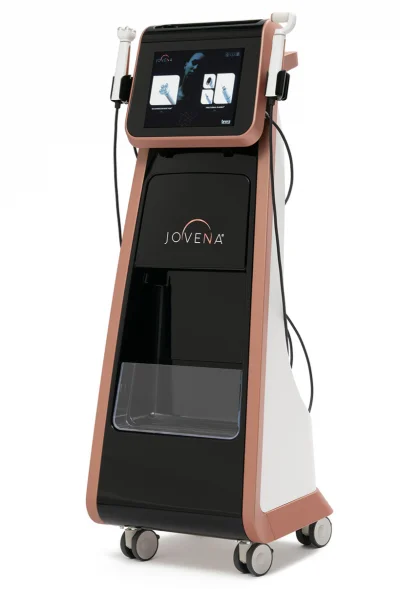
Skin tag removal may be a straightforward procedure, but how the tissue is treated can make a meaningful difference to both outcomes and patient experience. That’s where fractional plasma technology on the Jovena device offers a more considered approach.
By delivering controlled plasma energy in precise micro-points, the treatment works within the upper layers of the skin to target the concern while leaving surrounding tissue largely unaffected. This supports a natural repair response, encouraging cleaner healing and more refined results over time.
For clinics, Jovena provides a versatile platform that extends beyond simple lesion removal into broader skin renewal and resurfacing treatments. For patients, it offers a precise, controlled option that aligns removal with overall skin quality - not just resolution of the concern.
Why Side Effects And Risks Matter, Even For A Common Condition
Skin tag removal is widely regarded as safe, but like any medical or aesthetic procedure, it carries potential side effects and risks. Understanding these upfront helps set realistic expectations and supports informed decision-making, rather than relying on reassurance alone.
Skin tag removal is usually straightforward, but not consequence-free
Skin tags, medically known as acrochordons, are benign growths, and their removal is often straightforward when performed by a trained professional. However, the fact that a condition is common does not mean the procedure is entirely without risk.
- Any treatment that breaks the skin can cause temporary inflammation, bleeding, or changes in the healing process.
- The likelihood and type of side effects vary depending on the size of the skin tag, its location, and the method used.
- Areas such as the eyelids, neck, or groin require particular care due to thinner skin or increased friction.
A clear discussion of these factors allows patients to weigh convenience against potential downsides in a balanced way.
Why professional guidance reduces avoidable complications
Most complications associated with skin tag removal are preventable through proper assessment and technique. Professional evaluation helps ensure that the growth is correctly identified and that the most appropriate removal method is selected.
- Not all skin growths that resemble skin tags are suitable for cosmetic removal without further checks.
- Technique selection influences healing, scar risk, and the risk of pigment change.
- Sterile conditions and postoperative care instructions reduce the risk of infection and support normal healing.
Professional guidance does not eliminate risk entirely, but it significantly reduces the likelihood of avoidable complications and unexpected outcomes.
Understanding why side effects and risks matter, even for a common procedure, helps frame skin tag removal as a considered medical decision rather than a purely cosmetic one.
Common Short-term Side Effects After Skin Tag Removal
Most people experience only mild, short-lived side effects after skin tag removal. Knowing what is typical in the days following treatment can help distinguish normal healing from signs that may need review.
Redness, swelling, and tenderness
Mild redness and localised swelling are common immediately after skin tag removal and usually settle within a few days.
- This response reflects normal inflammation as the skin begins to heal.
- Tenderness is often more noticeable in areas with thinner skin or greater movement, such as the neck or underarms.
- Symptoms should gradually improve rather than worsen.
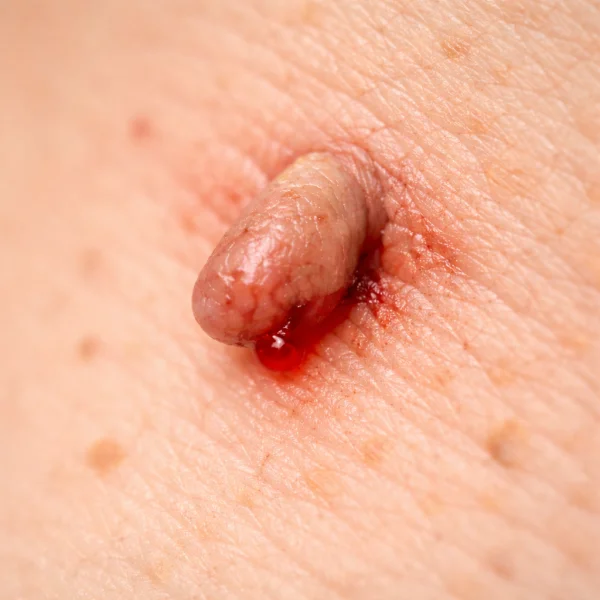
Minor bleeding or scabbing
Small amounts of bleeding can occur during or shortly after removal, particularly with snip excision or when the skin tag has a narrow stalk.
- Clinicians typically control bleeding during treatment using pressure or cautery, where appropriate.
- A small scab may form and should be left undisturbed to support healing.
- Ongoing bleeding is uncommon and would warrant professional advice.
Temporary discomfort or sensitivity
Some people notice increased sensitivity at the treatment site for a short period.
- Discomfort is usually mild and manageable without medication.
- Sensitivity may last slightly longer in areas exposed to friction from clothing or jewellery.
- Pain that increases rather than resolves is atypical and should be assessed.
These short-term effects are part of the normal healing process and usually resolve without intervention when appropriate aftercare is followed.
Less Common But Important Risks To Understand
While most people recover without issue, there are less common risks associated with skin tag removal that are important to understand before treatment. These are not expected outcomes, but they help explain why assessment, technique, and aftercare matter.
Infection risk and how it occurs
Infection after skin tag removal is uncommon when procedures are carried out in a clinical setting, but it remains a recognised risk.
- Infection can occur if bacteria enter the skin during or after treatment.
- Early signs may include increasing redness, warmth, swelling, discharge, or pain that does not settle.
- Proper sterile technique and clear aftercare guidance significantly reduce this risk.
Prompt review enables early treatment of infections and helps prevent more serious complications.
Scarring and texture change
Permanent scarring after skin tag removal is rare, but changes in skin texture can occur, particularly in certain areas.
- Larger skin tags or those with a broader base carry a slightly higher risk of visible marks.
- Healing can look different in areas of high movement or tension, such as the neck or groin.
- Individual healing response plays a role, even when the procedure is performed correctly.
These factors are usually discussed during consultation to align expectations with clinical reality.
Nerve irritation or prolonged tenderness
Occasionally, people experience prolonged sensitivity at the treatment site.
- This may occur if a small nerve ending is irritated during removal.
- Symptoms are usually temporary and improve as healing progresses.
- Persistent or worsening discomfort is not typical and should be assessed.
Understanding these possibilities supports informed consent rather than alarm.
Although these risks are uncommon, they underscore that skin tag removal should be treated as a minor medical procedure rather than purely cosmetic.
Pigment Changes And Skin Of Colour Considerations
Changes in skin colour are among the more nuanced risks of skin tag removal and are often under-explained. Understanding how and why pigment changes occur is particularly important for people with medium- to dark-skinned tones.
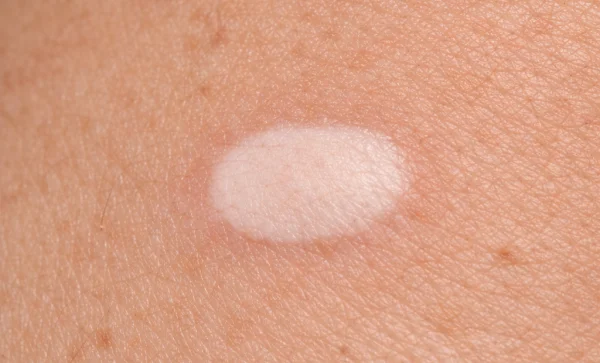
Hyperpigmentation and hypopigmentation explained simply
Pigment change can occur when the skin’s normal healing response affects melanin production in the treated area.
- Hyperpigmentation refers to darkening of the skin and is more common after inflammation or irritation.
- Hypopigmentation refers to lightening of the skin and is less common but may occur when pigment-producing cells are affected.
- In many cases, these changes are temporary and fade gradually over weeks or months, but this cannot be guaranteed.
The risk of pigmentary change varies with skin type, treatment method, and postprocedural healing.
Why darker skin tones need tailored approaches
People with darker skin tones are not unsuitable for skin tag removal, but they do benefit from a more considered approach.
- Higher melanin levels can increase the risk of post-inflammatory pigmentation.
- Certain techniques, particularly those involving heat or freezing, require careful use to minimise pigment disruption.
- Practitioner experience and the selection of conservative techniques are key factors in reducing risk.
Discussing skin tone openly during consultation helps ensure that treatment decisions are based on individual skin behaviour rather than assumptions.
Pigment change is not inevitable, but it is an important consideration that should be discussed clearly, especially for those with skin of colour.
Risks Linked To Specific Removal Methods
Different skin tag removal methods are used depending on the lesion's size, location, and characteristics. Each technique has a slightly different risk profile, which is why method selection is usually discussed during consultation rather than decided in advance.
Snip excision
Snip excision involves cutting the skin tag at its base using sterile scissors or a blade and is commonly used for small, narrow-stalked tags.
- Bleeding can occur during removal, but is usually brief and controlled immediately.
- Healing typically involves a small scab and carries a low risk of pigment change when performed carefully.
- Larger or broader-based skin tags may require local anaesthetic and closer aftercare.
This method is often chosen for its precision and predictable healing when the lesion is suitable.
Electrosurgery
Electrosurgery uses controlled heat to remove the skin tag and simultaneously seal adjacent blood vessels.
- The use of heat reduces bleeding but introduces a small risk of irritation of the surrounding tissue.
- There is a slightly higher risk of pigment change, particularly in darker skin tones, if heat spreads beyond the target area.
- Accurate technique and appropriate settings are important to minimise collateral skin damage.
Electrosurgery is commonly used for multiple or slightly larger skin tags where bleeding control is helpful.
Cryotherapy
Cryotherapy removes skin tags by freezing the tissue, causing it to dry out and detach over time.
- The depth of freezing is less predictable than that of cutting or cautery.
- Pigment changes are more commonly reported after freezing, particularly among individuals with medium to dark skin tones.
- Healing may take longer, and the treated area may initially appear blistered or irritated.
Cryotherapy may be appropriate in selected cases, but its limitations are an important part of the decision-making process.
No single removal method is universally best. The safest option depends on the skin tag itself, the surrounding skin, and the individual’s healing tendencies.
Limitations Of Skin Tag Removal That Are Often Misunderstood
Skin tag removal can effectively address an individual lesion, but it does not alter the underlying tendency to develop skin tags. Understanding these limitations helps prevent disappointment and supports the development of realistic expectations over time.
Why new skin tags can still appear
Removing a skin tag does not prevent the formation of additional skin tags in the future.
- Skin tags often develop due to friction, skin folds, hormonal factors, or metabolic influences.
- New skin tags may appear in the same area or elsewhere, even after successful removal.
- This is considered new growth rather than treatment failure.
Clinicians usually explain this distinction during consultation to avoid the assumption that repeat treatment means something has gone wrong.
Cosmetic outcome limitations
While many people heal with minimal visible change, cosmetic outcomes vary and cannot be guaranteed.
- Healing can leave a faint mark or slight texture change, particularly where skin is thin or mobile.
- Pigment changes may take time to settle and may not fully resolve in all cases.
- The goal of treatment is safe removal, not perfection.
A clear discussion of cosmetic limitations allows individuals to decide whether the expected outcome aligns with their priorities.
Recognising the limits of what skin tag removal can and cannot achieve supports satisfaction and informed choice, particularly for those considering treatment primarily for reassurance or comfort.
Red Flags And When To Seek Medical Advice
Most skin tag removals heal without difficulty; however, there are situations in which symptoms deviate from the expected healing pattern. Knowing when to seek medical advice helps ensure that potential complications are addressed promptly and appropriately.
Symptoms that should not be ignored
Certain signs indicate that healing is not progressing as expected and warrant review by a healthcare professional.
- Increasing pain, swelling, or redness after the first few days rather than gradual improvement.
- Discharge, spreading warmth, or an unpleasant smell from the treatment site.
- Bleeding that continues or recurs after initial healing.
- Changes in colour, shape, or sensation that were not discussed during consultation.
These symptoms do not necessarily indicate a serious problem, but early assessment reduces the risk of escalation.
When a GP or dermatologist is the right next step
The appropriate point of contact depends on the nature of the concern and the setting in which the treatment was provided.
- A GP is often the first point of contact for signs of infection, delayed healing, or diagnostic uncertainty.
- Referral to a dermatologist may be advised if there is doubt about the original diagnosis or if healing is atypical.
- Urgent review is appropriate if there is severe pain, rapid swelling, or signs of systemic illness.
Clear guidance on follow-up pathways is part of responsible aftercare and supports patient confidence.
Understanding what falls outside normal healing helps balance reassurance with vigilance and ensures that concerns are addressed without unnecessary delay.
Balancing Risks With Benefits In A Calm, Informed Way
Deciding whether to remove a skin tag is rarely urgent. For most people, the choice is based on comfort, reassurance, or practicality rather than medical necessity, making balanced information especially important.

How clinicians frame risk during consultation
A responsible consultation focuses on shared understanding rather than recommendations.
- Clinicians explain what is known, what varies between individuals, and where uncertainty remains.
- Risks are discussed in proportion, including their likelihood and the measures in place to manage them if they occur.
- Consent is based on understanding the procedure, possible side effects, and realistic outcomes, not on reassurance alone.
This approach allows people to weigh benefits against risks in the context of their own priorities.
Deciding whether removal is right for you
There is no obligation to remove a skin tag if it is not causing physical or emotional concern.
- Some individuals elect removal due to irritation, repeated catching, or uncertainty regarding a lesion.
- Others decide that monitoring or doing nothing feels appropriate, particularly if the skin tag is small and symptom-free.
- Timing can be flexible, and waiting does not usually increase risk.
A considered decision reflects personal comfort levels rather than external pressure.
Balancing risks with benefits is about clarity, not persuasion. When expectations are realistic and decisions are unhurried, people are more likely to feel confident in their choices.
Conclusion
Skin tag removal is usually a low-risk procedure, but it helps to approach it with the same care you would give any skin treatment. Most short-term effects are mild and resolve quickly, but risks such as infection, scarring, and pigmentary change remain possible, particularly when the skin is sensitive, the area is high-friction, or the method used is not well matched to the lesion.
The most helpful mindset is realistic rather than worried. Different techniques carry different trade-offs, and no method can guarantee a completely invisible result or prevent new skin tags from developing later. A careful assessment, good sterile practice, and clear aftercare advice make a meaningful difference to safety and predictability.
If you are unsure about a skin growth or want its removal but are concerned about potential side effects, consider discussing your options with a qualified clinician. Taking time to weigh suitability and expectations is a sensible next step, not a delay.
Your Skin Tag Removal Questions
Real Questions from Real People — Answered
Straightforward answers to the questions people like you are asking right now about Skin Tag Removal.

Be the first to ask a Skin Tag Removal question.
Click here to ask your own question.
Find A Verified Clinic
Trusted Skin Tag Removal Experts, Local to You
Easily connect with qualified, verified professionals for safe, reliable treatment.

Renew Medi Clinic
Renew Medi Clinic is a medical-led aesthetic and regenerative clinic in Brighton, offering personalised treatments focused on natural results, skin health and long-term wellbeing.

Dr Vahe Clinic
Dr Vahe Clinic is a doctor-led medical, surgical, aesthetic and longevity clinic in Chelsea, London, providing personalised, evidence-based treatments focused on safety and natural results.
To find a Skin Tag Removal clinic near you, please click here.
Grow Your Practice with Skin Tag Removal
Whether you are already using Skin Tag Removal or considering adding it to your treatment menu, here is how to make the most of it.

Are you a practitioner? If you'd like to link your practice to Skin Tag Removal and become part of ConsultingRoom.com, you can register as a verified specialist using the information on our specialist registration page.
Once verified, your profile can feature Skin Tag Removal alongside the other treatments, conditions and products you support, helping patients searching ConsultingRoom.com find you directly.