

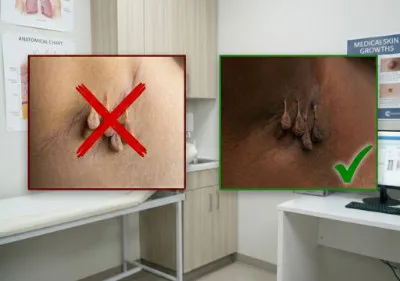
Skin tags are among the most common benign skin growths, yet they are also among the most misunderstood. Because they can vary in size, shape, and location, they are often confused with other skin lesions that carry different risks. This uncertainty is amplified by online advice, social media content, and home-removal trends that rarely explain how clinicians assess skin growths or why caution is warranted in some situations.
A careful understanding is important because decisions about skin tags are not solely about appearance. Accurate identification helps avoid unnecessary worry, while informed guidance reduces the risk of treating the wrong lesion type or choosing an unsuitable removal method. Misconceptions can lead people either to ignore changes that should be checked or to act on reassurance that is not clinically sound.
This guide explains where common myths originate, what medical evidence shows, and how to evaluate skin tag information with confidence. It covers safety, health associations, removal considerations, and when reassurance is enough, all in clear, plain English aligned with UK clinical practice.
Our Preferred Partner - Jovena Fractional Plasma
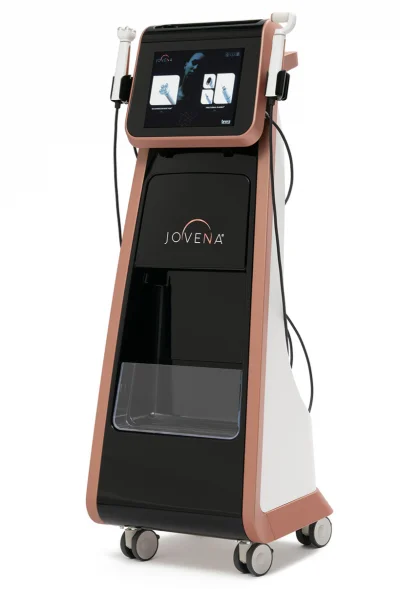
Skin tag removal may be a straightforward procedure, but how the tissue is treated can make a meaningful difference to both outcomes and patient experience. That’s where fractional plasma technology on the Jovena device offers a more considered approach.
By delivering controlled plasma energy in precise micro-points, the treatment works within the upper layers of the skin to target the concern while leaving surrounding tissue largely unaffected. This supports a natural repair response, encouraging cleaner healing and more refined results over time.
For clinics, Jovena provides a versatile platform that extends beyond simple lesion removal into broader skin renewal and resurfacing treatments. For patients, it offers a precise, controlled option that aligns removal with overall skin quality - not just resolution of the concern.
Why Skin Tag Myths Are So Common
Skin tag myths are widespread because these growths are extremely common, visually varied, and often discussed outside a clinical setting. When a reliable medical context is missing, assumptions and misinformation tend to fill the gap.
Confusion between harmless and harmful skin growths
- Skin tags are frequently mistaken for other skin lesions such as moles, warts, or seborrhoeic keratoses, some of which do require monitoring or treatment.
- Many benign skin growths share overlapping features, including colour, texture, or location, which can make self-identification difficult.
- Without training, it is not always obvious which features are clinically relevant and which are not, leading to unnecessary concern.
This overlap explains why reassurance from a qualified professional is often helpful, even when the growth itself is harmless.
The role of online advice and social media
- Online content often presents simplified or absolute claims, such as stating that all skin tags are dangerous or that removal is always easy and risk-free.
- Short videos and personal testimonials rarely explain diagnostic uncertainty, skin type variation, or potential risks.
- Algorithms tend to amplify dramatic or alarming messages, thereby distorting perceptions of how common and low-risk skin tags are.
As a result, people may encounter confident advice that lacks clinical balance or context, making it harder to know what to trust.
Skin tag myths persist because common, harmless conditions are often discussed without medical framing. Understanding why confusion arises helps separate reassurance from genuine reasons to seek advice.
Myth: Skin Tags Are Dangerous Or Cancerous
One of the most persistent skin tag myths is the belief that they are dangerous or a sign of skin cancer. This misunderstanding is common and often causes unnecessary anxiety.
What benign actually means in medical terms
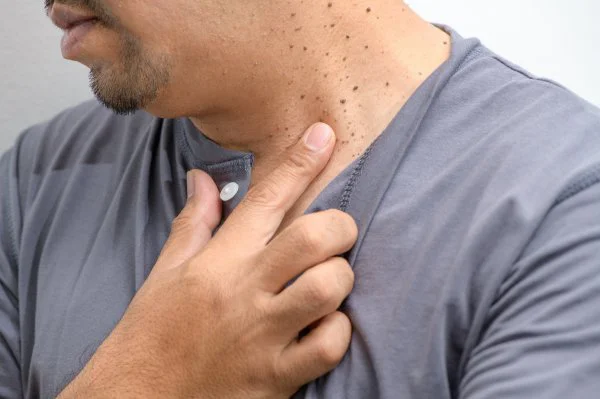
- Skin tags are classified as benign growths, meaning they do not behave like cancer and do not spread to other tissues.
- They are made up of normal skin components and typically grow slowly, if at all.
- In clinical practice, skin tags are not considered precancerous and do not progress to cancer over time.
The benign label relates to biological behaviour, not appearance, which is why skin tags can look concerning despite being medically harmless.
When should a skin growth be checked?
- Although skin tags themselves are not cancerous, not every raised or pedunculated lesion is a skin tag.
- Changes such as rapid growth, bleeding without trauma, persistent pain, or marked colour change warrant professional assessment.
- Checking a lesion prior to removal ensures that the diagnosis is correct and that appropriate management is selected.
This step concerns accuracy and safety rather than suspicion, and it is a routine component of responsible care.
Skin tags are not dangerous and do not indicate cancer, but accurate identification still matters. Knowing when reassurance
Myth: Skin Tags Are Contagious
Some people worry that skin tags can spread through skin-to-skin contact. This belief is understandable, but it does not reflect the mechanisms underlying skin tag development.
Why skin tags are not infections
- Skin tags are not caused by bacteria, viruses, or fungi.
- They develop from normal skin tissue and are linked to friction, skin folds, and individual biological factors.
- Because no infectious agent is involved, skin tags cannot be transmitted from one person to another.
This means that everyday contact, sharing towels, or close personal contact does not affect whether someone develops skin tags.
Why the myth persists
- Skin tags are often confused with warts, which are caused by a virus and can spread.
- They commonly appear in clusters, particularly in areas where skin rubs together, giving the impression that they are spreading.
- Observing new skin tags develop near existing ones can reinforce the perception of contagion, even though the process is noninfectious.
Understanding this distinction helps reduce unnecessary concern about transmission.
Skin tags are not contagious and do not spread through contact. Their appearance in groups reflects shared risk factors rather than infection.
Myth: You Can Safely Remove Skin Tags At Home
Advice about home skin tag removal is widely shared, often framed as simple, low-risk, and cost-saving. In practice, removing skin tags without proper assessment or sterile technique carries avoidable risks.
Common home remedies and why they appeal
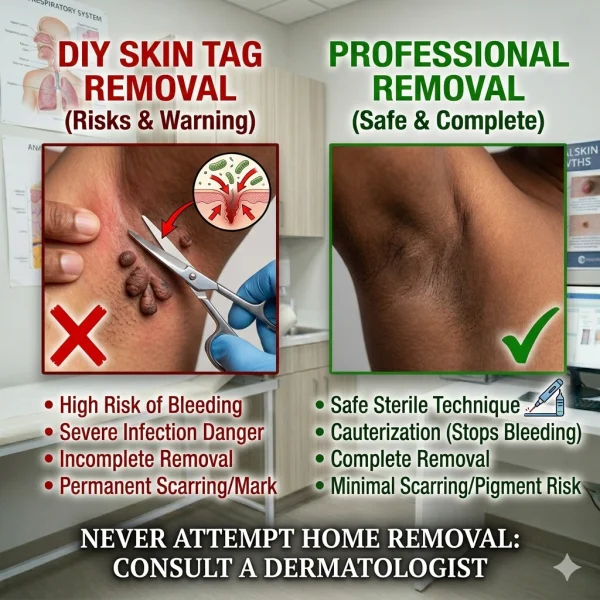
- Popular methods include tying off the skin tag, cutting it with scissors, using freezing sprays, or applying creams marketed online.
- These approaches appeal because they appear quick, inexpensive, and easy to do without medical input.
- Online demonstrations often present uncomplicated cases and do not reflect the range of skin types, locations, or lesion types encountered in clinical practice.
The simplicity presented in these examples can be misleading, particularly when important safety steps are omitted.
Medical risks of DIY removal
- Without a professional assessment, the lesion may not be a skin tag, which could lead to inappropriate treatment.
- Cutting or tying off a lesion can cause significant bleeding, infection, or delayed healing, especially in areas with a good blood supply.
- Pigment changes and scarring are more likely when removal is poorly controlled, particularly in darker skin tones.
For these reasons, clinicians advise against home removal, even when the skin tag itself appears small or straightforward.
While home remedies are often presented as harmless, they overlook the need for accurate diagnosis and safe technique. Professional removal prioritises both safety and appropriate aftercare.
Myth: Skin Tags Always Mean Something Is Wrong With Your Health
It is common to worry that skin tags are a sign of an underlying medical problem. While skin tags can be associated with certain health factors, they are also very common among otherwise healthy individuals.
What associations really mean
- Skin tags are more frequently observed in areas of friction, such as the neck, underarms, and groin, regardless of overall health status.
- Studies have shown associations between multiple skin tags and factors such as weight, insulin resistance, pregnancy, and hormonal change.
- An association does not imply causation or diagnosis; it simply describes a pattern observed across populations.
For most people, the presence of one or a few skin tags does not indicate illness or disease.
When further health checks may be sensible
- A higher number of skin tags, particularly if they appear suddenly or alongside other symptoms, may prompt a GP to consider a broader health context.
- This does not imply that a serious problem is expected; rather, skin findings can sometimes co-occur with other routine health indicators.
- Any decision to investigate further is based on the whole picture, including personal and family history.
In this way, skin tags are rarely a cause for alarm but can occasionally prompt a general health review.
Skin tags are common and usually reflect normal variation rather than poor health. Understanding the difference between association and diagnosis helps prevent unnecessary worry.
Myth: Removal Is Purely Cosmetic And Never Justified
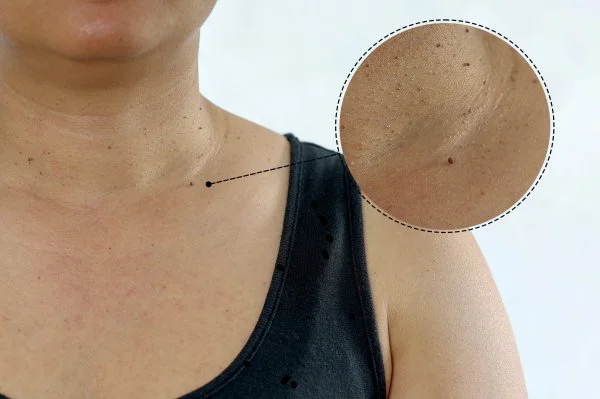
Skin tag removal is often described as cosmetic, which can lead people to view seeking treatment as trivial or inappropriate. In reality, there are practical and medical reasons why removal may be reasonable for some individuals.
Practical reasons people choose removal
- Skin tags can catch on clothing, jewellery, or glasses, leading to repeated irritation or bleeding.
- Tags in areas such as the eyelids, neck, or groin may interfere with daily activities or personal care.
- Ongoing friction can cause inflammation, making an otherwise harmless lesion uncomfortable.
These considerations relate to comfort and quality of life rather than appearance alone.
NHS vs private care in the UK
- In the UK, skin tag removal is usually classed as cosmetic and not funded by the NHS unless there is a clear medical indication.
- Private clinics assess suitability, confirm diagnosis, and discuss risks before offering treatment.
- The cost of private removal reflects clinical assessment, practitioner training, sterile equipment, and aftercare.
Understanding this distinction helps set realistic expectations about access and funding.
Skin tag removal is not automatically unnecessary or frivolous. Decisions are often based on comfort, repeated irritation, or practical impact rather than aesthetics alone.
Myth: All Removal Methods Are The Same
Skin tag removal is sometimes described as a single, simple procedure. In practice, the method used can influence healing, comfort, and the risk of side effects, which is why clinicians choose techniques carefully.
Overview of professional removal options
- Snip excision involves removing the skin tag with sterile scissors or a blade and is commonly used for small, narrow-based tags.
- Electrosurgery uses controlled heat to remove the tag and seal blood vessels, thereby reducing bleeding in some cases.
- Cryotherapy freezes tissue, causing it to gradually separate; however, it is not suitable for all sites or skin types.
The choice of method depends on factors such as size, location, blood supply, and surrounding skin.
Skin tone and healing considerations
- People with darker skin tones may be at higher risk of pigmentary changes after removal, regardless of the method used.
- Some techniques are more predictable than others regarding healing and cosmetic outcomes.
- Practitioner experience plays a significant role in minimising scarring, infection, and unwanted pigment changes.
This is why a one-size-fits-all approach is avoided in responsible clinical practice.
Skin tag removal methods are not interchangeable. Appropriate technique selection helps balance safety, healing, and cosmetic considerations.
How To Approach Skin Tag Information With Confidence
After encountering conflicting advice, it can be difficult to know what to believe about skin tags. A structured, evidence-led approach helps reduce uncertainty and supports calm, informed decision-making.
How to spot trustworthy advice
- Reliable information explains what is known, what varies, and what depends on individual factors, rather than offering absolute claims.
- Credible sources are clear about limits, risks, and uncertainty, and avoid promising outcomes or quick fixes.
- Medical guidance is generally consistent across reputable UK sources, even when the wording differs.
If advice relies heavily on personal success stories or dramatic warnings without a clinical context, it is unlikely to be balanced.
Deciding what to do next
- For many people, reassurance alone is sufficient once they understand what a skin tag is and why it has appeared.
- If there is uncertainty about diagnosis, symptoms such as bleeding or discomfort, or questions about removal, a professional assessment can clarify options.
- Preparing a few clear questions in advance can make any consultation more focused and reassuring.
The aim is not to rush into treatment, but to determine whether any action is warranted.
Confidence comes from clear, proportionate information rather than certainty or urgency. When skin tag advice is grounded in a medical context, decisions become simpler and less stressful.
Conclusion
Skin tag myths tend to thrive in contexts of uncertainty, particularly when harmless skin growths are mistaken for conditions that require monitoring. The most helpful thing to remember is that skin tags are typically benign and non-contagious, but accurate identification still matters, especially if a lesion is changing, bleeding without an obvious cause, or painful.
It is also prudent to exercise caution when moving home. The main risks are not only scarring or infection, but also treating the wrong type of lesion without realising. If removal is being considered, the choice of method and practitioner experience can make a meaningful difference in healing and the risk of pigment change, particularly in sensitive areas and darker skin tones.
If you are unsure, a simple next step is to use a trusted UK health source for reassurance, or discuss your options with a qualified clinician who can confirm what the growth is and whether any treatment is appropriate for you.
Your Skin Tag Removal Questions
Real Questions from Real People — Answered
Straightforward answers to the questions people like you are asking right now about Skin Tag Removal.

Be the first to ask a Skin Tag Removal question.
Click here to ask your own question.
Find A Verified Clinic
Trusted Skin Tag Removal Experts, Local to You
Easily connect with qualified, verified professionals for safe, reliable treatment.

Renew Medi Clinic
Renew Medi Clinic is a medical-led aesthetic and regenerative clinic in Brighton, offering personalised treatments focused on natural results, skin health and long-term wellbeing.

Dr Vahe Clinic
Dr Vahe Clinic is a doctor-led medical, surgical, aesthetic and longevity clinic in Chelsea, London, providing personalised, evidence-based treatments focused on safety and natural results.
To find a Skin Tag Removal clinic near you, please click here.
Grow Your Practice with Skin Tag Removal
Whether you are already using Skin Tag Removal or considering adding it to your treatment menu, here is how to make the most of it.

Are you a practitioner? If you'd like to link your practice to Skin Tag Removal and become part of ConsultingRoom.com, you can register as a verified specialist using the information on our specialist registration page.
Once verified, your profile can feature Skin Tag Removal alongside the other treatments, conditions and products you support, helping patients searching ConsultingRoom.com find you directly.