

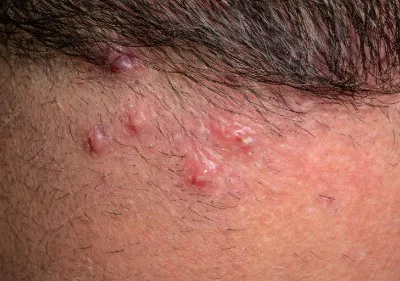
Scalp acne is often less straightforward than acne on the face. It can be harder to see, easier to mistake for another scalp condition, and more difficult to treat because hair, oil, sweat, and product build-up all affect the area differently. Some people notice tenderness before they notice visible spots. Others are unsure whether they are dealing with acne at all, especially if the scalp is also itchy, flaky, or irritated.
That uncertainty matters because different scalp conditions can look similar but need different treatment approaches. Using the wrong products may add further irritation, while delaying assessment can make persistent inflammation harder to manage. For people researching treatment options, it is also important to understand where basic scalp care ends and where medical or professional support may become more relevant.
This guide explains what scalp acne is, what commonly causes it, how to recognise the usual symptoms, and how it compares with conditions such as folliculitis or seborrhoeic dermatitis. It also outlines practical steps that may help reduce breakouts, the medical treatments used for persistent cases, and the role that professional clinic treatments may sometimes play. The aim is to give you a clear, measured overview so you can decide what information is relevant to your situation and what next step, if any, makes sense.
The first step is to understand what scalp acne is and why it can present differently from acne elsewhere.
Our Preferred Partner - LDM® Triple

LDM® Triple is a non-invasive ultrasound-based treatment used in aesthetic and dermatology clinics to support skin health, tissue regulation, and the Treatment of Acne-Prone or inflamed skin. This guide is for anyone trying to understand what it is, how it works, and whether it may be relevant to their skin concern.
- What LDM® Triple is, and how it differs from standard cosmetic ultrasound
- Which skin concerns it is commonly used for, including Acne and early ageing-related concerns
- What to consider around suitability, comfort, risks, pricing and provider choice
What Is Scalp Acne?
Scalp acne refers to spots or inflamed bumps that develop on the scalp, usually within the hair follicles. Like acne elsewhere on the body, it occurs when oil, dead skin cells, and bacteria clog follicles and trigger inflammation.
Although it shares many features with facial acne, scalp acne can feel different because it develops beneath hair and in an area where oil production and product build-up can easily accumulate.
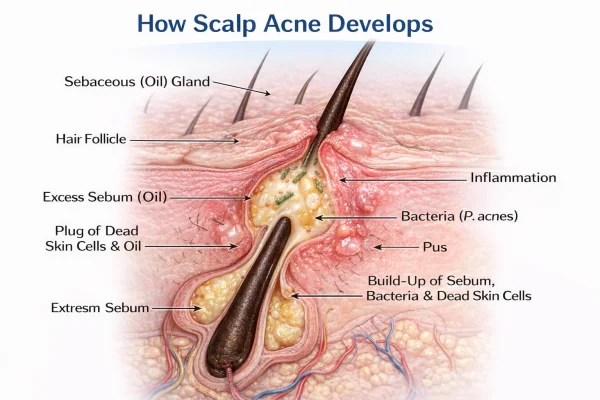
How scalp acne develops
Scalp acne forms through the same basic process as acne on other parts of the body.
-
Hair follicles become blocked. Oil produced by sebaceous glands mixes with dead skin cells and blocks the follicle opening.
-
Bacteria multiply within the blocked follicle. Normally harmless bacteria on the skin can contribute to inflammation when trapped in the pore.
-
Inflammation develops. This can lead to small bumps, tender spots, or, occasionally, deeper, inflamed lesions.
The scalp contains a high density of hair follicles and oil-producing glands, which can make it more prone to blocked follicles under certain conditions.
How scalp acne differs from facial acne
Although the underlying process is similar, scalp acne often presents slightly differently from facial acne.
-
Spots may be harder to see. Hair can conceal early lesions until they become tender or inflamed.
-
Bumps may feel deeper or more painful. Pressure from brushing, washing, or resting the head can make them more noticeable.
-
Product build-up can play a larger role. Haircare products, dry shampoo, or oils may accumulate near the scalp, contributing to blocked follicles.
Because of these differences, some people first notice scalp acne through sensitivity or soreness rather than visible spots.
When scalp spots may not be acne
Not every bump on the scalp is caused by acne. Several other scalp conditions can look similar, including:
-
Folliculitis, which is inflammation or infection of hair follicles
-
Seborrhoeic dermatitis, which causes redness and flaking
-
Scalp irritation from hair products or friction
If scalp bumps are persistent, spreading, or painful, a healthcare professional or dermatologist can help confirm the diagnosis and recommend appropriate treatment.
In most cases, however, scalp acne is manageable once the underlying causes are understood and addressed.
What Causes Acne On The Scalp?
Scalp acne usually develops when hair follicles on the scalp become blocked or irritated, allowing inflammation to develop beneath the skin. The process is similar to acne elsewhere on the body, although several scalp-specific factors can influence when breakouts occur.
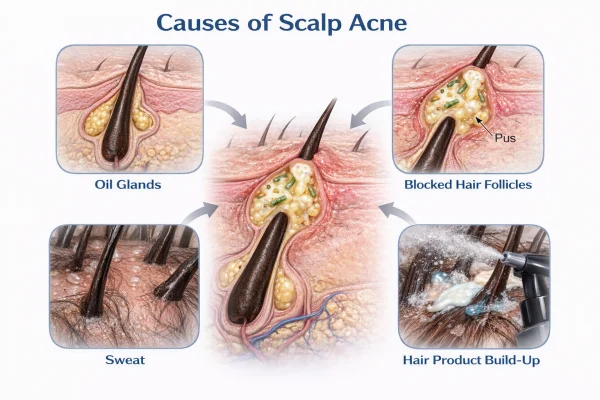
Understanding these causes can help people identify triggers and make practical adjustments to their scalp and hair care routines.
Oil production and blocked follicles.
The scalp contains many sebaceous glands that produce sebum to protect the skin and hair.
When this natural oil combines with dead skin cells, it can block hair follicles and lead to acne.
-
Excess sebum production. Some people naturally produce more oil, which can increase the likelihood of blocked follicles.
-
Dead skin cell build-up. When skin cells are not shed effectively, they may accumulate and clog pores.
-
Inflammation within the follicle. Bacteria present on the skin can trigger an inflammatory response once the follicle becomes blocked.
These processes are part of the normal acne pathway seen on the face, chest, and back as well.
Hair products and scalp build-up
Haircare products can sometimes contribute to scalp breakouts, particularly when they accumulate near the roots.
-
Heavy styling products. Waxes, pomades, oils, and thick conditioners may sit on the scalp and block follicles.
-
Dry shampoo residue. Frequent use without thorough cleansing can lead to product build-up.
-
Occlusive ingredients. Some hair products contain oils or silicones that may trap debris around follicles.
Many modern products are designed to minimise pore blockage, but product build-up can still occur when multiple styling products are used together.
Sweat, friction, and environmental factors
Lifestyle factors can also influence scalp breakouts.
-
Sweating. Sweat can mix with oil and debris on the scalp, creating conditions that encourage follicle blockage.
-
Friction. Helmets, hats, or tight headwear may trap heat and increase irritation around hair follicles.
-
Exercise or hot environments. These conditions may increase oil production and perspiration.
These factors do not cause acne directly but may contribute to the environment that leads to follicle blockage or inflammation.
Hormonal influences
Hormones can affect how much oil the skin produces.
-
Puberty and adolescence commonly increase sebum production.
-
Hormonal fluctuations in adults, particularly around menstrual cycles, may contribute to acne flare-ups.
-
Hormonal conditions, such as polycystic ovary syndrome, can also influence acne patterns.
Hormonal influences are not specific to the scalp but may contribute to breakouts in multiple areas of the body.
Certain medications or underlying conditions
Some medications can increase the likelihood of acne.
Examples may include:
-
steroid medications
-
Lithium is used for mood disorders
-
certain treatments used for epilepsy
These medications can affect oil production or skin inflammation, which may contribute to the development of acne.
If scalp breakouts appear suddenly after starting a new medication, it can be helpful to discuss this with a healthcare professional.
Scalp acne usually results from a combination of oil production, follicle blockage, and local irritation, rather than a single cause. Identifying contributing factors such as product build-up, sweating, or hormonal changes can help guide appropriate care.
Scalp Acne Vs Other Scalp Conditions
Spots on the scalp are not always caused by acne. Several common scalp conditions can look similar, making self-diagnosis difficult and sometimes leading to the wrong treatment.
Understanding the differences helps ensure that care is appropriate and avoids unnecessary irritation or delays in improvement.
Folliculitis
Folliculitis is one of the most commonly confused conditions.
-
What it is. Inflammation or infection of hair follicles is often caused by bacteria or irritation.
-
How it appears. Small red or pus-filled bumps that may appear in clusters and can feel itchy or tender.
-
Common triggers. Shaving, friction, sweating, or occlusive products.
How it differs from scalp acne:
-
Folliculitis often presents as more uniform, surface-level bumps, rather than a mix of blackheads, whiteheads, and deeper lesions.
-
It may develop more quickly and can sometimes spread if the underlying cause is not addressed.
If folliculitis is suspected, treatment may focus more on antibacterial or antiseptic approaches, rather than standard acne treatments.
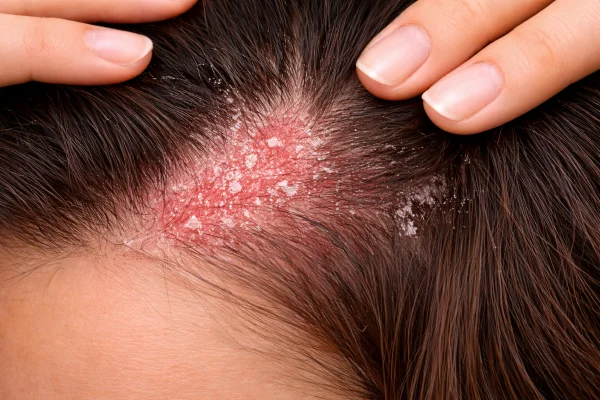
Seborrhoeic dermatitis and dandruff
Seborrhoeic dermatitis is a common scalp condition linked to oil production and yeast overgrowth.
-
What it is. A condition that causes flaking, redness, and irritation on the scalp.
-
How it appears. Greasy or dry flakes, sometimes with redness and mild inflammation.
-
Associated symptoms. Itching, scaling, and sensitivity rather than distinct spots.
How it differs from scalp acne:
-
Seborrhoeic dermatitis is primarily a condition of flaking and irritation, not blocked follicles.
-
It may occasionally coexist with acne, making the scalp feel both flaky and spot-prone.
Treatment typically involves medicated shampoos or antifungal treatments, rather than acne-focused products.
Irritation and contact reactions
Some scalp bumps are caused by irritation rather than acne.
-
What it is—a reaction to haircare products, dyes, or environmental factors.
-
How it appears. Redness, sensitivity, and sometimes small bumps.
-
Common triggers. New products, fragrances, or chemical treatments.
How it differs from scalp acne:
-
Irritation often appears shortly after exposure to a new product.
-
The scalp may feel more sensitive or burning, rather than producing typical acne lesions.
Identifying and removing the trigger is usually the first step in management.
When to seek medical assessment
It can be helpful to seek professional advice if the diagnosis is uncertain or symptoms persist.
Consider a consultation if:
-
bumps are painful, persistent, or worsening
-
There is no improvement with over-the-counter care
-
lesions appear to be spreading or becoming inflamed
-
There are concerns about scarring or hair thinning
A healthcare professional can assess the scalp and recommend treatment based on the underlying cause.
While scalp acne is common, not all scalp bumps are acne. Distinguishing between acne, folliculitis, and other conditions allows for more appropriate and effective treatment.
Common Symptoms Of Scalp Acne
Scalp acne can present in several ways, depending on how deeply the hair follicles are affected and the level of inflammation. Because the scalp is covered by hair, symptoms are often noticed through sensation rather than visibility.
Recognising these signs can help identify scalp acne earlier and guide appropriate care.
Typical signs and sensations
Most cases of scalp acne involve a combination of visible and sensory symptoms.
-
Small bumps or spots on the scalp. These may be red, inflamed, or contain pus.
-
Tenderness or soreness. Spots can feel uncomfortable, particularly when brushing hair or lying down.
-
Itching or sensitivity. Some people notice irritation before visible spots appear.
-
Clusters of lesions. Breakouts may occur in specific areas rather than evenly across the scalp.
Because the scalp is less visible, people often become aware of acne when they touch the area or experience discomfort, rather than seeing the spots directly.
Deeper or more inflamed lesions
In some cases, scalp acne may develop into more pronounced or persistent lesions.
-
Nodules or cyst-like bumps. These are larger and deeper and can be more painful.
-
Increased inflammation. The surrounding skin may feel warm or swollen.
-
Longer healing time. Deeper lesions may take longer to settle compared to surface-level spots.
These types of lesions are more likely to require medical assessment or prescription treatment, particularly if they recur.
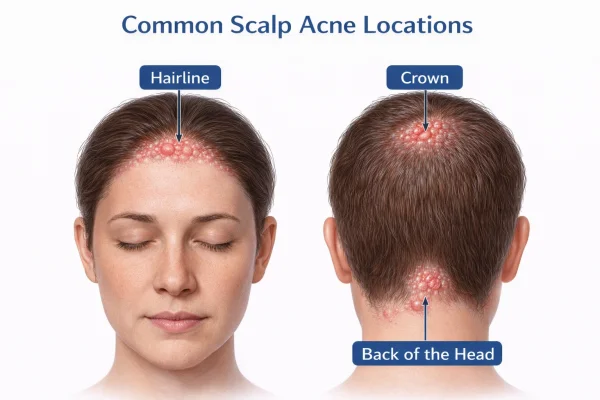
Areas where scalp acne commonly appears
Scalp acne can occur anywhere, but certain areas may be more prone to it.
-
Hairline. Often influenced by hair products or contact with the skin.
-
Crown or top of the scalp—areas with higher oil production.
-
Back of the head. It can be affected by sweat, friction, or pressure.
Patterns can vary between individuals, and identifying where breakouts occur may help highlight contributing factors.
When symptoms may indicate a more significant issue
While mild scalp acne is common, certain symptoms may warrant further assessment.
-
Persistent or worsening pain
-
Large or spreading lesions
-
Signs of infection, such as increased redness or swelling
-
Changes in hair density, although uncommon, may warrant review
Early assessment can help reduce the risk of prolonged inflammation or complications.
Practical Steps That May Help Reduce Scalp Breakouts
For many people, mild scalp acne can improve with consistent scalp care and small adjustments to daily habits. These steps focus on reducing oil build-up, limiting irritation, and supporting the natural balance of the scalp.
While these measures may not resolve more persistent or severe acne, they often form a useful foundation before considering medical treatment.
Scalp hygiene and cleansing routine
Keeping the scalp clean without over-irritating it is an important starting point.
-
Wash the scalp regularly. This helps remove excess oil, sweat, and debris that can clog follicles.
-
Use a gentle, non-irritating shampoo. Products designed for sensitive or blemish-prone skin may be more suitable.
-
Rinse thoroughly. Residual product can accumulate near the roots and contribute to the build-up.
-
Cleanse after sweating. Washing the scalp after exercise or heat exposure may help reduce irritation.
Washing too frequently can sometimes increase dryness or sensitivity, so it is usually best to find a balanced routine suited to individual hair type and lifestyle.
Choosing appropriate haircare products
Haircare choices can influence how easily follicles become blocked.
-
Look for lighter formulations. Products labelled as non-comedogenic or lightweight may be less likely to clog follicles.
-
Limit heavy oils and waxes near the scalp. These can sit on the skin and trap debris.
-
Apply conditioner mainly to mid-lengths and ends. This reduces residue at the roots.
-
Be cautious with dry shampoo. Occasional use is usually fine, but build-up may occur if not washed out regularly.
If breakouts persist, reviewing haircare ingredients and simplifying routines can be a helpful step.
Managing sweat and friction
Reducing environmental triggers can support scalp health.
-
Remove sweat promptly. Showering or rinsing the scalp after exercise can help prevent build-up.
-
Limit prolonged pressure or friction. Tight headwear, helmets, or frequent contact may irritate follicles.
-
Keep fabrics clean. Hats, pillowcases, and headbands can accumulate oil and bacteria over time.
These adjustments are particularly relevant for people with active lifestyles or who regularly experience heat.
Avoiding picking or irritation
How you handle scalp lesions can influence their healing.
-
Avoid picking or scratching. This may increase inflammation and the risk of scarring.
-
Be gentle when brushing or styling. Reducing pressure on affected areas can help minimise discomfort.
-
Use clean tools. Hairbrushes and accessories should be cleaned regularly to reduce build-up.
Although it can be tempting to interfere with painful spots, leaving them undisturbed generally supports better healing.
When self-care may not be enough
If scalp acne does not improve with these steps, further treatment may be needed.
-
Persistent or painful breakouts may require prescription treatments
-
Recurrent inflammation may indicate an underlying condition, such as folliculitis
-
Worsening symptoms should be assessed to avoid prolonged irritation
A healthcare professional can help determine whether additional treatment is appropriate.
Practical steps such as gentle cleansing, appropriate product use, and reducing irritation can often help manage mild scalp acne. These approaches focus on supporting the scalp environment rather than treating individual spots in isolation.
Medical Treatments For Persistent Scalp Acne
When scalp acne does not improve with self-care alone, medical treatment may be recommended. The approach usually depends on the severity of symptoms, how long the condition has been present, and whether inflammation is ongoing.
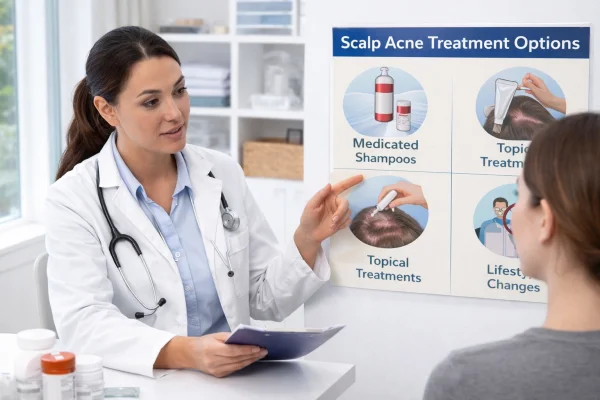
In the UK, treatment typically follows a stepwise approach, starting with topical options and progressing to oral medication if needed.
Topical treatments
Topical treatments are often the first step for mild to moderate scalp acne, although application can be less straightforward due to hair coverage.
-
Benzoyl peroxide. Helps reduce bacteria and inflammation within blocked follicles.
-
Salicylic acid. Supports exfoliation by removing dead skin cells from the scalp surface.
-
Topical antibiotics. It may be used short-term to reduce inflammation and bacterial activity.
-
Topical retinoids. Help regulate skin cell turnover and reduce follicle blockage.
These treatments are usually applied to the affected areas rather than individual spots. On the scalp, this may involve lotions, gels, or medicated washes to facilitate distribution.
A healthcare professional can advise on how to apply these safely without irritating, particularly in areas with dense hair.
Oral medications
For more persistent or widespread scalp acne, oral treatments may be considered.
-
Oral antibiotics. Commonly used for inflammatory acne to reduce bacteria and inflammation. These are typically prescribed for a limited duration and reviewed regularly.
-
Hormonal treatments. In some cases, particularly in adult women, hormonal therapies may help regulate oil production.
-
Isotretinoin. A specialist treatment for severe or treatment-resistant acne, usually prescribed under dermatology supervision.
Treatment courses are often reviewed after around 12 weeks to assess response and adjust the plan if needed, in line with UK clinical guidance.
Because oral treatments affect the body more broadly, they require careful assessment, monitoring, and discussion of potential side effects.
Considerations for scalp-specific treatment
Treating acne on the scalp can involve additional practical considerations.
-
Application methods. Liquids, foams, or washes may be preferred over creams due to easier scalp coverage.
-
Haircare compatibility. Treatments should be used alongside appropriate shampoos to avoid excess irritation or build-up.
-
Consistency. Regular use is important, as improvement may take several weeks to become noticeable.
A tailored approach is often needed, as scalp acne can vary in presentation and response to treatment.
When referral to a specialist may be needed
In some cases, referral to a dermatologist may be appropriate.
This may be considered if:
-
Acne is moderate to severe and not responding to initial treatment
-
There is persistent inflammation or risk of scarring
-
Specialist treatments such as isotretinoin are being considered
Referral pathways in the UK may involve NHS dermatology services or private consultation, depending on individual circumstances.
Medical treatment for scalp acne typically involves a combination of topical and, where needed, oral therapies, tailored to the severity and underlying causes. Professional guidance helps ensure treatment is both effective and appropriate for the individual.
Professional Clinic Treatments That May Help
For some people, scalp acne does not fully respond to skincare or medication alone. In these cases, professional clinic treatments may be considered as part of a broader management plan, particularly where inflammation is persistent or difficult to control.
These treatments are typically used alongside medical advice rather than as a replacement for it, and suitability depends on the individual’s scalp condition and overall skin health.
Professional scalp treatments in aesthetic clinics
Aesthetic and dermatology clinics may offer treatments designed to support the skin’s natural repair processes and reduce inflammation.
-
Superficial chemical exfoliation. Carefully selected acids may be used to remove dead skin cells and reduce follicle blockage on the scalp surface.
-
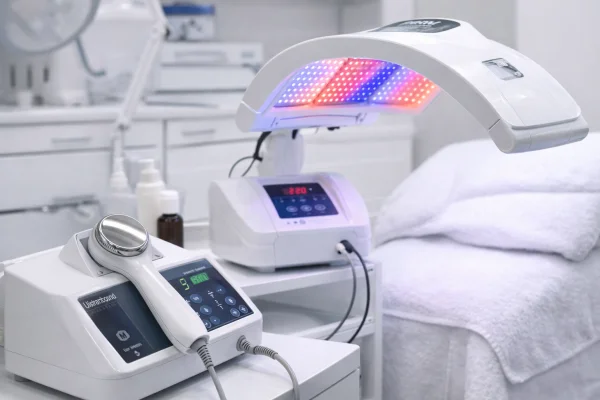
Light-based therapies. LED treatments may help control inflammation and reduce bacterial activity associated with acne.
-
Ultrasound-based treatments such as LDM Triple. These therapies use dual-frequency ultrasound to support skin hydration, barrier function, and the regulation of inflammation.
The suitability of these treatments for the scalp depends on factors such as hair density, sensitivity, and the extent of the acne, so a professional assessment is important.
What to expect from a consultation
Before any clinic-based treatment, a consultation is usually carried out to assess the scalp and discuss appropriate options.
This may include:
-
Assessment of the scalp and hair follicles to confirm the diagnosis
-
Review of medical history and current treatments
-
Discussion of triggers, such as haircare products or lifestyle factors
-
A personalised treatment plan, which may combine skincare, medical treatment, and clinic procedures
The aim is to ensure that any treatment offered is appropriate, safe, and aligned with the individual’s needs, rather than applying a standard approach.
Suitability and limitations
Clinic treatments may be helpful in certain situations, but they are not always necessary.
-
They may be considered when topical or oral treatments have not achieved sufficient improvement.
-
They are often used to support overall skin health rather than to replace medical treatment directly.
-
Results can vary, and multiple sessions may be recommended depending on the approach.
It is also important to recognise that not all scalp conditions will benefit from aesthetic treatments, particularly if the underlying issue is not acne.
Professional treatments can play a supportive role in managing scalp acne, particularly where inflammation or recurrence remains a concern. A consultation helps determine whether these options are appropriate and how they fit into a wider treatment plan.
Your Acne Questions
Real Questions from Real People — Answered
Straightforward answers to the questions people like you are asking right now about Acne.

Do u use obaji products.
Do you provide treatments with obaji products
My son suffers with acne.
My son suffers with acne, we have tried a lot of different treatments but nothing seems to work, I would like to find out about prices for consultation and possible treatment
To view all the Acne questions, please click here.
Or href="/questions/?Treatment_Sent=Acne">click here to ask your own question.
Find A Verified Clinic
Trusted Acne Experts, Local to You
Easily connect with qualified, verified professionals for safe, reliable treatment.


Angela Lord Aesthetics and Wellness
Welcome to Angela Lord Aesthetics & Wellness, my private, registered home clinic in Preston, Paignton. Serving Torbay, Marldon and wider Devon, and national.
The Elite Clinic
The Elite Clinic is a nurse-led aesthetics and skin clinic in Knowle, Solihull, offering advanced skin rejuvenation, laser treatments and personalised cosmetic care.
To find a Acne clinic near you, please click here.
Grow Your Practice with Acne
Whether you are already using Acne or considering adding it to your treatment menu, here is how to make the most of it.

Are you a practitioner? If you'd like to link your practice to Acne and become part of ConsultingRoom.com, you can register as a verified specialist using the information on our specialist registration page.
Once verified, your profile can feature Acne alongside the other treatments, conditions and products you support, helping patients searching ConsultingRoom.com find you directly.