

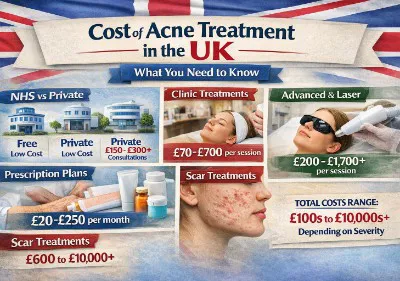
Acne treatment costs in the UK can vary significantly, making it difficult to know what is reasonable or necessary. Some people begin with pharmacy treatments, while others move towards prescription medication or clinic-based care. Costs can build gradually over time, rather than appearing as a single fixed expense, which adds to the uncertainty.
Part of the confusion comes from how acne is treated. It is not usually managed with a single product or a single appointment, but through a combination of approaches that may change depending on how the skin responds. NHS care follows structured clinical pathways, while private treatment offers more flexibility in access and treatment choice. Without clear guidance, it can be difficult to compare these options meaningfully.
Understanding costs is not just about budgeting. It also helps you assess whether a treatment plan is proportionate, appropriate, and sustainable. This guide explains how acne treatment costs are structured in the UK, what influences pricing, and how different pathways compare. It is intended to support clear, balanced decision-making rather than promote any specific approach.
To begin, it helps to understand why acne treatment costs vary and what is typically included in the overall price.
Our Preferred Partner - LDM® Triple
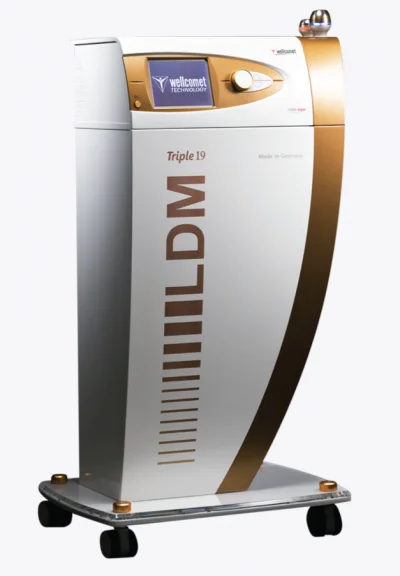
LDM® Triple is a non-invasive ultrasound-based treatment used in aesthetic and dermatology clinics to support skin health, tissue regulation, and the Treatment of Acne-Prone or inflamed skin. This guide is for anyone trying to understand what it is, how it works, and whether it may be relevant to their skin concern.
- What LDM® Triple is, and how it differs from standard cosmetic ultrasound
- Which skin concerns it is commonly used for, including Acne and early ageing-related concerns
- What to consider around suitability, comfort, risks, pricing and provider choice
Cost Of Acne Treatment In The UK
The cost of acne treatment in the UK varies widely, depending on severity, treatment type, and whether care is accessed through the NHS or privately. Understanding what sits behind these costs can help you compare options more accurately and avoid unexpected expenses.
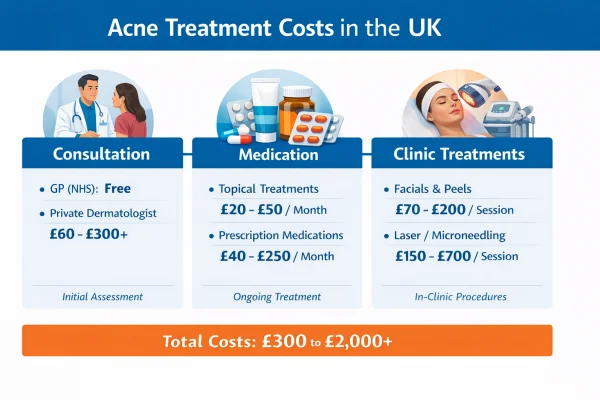
Why acne treatment costs vary so much
Acne is not a single-condition pathway, and treatment is usually adjusted over time:
-
Severity matters: mild acne may respond to topical treatments, while moderate to severe acne often requires prescription medication or specialist care
-
Type of acne: Inflammatory or hormonal acne can require longer or more complex treatment plans
-
Duration of treatment: most treatments are reviewed at around 12 weeks, and some continue for several months
-
Care setting: NHS treatment follows structured guidelines, while private care offers faster access and broader options
This variation means two people with acne may follow very different treatment pathways, even if their symptoms appear similar.
What is typically included in acne treatment costs
When comparing prices, it is important to look beyond the headline figure:
-
Initial consultation: assessment, diagnosis, and treatment planning
-
Follow-up appointments: used to review progress and adjust treatment
-
Prescription costs: topical treatments, oral antibiotics, or other medications
-
In-clinic treatments: such as chemical peels, LED therapy, or ultrasound-based options like LDM Triple
-
Ongoing skincare: maintenance products to support treatment and prevent recurrence
Some clinics present costs per session, while others recommend a course of treatments. This can make direct comparison difficult without understanding what is included.
Hidden or ongoing costs to be aware of
Acne is often managed over time rather than treated once:
-
Repeat prescriptions or extended courses of treatment
-
Maintenance treatments after improvement
-
Skincare products recommended alongside medical treatment
-
Additional consultations if treatment needs to be adjusted
Being aware of these factors can help you plan more realistically and avoid starting a treatment that is difficult to sustain.
How to compare acne treatment costs more effectively
A higher price does not always mean better care, but very low-cost options may not include full assessment or follow-up:
-
Check whether the consultation is included or charged separately
-
Ask how many sessions or weeks of treatment are expected
-
Clarify whether prescriptions or products are included
-
Ensure the provider is appropriately qualified for the level of treatment offered
This approach helps you compare like-for-like and focus on value rather than just price.
In practice, the most appropriate treatment is not always the least expensive, but it should be proportionate to your skin’s needs and supported by a clear plan.
Understanding how acne treatment costs are structured makes it easier to choose an approach that is both clinically appropriate and financially manageable.
Acne Treatment Cost Breakdown In The UK
NHS acne treatment offers a structured, evidence-based approach, with costs largely covered, except for standard prescription charges. For many people, it is the first step in managing acne, particularly when symptoms are mild to moderate.
What acne treatments are available on the NHS
Treatment through the NHS follows clinical guidelines and is usually managed by a GP initially:
-
Topical treatments, such as benzoyl peroxide or retinoids, are often used as first-line options
-
Combination treatments: topical retinoids combined with antibiotics to target multiple causes of acne
-
Oral antibiotics: prescribed for inflammatory acne, usually alongside topical treatment
-
Hormonal treatments: considered in some women where acne is linked to hormonal changes
-
Specialist referral: for more severe or treatment-resistant acne, including consideration of isotretinoin
Treatment is typically reviewed after around 12 weeks to assess progress and decide whether to continue, adjust, or escalate care.
Costs of NHS acne treatment
The NHS removes many of the financial barriers to treatment:
-
GP and specialist consultations: provided without direct cost
-
Prescription charges: standard NHS fee in England per item, with exemptions for some groups
-
No cost for referrals, including dermatology appointments if clinically required
For patients in Scotland, Wales, and Northern Ireland, prescriptions are generally free, further reducing ongoing costs.
Limitations of NHS treatment pathways
While NHS care is clinically appropriate and widely accessible, there are practical considerations:
-
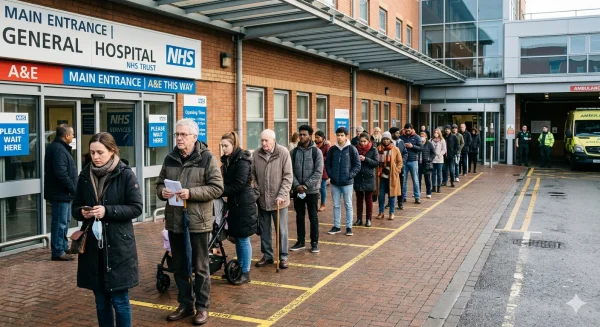
Waiting times: non-urgent dermatology referrals may take several weeks or longer
-
Limited access to aesthetic treatments: procedures such as chemical peels or light therapies are not typically available
-
Focus on medical need: treatment is prioritised based on clinical severity rather than cosmetic concerns
This means some patients choose to explore private options when seeking faster access or a broader range of treatments.
When NHS treatment may be the right starting point
For many people, NHS care provides a suitable and effective foundation:
-
Early-stage or mild acne
-
First-time treatment without previous prescriptions
-
Cases where cost is a primary concern
-
Situations where medical oversight is important before considering other options
If treatment does not lead to sufficient improvement, referral to specialist care is part of the established pathway.
NHS acne treatment offers a structured and cost-effective route, particularly in the early stages, but it may not cover every treatment option or timeframe some patients are looking for.
Private Acne Treatment Costs In The UK
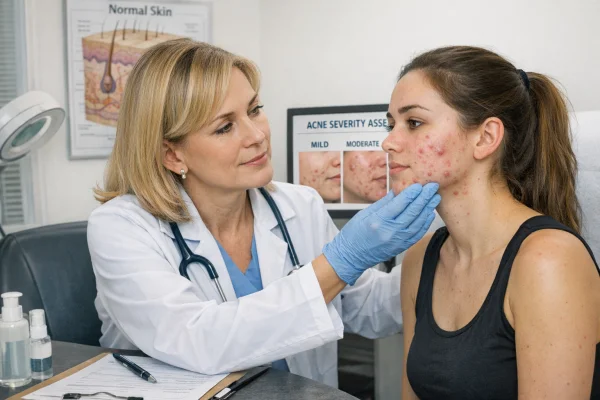
Private acne treatment costs in the UK vary depending on the provider, the type of treatment, and the level of personalisation. Private care often combines medical and aesthetic approaches, offering more flexibility, but it is important to understand how costs are structured before committing.
Typical consultation fees
Private treatment usually begins with a paid consultation:
-
Aesthetic clinic consultations often range from around £50 to £150
-
Private GP consultations: typically between £70 and £200
-
Consultant dermatologist appointments: can range from £150 to £300 or more
The consultation should include a full skin assessment, discussion of treatment options, and a clear plan. In some clinics, the fee may be redeemable against treatment, but this is not always the case.
What to check:
-
Whether the consultation includes a treatment plan
-
If follow-up appointments are included or charged separately
-
The level of qualification and experience of the practitioner
Cost of prescription-based treatments privately
Private prescriptions can increase overall costs, particularly over time:
-
Topical treatments: often £20 to £60 per product
-
Oral antibiotics: relatively low cost, but require follow-up reviews
-
Hormonal treatments: ongoing monthly cost depending on prescription type
-
Isotretinoin: higher overall cost due to specialist supervision, blood tests, and regular monitoring
Follow-up appointments are usually required to assess progress and adjust treatment, which adds to the total cost.
What to consider:
-
Frequency of reviews during treatment
-
Whether monitoring (such as blood tests) is included
-
The expected duration of treatment
Cost of professional clinic treatments
Many private clinics offer in-clinic treatments alongside or instead of prescription care:
-
Chemical peels: typically £60 to £150 per session
-
LED light therapy: around £40 to £100 per session
-
Medical facials or extraction treatments: usually £50 to £120
-
Ultrasound-based treatments such as LDM Triple: often £80 to £150 per session
These treatments are usually recommended as a course, often 4 to 8 sessions, depending on the condition of the skin.
They are generally used to:
-
Support skin healing and reduce inflammation
-
Improve tolerance to topical treatments
-
Complement medical treatment rather than replace it
Course pricing versus pay-per-session
Clinics may present pricing in different ways:
-
Pay-per-session: more flexible, but higher cost per visit
-
Course packages: reduced price per session when multiple treatments are booked in advance
A course can offer better value, but it is important to understand:
-
How many sessions are realistically needed
-
Whether the course is tailored or fixed
-
What happens if your skin improves sooner or requires a change in approach
What influences private treatment costs overall
Several factors will affect the final cost:
-
Complexity and severity of acne
-
Number of treatments required over time
-
Combination of medical and aesthetic approaches
-
Location and reputation of the clinic or practitioner
Private treatment can offer faster access and a broader range of options, but costs can increase if treatment is not clearly planned from the outset.
Private acne treatment offers flexibility and access to a wider range of options, but costs vary depending on the level of care, the treatments selected, and the length of treatment.
Average Price Ranges For Common Acne Treatments
Average acne treatment prices in the UK can help set expectations, but most people will spend across several categories rather than choosing a single option. Costs typically build over time, depending on how the skin responds and whether ongoing treatment is needed.
Topical and skincare costs
For mild acne or as part of a wider plan, skincare is often the starting point:
-
Over-the-counter products: typically £10 to £30 per item
-
Clinic or prescription-strength topicals: around £20 to £60 per product
-
Monthly spend: often between £20 and £100, depending on the number of products used
These products are usually applied daily and may need to be continued long-term to maintain results.
Key considerations:
-
Using multiple active ingredients can increase costs
-
Some products are replaced every 4 to 8 weeks
-
Consistency is essential for effectiveness
Medication costs
Medication is often introduced for moderate to more persistent acne:
-
Oral antibiotics: generally low cost per prescription, but require review appointments
-
Hormonal treatments: ongoing monthly cost, depending on prescription type
-
Isotretinoin (private): can range from approximately £500 to £1,500 or more for a full course, including monitoring and follow-up
Costs vary depending on:
-
Length of treatment
-
Frequency of follow-up
-
Whether tests and consultations are included
In-clinic treatment costs
Professional treatments are usually priced per session or as a course:
-
Chemical peels: £60 to £150 per session
-
LED light therapy: £40 to £100 per session
-
Medical facials or extraction treatments: £50 to £120 per session
-
Ultrasound-based treatments such as LDM Triple: typically £80 to £150 per session
A typical course may involve:
-
4 to 8 sessions initially
-
Maintenance treatments at longer intervals
This means total costs can range from a few hundred to over £1,000 depending on the plan.
Combining treatments: typical total cost ranges
Most acne treatment plans involve a combination of approaches:
-
Mild acne:
-
Skincare and occasional treatments
-
Approximate monthly cost: £20 to £100
-
-
Moderate acne:
-
Prescription treatment plus occasional clinic support
-
Approximate cost over 3 to 6 months: £150 to £600+
-
-
Moderate to severe acne:
-
Ongoing medical treatment, regular reviews, and possible clinic treatments
-
Approximate total cost: £500 to £2,000+ depending on pathway
-
These ranges are indicative and can vary based on individual response and treatment choices.
Looking at average price ranges can help you plan realistically, but most people will follow a layered approach where costs build gradually rather than appearing as a single fixed figure
What Affects The Total Cost Of Acne Treatment
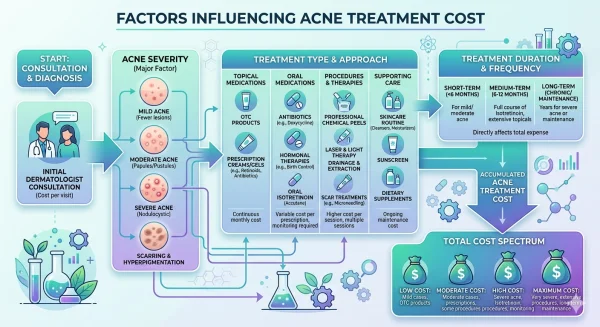
The total cost of acne treatment in the UK is shaped by more than the price of a single product or appointment. It reflects the severity of the acne, how the skin responds, and how consistently treatment is followed over time.
Acne severity and duration
The starting point for cost is usually the severity of acne:
-
Mild acne: often managed with topical treatments and basic skincare
-
Moderate acne: may require prescription medication and closer monitoring
-
Severe acne: typically involves specialist care, longer treatment courses, and more frequent follow-up
Longer-standing or recurrent acne can increase costs, particularly if multiple treatment approaches have already been tried.
Key point: Early and appropriate treatment can reduce the likelihood of needing more intensive and costly interventions later.
Treatment consistency and adherence
How consistently treatment is used can directly affect both results and cost:
-
Stopping treatment early may reduce effectiveness and lead to relapse
-
Restarting treatment can extend the overall duration and increase the expense
-
Some treatments require a gradual introduction to reduce irritation, which can delay visible improvement
Most clinical pathways review progress at around 12 weeks, and completing that period is important before assessing effectiveness.
Combination treatments and personalised plans
Many people require more than one type of treatment:
-
Topical treatments combined with oral medication
-
Medical treatment supported by in-clinic procedures
-
Skincare is used to maintain results after improvement
This layered approach can increase upfront costs, but it is often used to improve outcomes and reduce the risk of recurrence.
Practitioner expertise and clinic type
Costs can vary depending on who provides the treatment:
-
GP-led care: typically lower cost but more generalised
-
Dermatologist-led care: higher cost, with specialist expertise
-
Aesthetic clinics vary widely depending on training, experience, and treatment range
Higher fees may reflect experience, time spent on assessment, and access to a broader range of treatments.
Location and access
Geography can also influence pricing:
-
Clinics in larger cities, particularly London, often charge higher fees
-
Regional clinics may offer lower pricing for similar treatments
-
Access to appointments can affect how quickly treatment begins, which may influence long-term cost
Ongoing maintenance and prevention
Even after improvement, some level of maintenance is often needed:
-
Continued use of topical treatments or skincare
-
Occasional follow-up treatments or reviews
-
Adjustments to treatment during hormonal changes or flare-ups
Planning for this ongoing phase helps avoid unexpected costs later.
The total cost of acne treatment is shaped by severity, consistency, and the type of care chosen, rather than a single fixed price. A structured, well-planned approach is often more cost-effective over time than repeated short-term solutions.
What Affects The Total Cost Of Acne Treatment
When considering the cost of acne treatment in the UK, it helps to understand how results typically develop over time. Most treatments are gradual, and costs should be viewed alongside realistic timelines rather than as an immediate change.
Timeline of improvement
Acne treatments work by influencing how the skin behaves, which takes time:
-
Early phase (first few weeks): Some treatments may cause dryness, irritation, or temporary worsening
-
6 to 8 weeks: early signs of improvement may begin to appear
-
12 weeks: this is the standard review point to assess whether treatment is effective
-
Beyond 12 weeks: continued improvement or adjustment of treatment depending on response
This timeline applies to both prescription treatments and many clinic-based options.
Risk of relapse and ongoing costs
For many people, acne is a recurring condition rather than a one-off issue:
-
Stopping treatment too early can lead to flare-ups
-
Hormonal changes, stress, or skincare changes may trigger recurrence
-
Maintenance treatment is often recommended to keep acne under control
This means costs may continue at a lower level even after improvement, rather than ending completely.
Preventing higher costs later
Early and appropriate treatment can reduce the risk of more complex issues:
-
Untreated or poorly controlled acne can lead to scarring or pigmentation changes
-
Acne scarring treatments are often more expensive and require specialist care
-
Consistent treatment can help reduce the need for more intensive interventions later
This is why treatment is often approached as a longer-term plan rather than a short-term fix.
Balancing cost with expectations
It is important to align cost with realistic outcomes:
-
No treatment guarantees complete or permanent clearance
-
Most treatments aim to reduce breakouts, inflammation, and long-term skin damage
-
Results vary depending on skin type, acne severity, and adherence to treatment
A clear treatment plan with defined review points can help ensure time and cost are used effectively.
Acne treatment is typically a gradual process, and understanding the expected timeline can help you judge whether a treatment is working before making changes.
Choosing The Right Treatment Pathway For Your Budget
Choosing an acne treatment pathway in the UK is not simply about finding the lowest cost. The aim is to match the level of treatment to your skin’s needs, so that time, cost, and outcomes are aligned from the outset.
Matching treatment level to acne severity
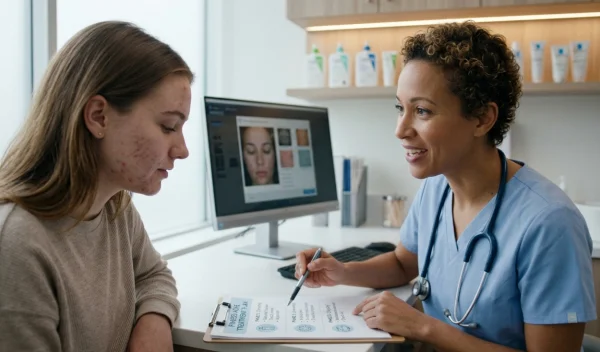
A structured approach helps avoid both under-treatment and unnecessary expense:
-
Mild acne:
-
Often managed with over-the-counter or pharmacy treatments
-
Lower ongoing cost, but requires consistency
-
-
Moderate acne:
-
May need prescription treatment from a GP or private provider
-
Costs increase with consultations and follow-up
-
-
Moderate to severe acne:
-
Often requires specialist input and longer treatment duration
-
May include a combination of medication and clinic-based treatments
-
Starting at the appropriate level can reduce the likelihood of repeated trial-and-error, which often increases overall cost.
Questions to ask before committing to treatment
Before starting any treatment plan, it is reasonable to ask for clarity on both clinical and financial aspects:
-
What is included in the quoted cost?
-
How many sessions or weeks of treatment are expected?
-
What level of improvement is considered realistic?
-
Are follow-up appointments included or charged separately?
-
Will additional products or prescriptions be required?
Clear answers to these questions can help you compare providers and avoid unexpected costs.
Building a realistic treatment plan
A practical plan considers both short-term treatment and longer-term management:
-
Initial phase: targeted treatment to reduce active acne
-
Review phase: assessment at around 12 weeks to adjust approach
-
Maintenance phase: lower-intensity treatment to help prevent recurrence
Budgeting across these phases can make costs more predictable and manageable.
It can also be helpful to prioritise treatments with the strongest clinical evidence first, before adding optional or supportive treatments.
Avoiding unnecessary spending
Some common situations can lead to higher costs without improving outcomes:
-
Switching treatments too quickly before they have had time to work
-
Using multiple products without a clear plan
-
Choosing treatments that are not suited to your acne type or severity
A structured consultation and a clear treatment plan can help reduce this risk.
The most effective acne treatment pathway is one that is appropriate for your skin, clearly planned, and sustainable over time, rather than simply the lowest- or highest-cost option.
Your Acne Questions
Real Questions from Real People — Answered
Straightforward answers to the questions people like you are asking right now about Acne.

Do u use obaji products.
Do you provide treatments with obaji products
My son suffers with acne.
My son suffers with acne, we have tried a lot of different treatments but nothing seems to work, I would like to find out about prices for consultation and possible treatment
To view all the Acne questions, please click here.
Or href="/questions/?Treatment_Sent=Acne">click here to ask your own question.
Find A Verified Clinic
Trusted Acne Experts, Local to You
Easily connect with qualified, verified professionals for safe, reliable treatment.


Angela Lord Aesthetics and Wellness
Welcome to Angela Lord Aesthetics & Wellness, my private, registered home clinic in Preston, Paignton. Serving Torbay, Marldon and wider Devon, and national.
The Elite Clinic
The Elite Clinic is a nurse-led aesthetics and skin clinic in Knowle, Solihull, offering advanced skin rejuvenation, laser treatments and personalised cosmetic care.
To find a Acne clinic near you, please click here.
Grow Your Practice with Acne
Whether you are already using Acne or considering adding it to your treatment menu, here is how to make the most of it.

Are you a practitioner? If you'd like to link your practice to Acne and become part of ConsultingRoom.com, you can register as a verified specialist using the information on our specialist registration page.
Once verified, your profile can feature Acne alongside the other treatments, conditions and products you support, helping patients searching ConsultingRoom.com find you directly.