

In 2013, the American Contact Dermatitis Society (a group of expert dermatologists specializing in skin allergies) named Methylisothiazolinone (MI) as the ‘Allergen of the year’.
MI is a preservative used in a variety of skincare products, including leave-on as well as wash-off products. You can find it in shampoos, conditioners, baby wet wipes, facial cleansers, body moisturizers and many others.
MI has good anti-bacterial properties and that’s why it is used in skincare products – to prevent contamination of the product with germs. It is very important for all skincare to be safe from bacterial contamination!
Unfortunately, MI has a quite high allergenic potential, i.e. might cause skin allergies (allergic contact dermatitis) in some people who are repeatedly exposed to it. Recently, an increase of allergic contact dermatitis to MI has been seen. Some dermatologists are concerned about whether this might be the first sign of an MI allergy ‘epidemic’.
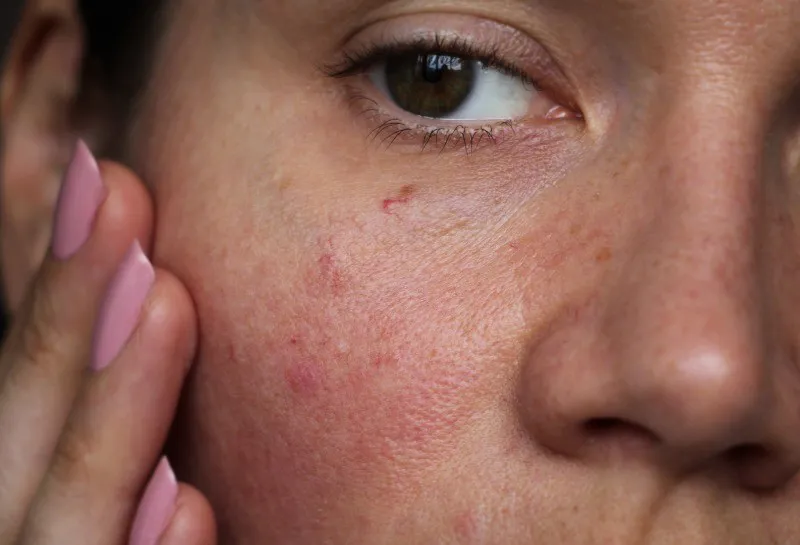
Allergic contact dermatitis to MI can show itself in a variety of clinical pictures, for example as a red, itchy, inflamed rash. If you suspect that you might be allergic to one of your skincare products, you should stop using it and see your doctor. Your doctor might prescribe a steroid cream to settle the rash. He should also refer you to a specialist patch test dermatologist for allergy testing.
Some doctors recommend trying something called a ROAT (Repeat open application test). This is where you use the product (as intended, i.e. use leave-on products as leave-on, but use wash-off products as wash-off. Don’t leave on wash-off products!) on the inner elbow area for a few days to see whether you can trigger a reaction here. If you don’t react in the ROAT, it is of course no guarantee that you won’t react differently with facial use, but at least it’s an indication. But the safest thing would of course be to go for proper allergy testing rather than doing some DIY.
Personally, I would hope that skincare companies try and replace MI with less allergenic preservatives where possible (although it’s perfectly legal to use MI at the moment), so watch this space…