

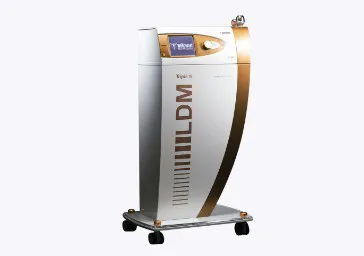
LDM® Triple, short for Local Dynamic Micro massage, sits in a part of the aesthetics market that can be difficult to interpret at first glance. It is often described as regenerative ultrasound, anti-inflammatory skin technology, or dynamic ultrasound therapy, which can sound technical without always making its practical meaning clear. For most people, the real question is simpler: what does this treatment actually do, and when might it be worth discussing with a qualified practitioner?
That distinction matters because treatments that sit under the broad heading of non-surgical skin rejuvenation can work in very different ways. LDM® Triple uses rapidly alternating ultrasound frequencies to influence tissue behaviour, with clinics commonly using it for concerns such as acne-prone skin, rosacea-prone or reactive skin, early laxity, uneven texture and post-procedure recovery.
This guide explains what LDM® Triple is, how it works, who it may suit, what treatment involves, how it compares with other options, and what to look for when choosing a provider.
Your LDM® Triple Questions
Real Questions from Real People - Answered
Straightforward answers to the questions people like you are asking right now about LDM® Triple.

Be the first to ask a LDM® Triple question.
Click here to ask your own question.
Find A Verified Clinic
Trusted LDM® Triple Experts, Local to You
Easily connect with qualified, verified professionals for safe, reliable treatment.

Dr Rita Rakus Mbbs Knightsbridge
Welcome to the practice of Dr Rita Rakus. we are one of the world’s leading cosmetic clinics with award-winning expertise in the fields of lip enhancement, facial rejuvenation and body contouring.



 +1 more
To find a LDM® Triple clinic near you, please click here.
What Is The LDM® Triple?
LDM® Triple stands for Local Dynamic Micro massage.
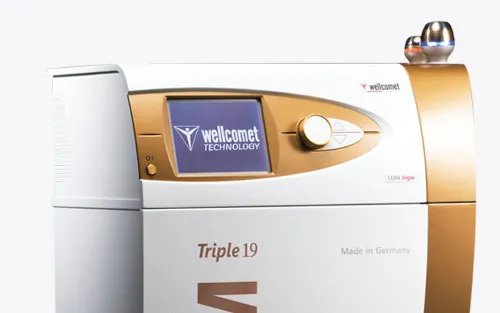
It is a non-invasive ultrasound-based treatment used in aesthetic and dermatology settings to support skin health and tissue regulation.
Unlike standard cosmetic ultrasound, LDM® Triple uses rapidly alternating frequencies rather than a single static frequency. This dynamic modulation is designed to influence tissue behaviour at a cellular level rather than simply delivering surface heat.
It sits within the category of non-surgical regenerative skin treatments and is often described in clinics as:
- Dynamic ultrasound therapy
- Regenerative ultrasound
- Anti-inflammatory skin technology
Importantly, LDM® Triple is not diagnostic ultrasound (like pregnancy scans). It is a therapeutic device used to support skin function and tissue quality.
How Does The LDM® Triple ultrasound work?
LDM® Triple delivers ultrasound energy while rapidly switching between three frequencies (typically 1 MHz, 3 MHz, and 10 MHz).
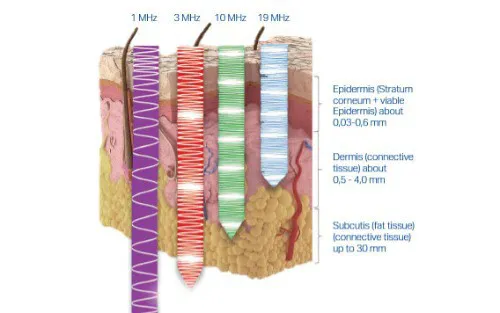
This dynamic switching is believed to:
- Stimulate fibroblast activity
- Support collagen and elastin production
- Help regulate inflammatory processes
- Improve microcirculation
Different frequencies interact with tissue at varying depths, allowing practitioners to tailor protocols depending on the concern being addressed.
Unlike heat-dominant technologies such as radiofrequency or HIFU, LDM® focuses more on tissue regulation and cellular response rather than thermal injury and tightening.
Clinical research has explored its effects on matrix metalloproteinases (MMPs), which are involved in inflammation and collagen breakdown. While evidence continues to evolve, studies suggest potential benefits in inflammatory and ageing-related skin conditions.
Who Is LDM® Triple Suitable For?
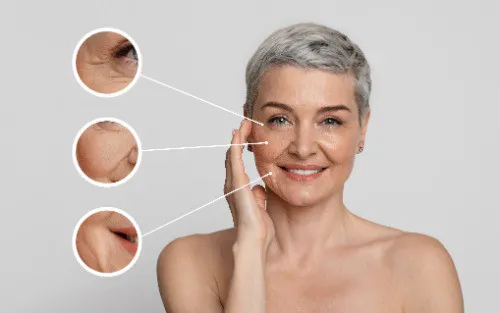
LDM® Triple may be considered for individuals experiencing:
- Acne-prone or inflamed skin
- Sensitive or reactive skin
- Early skin laxity
- Uneven skin texture
- Post-procedure recovery needs
It is often suitable for a wide range of skin types, including sensitive skin, due to its non-ablative and non-aggressive approach.
However, it may not be appropriate for individuals with:
- Implanted electronic devices (e.g. pacemakers)
- Active malignancy in the treatment area
- Certain acute medical conditions
A personalised consultation is essential to assess suitability and ensure realistic expectations regarding outcomes.
What Skin Concerns Can It Be Used For?
LDM® Triple is commonly used in clinical practice to support:
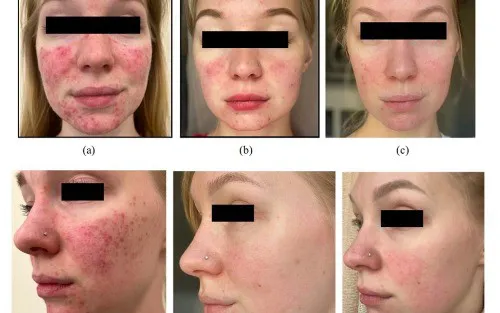
Acne-prone and inflamed skin
May assist in calming inflammation and supporting skin barrier function.
Rosacea-prone or reactive skin
Often selected where aggressive heat-based treatments are unsuitable.
Texture and early laxity concerns
Can be used to support collagen stimulation and improve skin density.
Body areas such as cellulite
Some clinics incorporate it into cellulite protocols as part of a broader treatment plan.
In cases of significant skin laxity, deep scarring, or advanced ageing, alternative or combination treatments may be more appropriate.
What Should You Expect During Treatment?

Consultation:
A detailed skin assessment is performed to determine suitability and treatment goals.
During the session:
A handheld applicator is moved across the skin with ultrasound gel. Most patients describe the sensation as warm and comfortable.
Duration:
Sessions typically last 20–45 minutes depending on the area treated.
Frequency:
Courses often involve multiple sessions spaced weekly or bi-weekly.
Downtime:
There is usually no downtime. Mild redness may occur but typically resolves quickly.
Progress is reviewed periodically, and protocols may be adjusted based on response.
Can LDM® Triple Be Combined with other treatments?
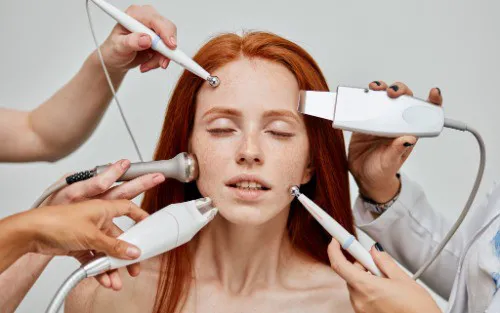
Yes. LDM® Triple is often:
- Used as a stand-alone regenerative treatment
- Combined with facials or skin therapies
- Integrated into acne or post-laser recovery protocols
Sequencing can be important. For example, it may be used before or after other treatments to support tissue recovery.
Combination treatments are avoided in certain situations, particularly if excessive heat or tissue stress would not be appropriate.
Clinical judgement plays a key role in determining safe and effective combinations.
How Much Does LDM® Triple Cost In The UK?

Typical UK pricing ranges from:
- £120–£250 per session (face)
- Course packages may offer reduced per-session pricing
Costs vary depending on:
- Clinic expertise
- Location
- Treatment duration
- Whether it is part of a combination protocol
When comparing pricing, patients may wish to consider practitioner training, consultation quality, and treatment planning rather than price alone.
Are There Any Side Effects Or Risks?

LDM® Triple is generally well tolerated.
Common short-term responses may include:
- Mild redness
- Temporary warmth
Less common risks are minimal but depend on practitioner technique and patient suitability.
Contraindications should always be reviewed before treatment.
While research supports its potential role in inflammation and tissue regulation, long-term comparative data versus other technologies continues to develop.
Treatment should always be performed in a regulated clinical setting by appropriately trained practitioners.
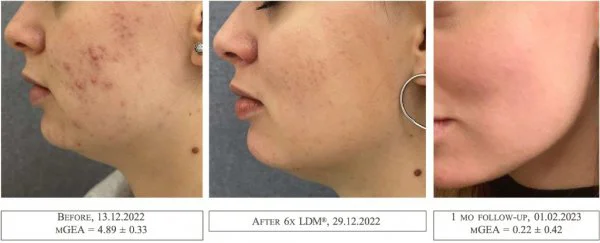
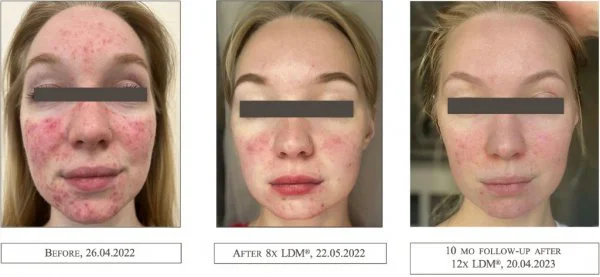
LDM® Triple Before And After Results
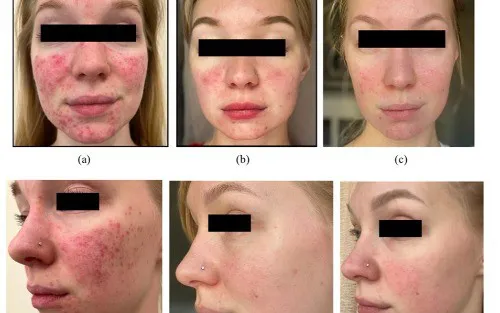
Acne Treatment
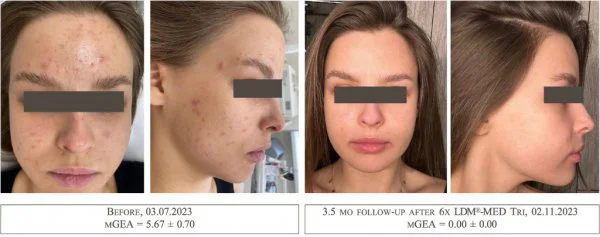
Acne Reduction
Rosacea Treatment
How Do You Choose A Provider?

When selecting a clinic, consider:
- Practitioner training specific to LDM® technology
- Experience treating your particular concern
- Quality of consultation and consent process
- Clear explanation of realistic outcomes
- Use our Practitioner Assessment Tool
Be cautious of:
- Guaranteed results
- Unrealistic timelines
- Deep discounting without assessment
Informed decision-making is key to achieving safe and appropriate outcomes.
How Does LDM® Triple Compare To Other Treatments?
Vs HIFU:
HIFU uses focused thermal injury to tighten deeper tissues. LDM® is gentler and more focused on tissue regulation rather than structural lifting.
Vs Radiofrequency:
RF primarily works through heat-induced collagen contraction. LDM® emphasises dynamic cellular stimulation with less thermal intensity.
Vs Microneedling or Laser:
Microneedling and lasers create controlled injury to stimulate repair. LDM® is non-injurious and may be preferred for sensitive or inflamed skin.
Comfort levels are generally higher and downtime lower compared to more aggressive modalities.
Importantly, “better” depends entirely on the individual’s skin condition, tolerance, and treatment goals.
Unlock The Power Of The LDM® Triple Add It To Your Clinic
Join the growing number of aesthetic professionals offering the LDM Triple to treat multiple concerns in your clinic.
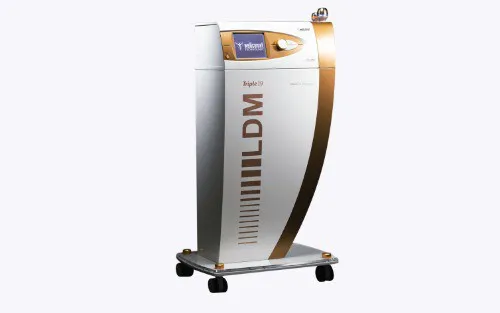
Many clinics are looking for technologies that support skin health, improve treatment outcomes, and fit naturally into existing protocols. The LDM® Triple has earned attention across the aesthetics industry because it focuses on something fundamental, the skin’s extracellular matrix and inflammatory balance.
In practice, this means the device can support a wide range of concerns, from inflammatory skin conditions to skin rejuvenation and post-procedure recovery. Clinics often integrate it alongside treatments such as microneedling, laser procedures, or injectable treatments to help optimise skin condition and recovery.
What makes the LDM® Triple particularly appealing is its versatility. A single device can support multiple treatment pathways within a clinic.
Clinics commonly use LDM® Triple to support:
-
Skin rejuvenation and collagen stimulation
-
Acne and inflammatory skin conditions
-
Rosacea-prone skin
-
Skin barrier recovery after procedures
-
Oedema and tissue repair support
-
Pre- and post-treatment skin preparation
Because treatments are non-invasive and comfortable, many clinics also position LDM® Triple sessions within treatment plans or skin health programmes. This creates opportunities for repeat visits and longer-term patient engagement, while supporting visible improvements in skin quality.
For clinics building a modern treatment portfolio, technologies that combine clinical credibility with practical versatility can make a real difference. The LDM® Triple is one of those devices that quietly fits into many treatment pathways without disrupting your existing service offering.
For more information, please Click Here.
If your clinic already uses the LDM® Triple, or you are planning to introduce it, adding it to your ConsultingRoom profile helps patients understand the technologies available to them and helps your clinic appear in relevant searches across the ConsultingRoom platform.
If you are not a member of ConsultingRoom. Click here to join now for just £20 inc VAT per month.
Grow Your Practice with LDM® Triple
Whether you are already using LDM® Triple or considering adding it to your treatment menu, here is how to make the most of it.

Are you a practitioner? If you'd like to link your practice to LDM® Triple and become part of ConsultingRoom.com, you can register as a verified specialist using the information on our specialist registration page.
Once verified, your profile can feature LDM® Triple alongside the other treatments, conditions and products you support, helping patients searching ConsultingRoom.com find you directly.
LDM® Triple Quick FAQs
Clear, Concise Answers to Common Queries
A simple, no-fluff roundup of frequent LDM® Triple questions to help you get the facts fast.

How long does an LDM® Triple treatment session usually take?
Most sessions are relatively short. A typical appointment lasts around 15 to 30 minutes, depending on the treatment area and the protocol used by the clinic. Some clinics combine LDM® Triple with other procedures or skincare steps, which may extend the overall appointment time. Your practitioner will usually explain the expected session length during consultation.
Is LDM® Triple suitable for all skin types?
Many clinics consider LDM® Triple suitable for a wide range of skin types because it uses non-invasive ultrasound energy rather than heat or needles. This approach can make it appropriate for skin that is sensitive or prone to redness. However, suitability still depends on individual factors such as skin condition, medical history, and current treatments, which should always be reviewed during consultation.
How many LDM® Triple sessions are usually recommended?
Many clinics recommend a course of LDM® Triple treatments rather than a single session, particularly when managing ongoing skin concerns. Treatment plans often involve sessions spaced weekly or fortnightly. The number of treatments varies depending on the skin concern, how the skin responds, and the practitioner’s assessment.
What happens during an LDM® Triple treatment?
During an LDM® Triple treatment, a handheld ultrasound device is moved across the skin using a conductive gel. The device delivers rapidly alternating ultrasound frequencies, creating a form of micro-massage within the tissue. This process is designed to influence tissue activity and fluid movement in the skin. Most people describe the sensation as gentle warmth or vibration.
Are there any known side effects with LDM® Triple?
Side effects are generally described as minimal when LDM® Triple is carried out by a trained professional. Some people may experience mild redness or warmth immediately after treatment, which usually settles quickly. As with any aesthetic procedure, individual responses can vary and a consultation is important to review potential risks.
Is there any recovery time after LDM® Triple?
LDM® Triple is usually considered a minimal downtime treatment. Many people return to normal daily activities shortly after their appointment. Practitioners may still recommend simple aftercare steps such as gentle skincare and sun protection, particularly if the treatment is part of a wider treatment plan.
How does LDM® Triple differ from standard ultrasound skin treatments?
Traditional cosmetic ultrasound treatments often use a single fixed frequency targeting a specific tissue depth. LDM® Triple technology rapidly alternates between multiple ultrasound frequencies during treatment. This dynamic frequency change allows the energy to interact with different layers of the skin within one session.
Does LDM® Triple involve heat or thermal damage to the skin?
LDM® Triple primarily relies on mechanical ultrasound effects rather than strong heat-based energy. The rapidly alternating frequencies create micro-vibrations within the tissue rather than significant thermal injury. Because of this approach, it is often described as a gentler technology compared with some heat-based aesthetic devices.
Do I need a consultation before having LDM® Triple treatment?
Yes. A consultation with a qualified practitioner is recommended before starting LDM® Triple treatment.
Can LDM® Triple be used for preventative skin care?
Some clinics use LDM® Triple as part of ongoing skin health or maintenance programmes rather than only for specific concerns. These treatments may be scheduled periodically to support overall skin condition. The frequency and approach vary depending on the individual and the practitioner’s clinical guidance.
What is "biological interference" and why does it matter?
When the device rapidly switches between frequencies every few milliseconds, your skin cells cannot respond to each one individually. Instead, they react to all three at once, creating what is known as biological interference. This combined cellular response is believed to drive deeper and more meaningful changes in the tissue than any single frequency could produce on its own.
What are the actual frequencies used, and what does each one do?
The 1 MHz frequency penetrates deepest, reaching the subcutaneous tissue and targeting concerns like cellulite and stretch marks. The 3 MHz frequency focuses on the dermis to support collagen stimulation and skin tightening. The higher frequencies of 10 MHz and 19 MHz, with half-depths of just 3 mm and 1.5 mm respectively, work primarily in the upper skin layers and can directly influence individual cells or small cell groups. The combination used depends on what is being treated.
Is this the same as HIFU or Ultherapy?
No, and the distinction is meaningful. LDM Triple is not painful, unlike older ultrasound technologies such as HIFU or Ultherapy, and it does not carry the same risks such as fibrosis. HIFU and Ultherapy use focused, high-intensity energy that generates heat to damage tissue and trigger a repair response. LDM Triple works differently: it supports the skin's own biology through mechanical micro-massage rather than thermal injury, making it a gentler option with no downtime.
Can it be used during pregnancy or whilst breastfeeding?
LDM Triple is considered safe for use during pregnancy. It does not rely on injectables, aggressive heat, or ablative energy, making it suitable for supporting skin health during this period. It is also suitable for pregnancy and breastfeeding individuals when used on the face. If you are pregnant or breastfeeding, it is always worth discussing this with your practitioner at consultation so they can tailor the session appropriately.
How many sessions will I need?
For maximum cosmetic results, patients generally undergo one to two sessions per week over a period of several weeks. The required number of sessions may increase when treating dermatological conditions. That said, the number varies depending on your skin concern, age, and lifestyle. Some people notice visible improvements after just one or two sessions, while conditions like acne, eczema, or scarring typically benefit from a longer course of treatment.
How long does a session take?
Sessions are typically quick, often taking no more than 30 minutes. When combined with other treatments or as part of a full-face protocol, the appointment may be longer. Your practitioner will give you a realistic time estimate at the point of booking.
Is there any downtime?
One of the standout benefits of these treatments is the lack of downtime. The procedure is comfortable for most patients, and since it does not cause pain, redness or swelling, you can return to your daily activities immediately. There is no downtime, redness, or discomfort to worry about. You can apply makeup and go about your day straight after.
Can it be combined with other aesthetic treatments?
It can be used all year round and can be easily combined with a variety of existing treatment methods on the market. The special ultrasound waves can also be used as a supportive treatment alongside wrinkle injections and as a pre- and post-operative measure in aesthetic plastic surgery. When performed immediately after deeper treatments like RF microneedling, fractional lasers, or injectables, LDM rapidly reduces redness, swelling, and bruising, significantly speeding up recovery time.
Does it work on the body as well as the face?
Yes. The 1 MHz frequency penetrates deep into the subcutaneous tissue, making it useful for concerns like cellulite and stretch marks. Many clinics use LDM Triple on the neck, décolletage, and body for skin tightening and texture improvement, not just the face.
What skin conditions can it help with?
LDM Triple is considered one of the safest treatments for conditions like eczema, psoriasis, and rosacea. It is non-invasive, non-ablative, and used in medical dermatology settings across Europe. It is also used for acne, scarring, ageing skin, loss of firmness, and general skin barrier impairment.
How does it affect collagen and hyaluronic acid?
The ultrasonic waves used in the LDM Triple can modulate individual tissue structures. They regulate matrix metalloproteinases, which are primarily responsible for tissue degradation, and influence the production of heat shock proteins, which are necessary for proper protein control in tissue. Hyaluronic acid levels in the skin can also be specifically influenced with certain ultrasound frequencies, which in turn can lead to more turgor and some rapidly visible structural changes in tissue.
Are the results immediate or gradual?
Both, depending on what is being treated. Many people notice an immediate improvement in hydration and skin radiance after a single session. The most substantial benefits are cumulative. For issues like improved skin barrier function, enhanced collagen and elastin production, and increased elasticity, a series of treatments is recommended. Each session builds upon the last for more significant and longer-lasting results.