

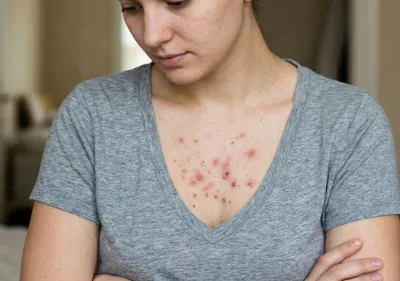
Chest acne is a form of body acne that develops when pores on the chest become blocked with oil, dead skin cells, and bacteria. Although the condition follows the same biological process as facial acne, the chest presents its own challenges. The skin in this area contains many oil-producing glands and is often exposed to sweat, friction from clothing, and environmental factors that can influence breakouts.
Chest acne raises practical questions. Some want to understand why breakouts appear in this area when their facial skin is relatively clear. Others are unsure whether the spots they are seeing are acne at all, as conditions such as folliculitis can look similar. It is also common to wonder whether skincare products, exercise, or clothing habits could be contributing to the problem.
Understanding the cause of chest acne matters because the most appropriate treatment often depends on several factors. These include the type of spots present, the severity of inflammation, and whether breakouts occur alongside acne on the face or back. In the UK, treatment approaches may range from targeted skincare and prescription medication to professional clinic treatments designed to support inflammation control and skin repair.
This guide provides a structured overview of chest acne, explaining how it develops, how it is diagnosed, and what treatment options may be considered. The aim is to provide clear, balanced information so readers can decide whether further advice from a healthcare professional or a skin clinic is appropriate.
To begin, it helps to understand what chest acne is and how it develops within the skin.
Our Preferred Partner - LDM® Triple

LDM® Triple is a non-invasive ultrasound-based treatment used in aesthetic and dermatology clinics to support skin health, tissue regulation, and the Treatment of Acne-Prone or inflamed skin. This guide is for anyone trying to understand what it is, how it works, and whether it may be relevant to their skin concern.
- What LDM® Triple is, and how it differs from standard cosmetic ultrasound
- Which skin concerns it is commonly used for, including Acne and early ageing-related concerns
- What to consider around suitability, comfort, risks, pricing and provider choice
What Is Chest Acne?
Chest acne refers to acne that develops on the skin of the chest, usually across the upper chest and sternum area. It occurs through the same biological process as facial acne, in which hair follicles become clogged with oil and dead skin cells, creating an environment for inflammation to develop.
Although many people associate acne primarily with the face, the chest is another common location because this area contains numerous oil-producing glands.
How chest acne develops in the skin
Chest acne forms when normal skin processes become disrupted within the hair follicles.
Key factors involved include:
-
Excess sebum production
Sebaceous glands produce oil to protect the skin. When too much oil is produced, it can clog pores. -
Build-up of dead skin cells
Skin naturally sheds cells, but if these accumulate within the follicle, they can combine with oil to create a plug. -
Bacterial activity and inflammation
Bacteria that normally live on the skin can multiply inside blocked follicles, triggering redness, swelling, and visible spots.
This process is the same mechanism that causes acne on the face, shoulders, and back.
Types of spots that can appear on the chest
Chest acne can present in several ways, depending on its severity.
Common types include:
-
Blackheads
Open clogged pores on the surface that appear dark. -
Whiteheads
Closed pores filled with oil and dead skin cells. -
Papules
Small red inflamed bumps without visible pus. -
Pustules
Spots with a visible white or yellow centre are caused by inflammation. -
Nodules or cysts
Larger, deeper lesions may be painful and are more likely to cause scarring.
Recognising the type of acne present can help guide appropriate treatment choices.
Where chest acne usually appears
Chest acne most often develops in areas with more active oil glands.
Common locations include:
-
The centre of the chest (sternum area)
-
The upper chest near the collarbones
-
Areas that experience friction from clothing
In some people, chest acne may occur alongside back acne or shoulder acne, forming part of a wider pattern of body acne.
Chest acne is a common form of body acne that develops through the same underlying processes as facial breakouts. Understanding how it forms and recognising the different types of spots is the first step towards choosing appropriate treatment or prevention strategies.
Why Does Acne Often Appear On The Chest?
Chest acne develops for many of the same reasons as facial acne. The skin on the chest contains numerous sebaceous glands, which means the area naturally produces oil. When this oil mixes with dead skin cells and becomes trapped inside hair follicles, blocked pores and inflammation can develop.
Several factors make the chest particularly prone to breakouts.
Oil production and sebaceous glands on the chest
The chest contains a high concentration of sebaceous glands, similar to the face and upper back.
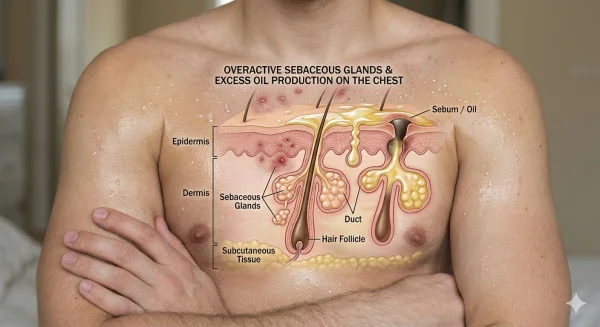
Important points to understand:
-
Sebum production is hormone-sensitive
Hormones regulate oil production in the skin. When levels change, sebaceous glands may produce more oil than the skin requires. -
Excess oil can block hair follicles.
Oil combines with dead skin cells inside the pore, forming a plug that can lead to blackheads or inflamed spots. -
Body areas with more oil glands are moreprone to acnee
This explains why acne commonly appears on the face, chest, shoulders, and back.
For some people, chest acne appears alongside breakouts in these other areas.
Sweat, heat and friction
Environmental factors often play a role in chest acne.
Common contributors include:
-
Sweat accumulation
Sweat can mix with oil and bacteria on the skin, increasing the chance of blocked pores. -
Tight or non-breathable clothing
Synthetic fabrics or tight sportswear can trap heat and moisture against the skin. -
Friction from clothing or equipment
Repeated rubbing from clothing, bags, or sports gear may irritate hair follicles and worsen inflammation.
This is one reason chest acne is sometimes more noticeable in people who exercise frequently or wear tight clothing for long periods.
Hormonal influences
Hormones are one of the most common underlying factors in acne.
Hormonal changes can:
-
Increase oil production in sebaceous glands
-
Trigger inflammation within hair follicles
-
Causes acne to flare at certain times
Examples of hormonal triggers include:
-
Puberty
-
Menstrual cycles
-
Pregnancy
-
Conditions affecting hormone balance
For some adults, chest acne can develop alongside hormonal acne affecting the jawline or back.
Chest acne often develops due to a combination of oil production, blocked pores, sweat, friction, and hormonal influences. Understanding these triggers can help people identify patterns in their own skin and take practical steps to reduce flare-ups.
Chest Acne Vs Folliculitis: How To Tell The Difference
Not every spot that appears on the chest is acne. A common condition that can look similar is folliculitis, which involves inflammation or infection of hair follicles. Distinguishing between the two is important because the underlying causes and treatments may differ.
Understanding the visible signs can help determine whether self-care, medical advice, or professional treatment is appropriate.
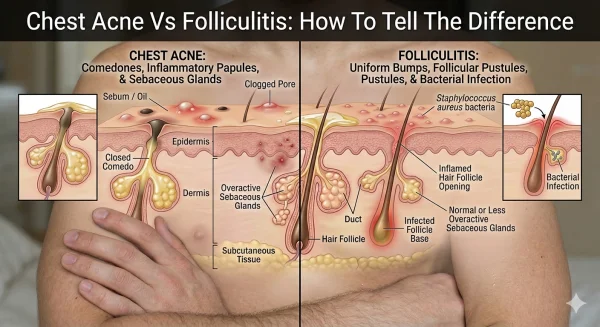
What folliculitis looks like
Folliculitis occurs when hair follicles become irritated or infected, often by bacteria or yeast.
Typical characteristics include:
-
Small red bumps centred around hair follicles
Each bump usually forms around a single hair. -
Itching or irritation
Folliculitis is often itchy rather than painful. -
Clusters of uniform spots
The bumps tend to look similar in size and shape. -
Possible triggers such as shaving or friction
Tight clothing, sweating, or shaving can contribute to follicle irritation.
Folliculitis may also appear suddenly after activities that trap moisture against the skin, such as exercise or prolonged sweating.
When chest breakouts are more likely to be acne
Chest acne typically shows a wider variety of spot types.
Signs that the condition may be acne include:
-
Blackheads or whiteheads present on the chest
These clogged pores are characteristic of acne. -
A mixture of lesion types
For example, red bumps, pustules, and clogged pores appear together. -
Recurring breakouts over time
Acne often develops in cycles and may persist for months or longer. -
Spots that may be tender or inflamed
Inflammatory acne lesions can sometimes feel sore to the touch.
In some cases, both acne and folliculitis can occur in the same area, particularly if the skin is exposed to sweat and friction.
When a professional assessment may be helpful
If chest breakouts are persistent, spreading, or difficult to identify, a healthcare professional may examine the skin to determine the underlying cause.
Assessment may be helpful if:
-
Spots are painful, worsening, or leaving marks on the skin
-
Breakouts do not improve with basic skincare adjustments
-
The rash appears suddenly or spreads rapidly
A professional assessment helps ensure that the correct condition is identified before treatment is started.
Although chest acne and folliculitis can look similar at first, they develop through different processes. Recognising the patterns of each condition can help guide appropriate care and avoid treatments that may not address the underlying cause.
Common Triggers That Make Chest Acne Worse
Chest acne rarely develops from a single cause. In many cases, breakouts appear when several factors combine, including oil production, blocked pores, friction, and environmental triggers. Recognising these influences can help reduce flare-ups and support more effective treatment.
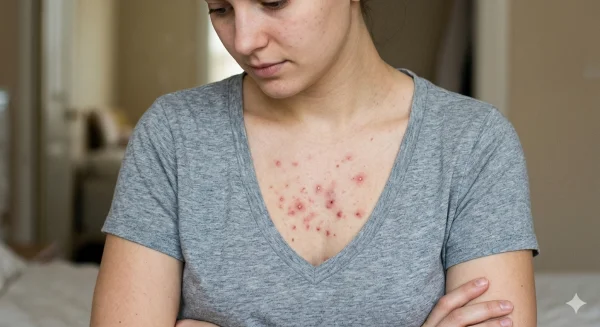
Skincare and cosmetic products
Products applied to the skin can sometimes clog pores on the chest.
Factors to consider include:
-
Oil-based or heavy formulations
Some creams, sunscreens, or body lotions may contain ingredients that can block pores in acne-prone skin. -
Hair products transferring to the chest
Conditioners, styling products, and oils can move from the hair onto the chest during showering or exercise. -
Fragranced or occlusive products
Products designed for intense moisturisation may create a barrier that traps oil and sweat against the skin.
Many dermatology guidelines recommend non-comedogenic skincare, meaning products formulated to reduce the likelihood of pore blockage.
Lifestyle and environmental factors
Everyday habits and environments can influence the activity of acne on the chest.
Common triggers include:
-
Heat and humidity
Warm environments increase sweating, which can combine with oil and bacteria on the skin. -
Exercise and prolonged sweating
Leaving sweat on the skin for extended periods may contribute to irritation and follicle blockage. -
Tight or synthetic clothing
Fabrics that trap moisture can create conditions wthat make acnemore elikely to develop -
Smoking
Some research has linked smoking with certain forms of adult acne.
These factors do not cause acne on their own, but they can contribute to flare-ups in individuals who are already prone to the condition.
Skin irritation and mechanical friction
Repeated rubbing against the skin can aggravate acne.
Examples include:
-
Tight sportswear
-
Backpack straps or sports equipment
-
Clothing seams are rubbing against the chest
This type of irritation is sometimes referred to as acne mechanica, where friction and pressure worsen inflammation in the skin.
Chest acne often reflects a combination of internal and external influences. Identifying triggers such as skincare products, friction, or prolonged sweating can help reduce flare-ups and support more consistent skin management.
How Chest Acne Is Diagnosed
Treatment Options For Chest Acne
Chest acne treatment usually involves a combination of skincare, medical therapies, and, in some cases, professional clinic treatments. The most appropriate option depends on the severity of the acne, how long it has been present, and whether it is causing discomfort or marks on the skin.
Many treatment plans focus on reducing oil production, preventing blocked pores, and controlling inflammation.
Skincare and over-the-counter treatments
For mild chest acne, treatment often begins with products designed to unclog pores and reduce inflammation.
Common options include:
-
Benzoyl peroxide washes or gels
These help reduce bacteria on the skin and may prevent clogged pores. -
Salicylic acid cleansers
This ingredient exfoliates inside the pores, helping remove excess oil and dead skin cells. -
Azelaic acid or niacinamide products
These may help control inflammation and improve the appearance of acne-prone skin.
When treating acne on the chest, products are usually applied to the entire affected area rather than individual spots. This helps prevent new breakouts from forming.
Prescription treatments
If chest acne does not improve with over-the-counter options, a healthcare professional may recommend prescription treatment.
Common medical treatments include:
-
Topical retinoids
These medicines help regulate skin cell turnover and reduce pore blockage. -
Combination topical treatments
Some products combine retinoids with antimicrobial ingredients to address several causes of acne. -
Oral antibiotics
These may be used for inflammatory acne to reduce bacterial and inflammatory activity in the skin.
Treatment courses are often reviewed after around 12 weeks to assess improvement and adjust the approach if needed.
Professional clinic treatments
In some cases, professional treatments may be used alongside medical or skincare approaches.
Options sometimes used in aesthetic or dermatology clinics include:
-
Chemical peels
These treatments exfoliate the skin and may help reduce blocked pores and inflammation. -
Light-based therapies
Certain light treatments target acne-related bacteria and inflammation. -
Ultrasound-based skin therapies
Treatments such as LDM Triple use medical ultrasound technology to support skin repair and help regulate inflammatory processes in acne-prone skin.
Professional treatments are typically recommended after a skin assessment to ensure they are suitable for the individual and the type of acne present.
Chest acne treatment usually involves a gradual approach, starting with appropriate skincare and progressing to medical or professional treatments when necessary. A tailored plan can help address both the visible breakouts and the underlying factors contributing to the condition.
Your Acne Questions
Real Questions from Real People — Answered
Straightforward answers to the questions people like you are asking right now about Acne.

Do u use obaji products.
Do you provide treatments with obaji products
My son suffers with acne.
My son suffers with acne, we have tried a lot of different treatments but nothing seems to work, I would like to find out about prices for consultation and possible treatment
To view all the Acne questions, please click here.
Or href="/questions/?Treatment_Sent=Acne">click here to ask your own question.
Find A Verified Clinic
Trusted Acne Experts, Local to You
Easily connect with qualified, verified professionals for safe, reliable treatment.


Angela Lord Aesthetics and Wellness
Welcome to Angela Lord Aesthetics & Wellness, my private, registered home clinic in Preston, Paignton. Serving Torbay, Marldon and wider Devon, and national.
The Elite Clinic
The Elite Clinic is a nurse-led aesthetics and skin clinic in Knowle, Solihull, offering advanced skin rejuvenation, laser treatments and personalised cosmetic care.
To find a Acne clinic near you, please click here.
Grow Your Practice with Acne
Whether you are already using Acne or considering adding it to your treatment menu, here is how to make the most of it.

Are you a practitioner? If you'd like to link your practice to Acne and become part of ConsultingRoom.com, you can register as a verified specialist using the information on our specialist registration page.
Once verified, your profile can feature Acne alongside the other treatments, conditions and products you support, helping patients searching ConsultingRoom.com find you directly.