

There is a gap at the heart of the supplement industry that most brands have little incentive to close. You buy a product, you read the label, you take the recommended dose, and then nothing. No confirmation. No feedback. No way of knowing whether the capsule you swallowed this morning is making any measurable difference to what is happening inside your cells.
For most supplements, this is an inconvenience. For omega-3, it is a structural problem. The benefits of correcting a fatty acid imbalance are real and well-documented, but they are not visible. They do not resolve a symptom you can observe overnight. They accumulate slowly, at a cellular level, over months. Which means that without measurement, the gap between taking a supplement and knowing it is working can stretch indefinitely.
This article makes the case for a different approach: testing before you supplement, and testing again once you have. It explains what blood data actually measures, why it tells you something a label fundamentally cannot, and what the data from over 1.7 million at-home tests reveals about where most UK adults actually stand. It also looks at how products like the Zinzino BalanceOil+ Kit with Test are designed around this principle, pairing supplementation with independent lab measurement so the process is accountable from the start.
If you have been taking omega-3 for a while and wondered whether it is doing anything, this is where that question gets a proper answer.

Most People Take Supplements on Trust. Here's Why That's a Problem.
The supplement industry is built on a reasonable-sounding assumption: that taking a product containing the right ingredients, at the right dose, will produce the right result. For many people, that assumption is never tested. They buy, they take, they continue. Whether anything is actually changing inside their body remains, in most cases, entirely unknown.
This is not a niche concern. It applies to the majority of supplements sold in the UK today, and it applies with particular force to omega-3. The market is vast. Products range from budget supermarket capsules to pharmaceutical-grade liquid formulations, with label claims that sound broadly similar across the board. A consumer has very little to go on beyond the dose stated on the packaging and, perhaps, a handful of reviews.
The label tells you what went into the bottle. It says nothing about what happens once you swallow it.
Absorption varies between individuals. It varies depending on what you eat the supplement with, what form the oil takes, and what else is in the formulation. Two people taking the same product at the same dose can end up with meaningfully different blood fatty acid levels. A label cannot account for any of that.
There is also a subtler problem. Because omega-3 benefits accumulate over months rather than days, and because they do not resolve a specific symptom you can track, most people have no reliable way of knowing whether their supplement is doing anything useful. They continue taking it on the basis that it is probably helping, or they stop because they cannot tell that it is. Neither response is based on information.
Testing changes this. A blood test that measures your actual fatty acid status gives you something no label can: a data point that reflects what is genuinely happening inside your body, independent of what the packaging says.
What Blood Data Actually Measures (and Why It's Different From What Labels Tell You)
Blood data measures what is present in your cells. A supplement label measures what was put in a bottle. These are not the same thing, and the difference between them is where most omega-3 decisions go wrong.
The relevant test for fatty acid status is one that analyses the composition of your red blood cell membranes. Red blood cells have a lifespan of approximately 120 days, and the fatty acids present in their membranes reflect what you have been eating and absorbing over that entire window. This makes red blood cell testing a stable, long-term marker of your actual nutritional status, rather than a snapshot of last night's dinner.
This distinction matters more than it might initially appear. Plasma testing, which is the type a GP might theoretically order, measures fatty acids circulating in the bloodstream at the moment of the test. Plasma levels respond quickly to individual meals: eat oily fish the evening before a blood draw, and your results will look considerably better than they would on a day you ate none. Red blood cell membrane composition does not shift that quickly. It reflects consistent intake over months, which is what you actually need to know.
The output of a fatty acid blood test is not a single number. A comprehensive panel measures multiple fatty acids individually and produces a ratio: specifically, the balance between omega-6 and omega-3 fatty acids in your cells. This omega-6:3 ratio is the figure with the most clinical relevance, as it reflects the balance between fatty acids that promote inflammation and those that counter it.
A label can tell you that a product contains 1,000 mg of fish oil. It cannot tell you your omega-6:3 ratio. It cannot tell you whether your ratio is 15:1 or 3:1. It cannot tell you whether three months of taking that product has moved your ratio in any direction. Only a blood test can do that.
| What a supplement label tells you | What a blood test tells you |
|---|---|
| The amount of fish oil in the product | The fatty acid composition of your red blood cells |
| The stated EPA and DHA content per dose | Your personal omega-6:3 ratio |
| The theoretical input | The actual output in your body |
| Whether the product meets a dosage standard | Whether your levels are within a healthy range |
| What you are swallowing | What is happening at a cellular level |
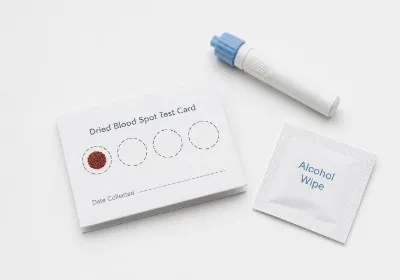
The Zinzino BalanceTest measures 11 fatty acids from a dried blood spot sample, processed independently by Vitas Analytical Services, a GMP-certified laboratory with over 25 years of experience in fatty acid analysis. The test produces a personal omega-6:3 ratio and a set of six wellness markers. It is this kind of data that makes supplementation a measurable process rather than an act of faith.

Why Most UK Adults Would Fail a Fatty Acid Test Today
The majority of UK adults who take a fatty acid blood test for the first time will find their results are outside the healthy range. This is not a fringe finding from a small study. It is the pattern that consistently emerges from the world's largest dataset of dried blood spot fatty acid tests.
Zinzino has now processed over 1.7 million BalanceTests globally. Across that dataset, 97% of first-time testers show an omega-6:3 ratio that is out of balance before they begin supplementing. The average ratio recorded is approximately 12:1. The target for normal heart, brain, and immune function is below 3:1. That is a fourfold gap between where most people are and where the evidence suggests they should be.
These figures are not surprising when you look at how the average UK diet is structured. Omega-6 fatty acids are present at high concentrations in the vegetable oils used in most processed and convenience foods: sunflower, corn, and soybean oils are particularly high in the omega-6 linoleic acid. Most people consume these oils daily, often without realising it, simply by eating packaged food.
Omega-3, by contrast, is found in meaningful quantities primarily in oily fish. The British Heart Foundation's dietary guidance recommends two 140g portions of fish per week, with only one of those being oily fish. That is the baseline. Most people do not consistently reach it, and even those who do may not get sufficient EPA and DHA to shift a ratio skewed by years of high omega-6 intake.
The result is a population that is structurally predisposed to omega-3 imbalance, not through poor health choices in any dramatic sense, but simply through eating a modern Western diet in a country with no government recommendation for omega-3 intake and no routine testing through primary care.
What makes this particularly relevant to anyone currently taking a supplement is the implication: if 97% of people are out of balance before they start, many will also be taking doses insufficient to correct their specific starting point. Without a baseline test, there is no way to know whether the dose you are taking is adequate for the gap you are actually trying to close.


What Testing Before You Supplement Actually Tells You
Testing before you supplement tells you where you actually are, not where you assume you are. That distinction sounds simple, but it changes the entire logic of what comes next: which product is appropriate, what dose makes sense for your body weight and starting ratio, and what a realistic outcome looks like within a defined timeframe.
A baseline fatty acid test provides your personal omega-6:3 ratio before any intervention. For most people, as the data above shows, that number will be higher than expected. Knowing it removes the guesswork from dosing. Zinzino's dosing guidance for BalanceOil+, for example, is calculated based on body weight at 0.15 ml per kilogram, precisely because the amount needed to meaningfully shift the ratio varies from person to person. A generic "one capsule daily" instruction cannot account for a starting ratio of 20:1 in the same way it cannot account for one of 8:1.
A baseline test also addresses the most common reason people quietly stop supplementing. Without a measurable starting point, progress is invisible. You take the product for three months, feel broadly the same, and have no way to assess whether anything has changed at the cellular level. A before measurement means a follow-up test at 120 days is genuinely informative: you are comparing two data points from the same person, using the same methodology, separated by the time it takes for red blood cell membranes to reflect a consistent change in intake.
Without a baseline, a follow-up test is largely meaningless. A result of 4:1 after 120 days of supplementing sounds positive, but it tells you nothing unless you know whether you started at 6:1 or 18:1. The distance travelled is what demonstrates whether the product and dose are working for your specific body.
There is a broader point here that applies beyond omega-3. Personalised supplementation, the idea that your routine should be based on your actual nutritional status rather than a generic population recommendation, is increasingly where evidence-based nutrition is heading. Testing before you start is the mechanism that enables personalisation. It is also the thing that most supplement brands, for straightforward commercial reasons, do not offer.
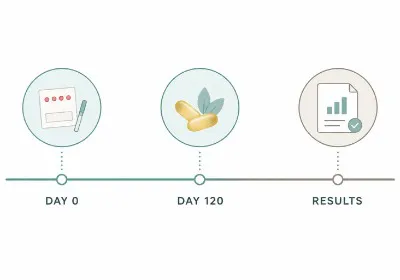
The Zinzino BalanceOil+ Kit with Test is structured specifically around this principle. The first BalanceTest is taken before supplementation begins. The second is taken at 120 days. The two tests together make the programme measurable rather than approximate, and structurally separate it from buying a supplement and a standalone test as separate purchases.

What Nobody Tells You About Reading a Supplement Label
Most people read a supplement label the way they read a nutritional panel on food: they look at the headline number, make a rough comparison with something else they have seen, and decide whether it seems reasonable. For omega-3, that approach misses most of what actually matters.
The first thing to understand is that "fish oil" and "omega-3" are not interchangeable terms on a label, even though they are often treated as such. A product advertising 1,000 mg of fish oil per capsule may contain as little as 300 mg of actual EPA and DHA combined. The remainder is other fats present in the oil. This is legal, common, and rarely flagged on the front of the packaging.
EPA and DHA are the two omega-3 fatty acids with the strongest body of evidence behind them. They are also the ones that a blood fatty acid test measures. The total fish oil figure is largely irrelevant. What matters is the combined EPA and DHA content per serving, and the ratio between them, since EPA and DHA have overlapping but distinct roles in the body.
The ratio matters for a second reason. The grade of fish oil used in a product determines how much EPA and DHA it actually delivers relative to total oil volume. A standard-grade fish oil might be 18% EPA and 12% DHA, which is written in the industry as 18/12. A higher grade product might be 20% EPA and 10% DHA, written as 20/10. The difference in EPA delivery between these two is meaningful at a therapeutic level, but both products could legally describe themselves as high-strength omega-3 on the label.
Absorption adds another layer of complexity that labels cannot address at all. Omega-3 fatty acids are fat-soluble, which means they are absorbed better when taken with dietary fat. An emulsified or liquid formulation may absorb more effectively than a standard capsule for some individuals. The presence of antioxidants in the formulation, particularly polyphenols from olive oil, helps protect the fragile omega-3 fatty acids from oxidation both before they reach the body and during absorption at the cellular level. None of this appears on a standard label.
| What the label shows | What it does not show |
|---|---|
| Total fish oil per capsule | How much of that is active EPA and DHA |
| EPA and DHA content per serving | Whether your body will absorb it effectively |
| The stated dose | Whether that dose is sufficient for your starting ratio |
| Certification marks | The grade of fish oil used |
| Ingredients list | Whether the formulation protects against oxidation |
BalanceOil+ uses a grade 20/10 EPA and DHA fish oil, which is above the industry standard 18/12, combined with cold-pressed extra-virgin olive oil from early-harvest Spanish Picual olives. The olive oil provides over 750 mg per kilogram of polyphenols, which serve a specific functional purpose: protecting the omega-3 fatty acids from oxidation. This is a formulation difference that does not appear on a standard label comparison, and it is not something you would know to look for unless you already understood why it mattered.

How the Zinzino BalanceOil+ Kit Puts This Into Practice
The Zinzino BalanceOil+ Kit with Test is the practical application of everything this article has covered. It combines a pharmaceutical-grade omega-3 supplement with two independent blood tests, structured around a 120-day programme, so the process of improving your fatty acid balance is measurable from the first day to the last.
The kit contains three components: a 300 ml bottle of BalanceOil+, and two BalanceTests. The first test is taken before supplementation begins, establishing your personal omega-6:3 ratio as a baseline. The second is taken at the 120-day mark, timed to coincide with the point at which red blood cell membranes will reflect the full impact of consistent supplementation. The before-and-after structure is not a marketing device. It is the logical application of how fatty acid testing actually works.
BalanceOil+ itself is a liquid supplement that blends a selectively sourced grade 20/10 fish oil with cold-pressed extra-virgin olive oil from early-harvest Spanish Picual olives. The fish oil is produced by LYSI in Iceland to pharmaceutical-grade GMP standards and is sourced from wild-caught anchovies, sardines, and mackerel from Friend of the Sea-certified fisheries. Olive oil contains over 750 mg per kilogram of polyphenols, which protect omega-3 fatty acids from oxidation during absorption. Each 12 ml serving provides 1,283 mg of EPA and 683 mg of DHA, alongside 20 micrograms of vitamin D3.
The BalanceTests are processed by Vitas Analytical Services, a GMP-certified chemical analysis laboratory based in Oslo with over 25 years of experience in dried blood spot testing. Vitas works independently of Zinzino, which matters: the results are not produced or interpreted by the brand selling the supplement. The laboratory has collaborative relationships with the World Health Organisation and major European research institutions. Results are returned digitally via the Zinzino test portal, typically within 10 to 20 days of the sample being received.
The test process itself is straightforward. A lancet, a filter paper collection card, a pre-addressed return envelope, and a unique test ID are included. A few drops of blood from a fingertip are collected onto the card, allowed to dry, and posted back. The sample is registered anonymously online using the test ID, and results are accessed through the same portal.
What the kit provides is not simply a supplement with a test bundled in. It provides a structured, time-gated programme in which the tests at the start and the end serve as mechanisms for accountability. Most supplement programmes offer no such structure. This one does.
The Zinzino BalanceOil+ Kit with Test is available at the Consulting Room shop, where it is listed alongside the wider Zinzino range, including the standalone BalanceTest, the HbA1c Test, and the Gut Health Test.
What to Expect: Realistic Outcomes and Honest Timelines
Knowing what a product can realistically deliver is as useful as knowing what it contains. For omega-3 supplementation, honest timelines matter because the most common reason people lose confidence in a supplement is expecting visible change on a timescale that does not match how fatty acid biology actually works.
Red blood cell membranes take time to reflect a consistent change in dietary intake. The 120-day interval between the two BalanceTests in the kit is not arbitrary. It reflects the approximate lifespan of a red blood cell and the point at which the fatty acid composition of those cells will have shifted meaningfully in response to sustained supplementation. Testing at four weeks would not give you a representative result. Testing at 120 days does.
Zinzino's own data, drawn from over 1.7 million BalanceTests, shows that the majority of European users who take BalanceOil+ consistently for 120 days reach an omega-6:3 ratio below 3:1 by the time they take their second test. The average starting ratio across the dataset is approximately 12:1. That is a substantial shift, achieved at the cellular level rather than by producing a single noticeable symptom you could point to on a given day.
Results vary. Starting ratio, body weight, dietary habits during the supplementation period, and dosing consistency all affect the outcome. A person starting at 20:1 will need to close a larger gap than someone starting at 8:1, and the dosing guidance accounts for this to a degree. What the kit provides is not a guaranteed outcome but a measurement framework: you will know where you started and where you ended up.
There are a few practical things worth knowing before you begin. The daily dose of BalanceOil+ is calculated on body weight at 0.15 ml per kilogram, so a person weighing 70 kg takes 10.5 ml daily. The oil is available in lemon, orange, lemon mint, and grapefruit lemon lime, and most people find it straightforward to take it directly or stir it into food. Opened bottles should be refrigerated and used within 45 days. The oil may turn cloudy when cold due to the olive oil content, which is normal and clears at room temperature.
Anyone taking blood-thinning medication should consult their doctor before starting BalanceOil+, as omega-3 fatty acids can affect blood coagulation at higher doses. This is a food supplement and should not be used as a substitute for a varied, balanced diet and a healthy lifestyle.
The second BalanceTest tells you whether the programme has worked for your body. That is the point of the structure. Not to promise a specific result, but to give you the tools to find out.
Try the Zinzino BalanceOil+ Kit with Test
The Zinzino BalanceOil+ Kit with Test at the Consulting Room shop is the practical starting point for anyone who wants to approach omega-3 supplementation with a before-and-after measurement framework rather than on assumption alone. It includes everything covered in this article in a single kit:
- Two independent BalanceTests processed by Vitas Analytical Services, one taken before supplementation and one at 120 days
- A 300 ml bottle of BalanceOil+, a pharmaceutical-grade omega-3 and high-polyphenol olive oil supplement
- A structured 120-day programme with digital results delivered via the Zinzino test portal