

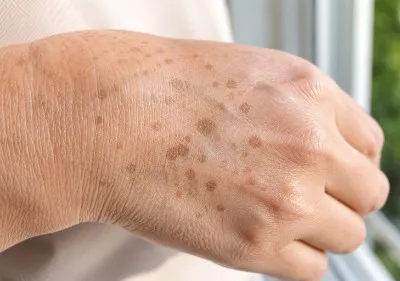
Hyperpigmentation is one of the most searched skin concerns in the UK, yet it remains widely misunderstood. The word gets used as a catch-all for anything that makes skin look uneven - sun spots, post-acne marks, pregnancy patches, age-related darkening - but these are distinct conditions with different mechanisms, different behaviours, and different responses to treatment. Lumping them together is one reason so many people spend time and money on approaches that are poorly matched to what they are actually dealing with.
Part of the confusion is that hyperpigmentation sits at the intersection of biology, lifestyle, and skin type in ways that are not always obvious. The same acne breakout can leave no lasting mark on one person and a visible dark patch for two years on another. A procedure considered safe and well-tolerated in fair skin can cause significant pigmentation in darker skin tones. Hormonal changes that cause melasma in one person have no visible effect on someone else with a near-identical hormonal profile. Understanding why these differences exist requires looking beneath the surface - at the cells, pathways, and triggers involved.
This guide covers the biology of hyperpigmentation in plain language, the main causes and types, why skin tone plays such a significant role, and when professional assessment is worth seeking. It is intended to give anyone managing pigmentation changes - or trying to make sense of them - a clearer, more grounded starting point.
To understand why hyperpigmentation develops, it helps to start with what the condition actually is - and what it is not.
Our Preferred Partner - LaserMe by Neauvia
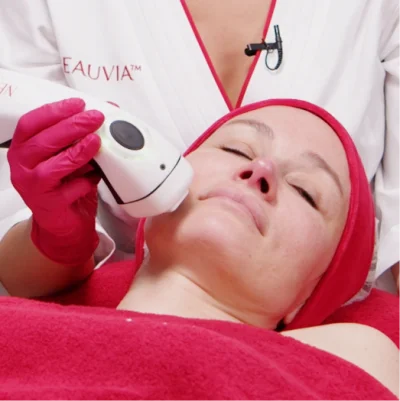
LaserMe is a non-ablative fractional diode laser used in medical aesthetics clinics across the UK to support skin regeneration and pigmentation management. This guide is for anyone trying to understand what it is, how it works, and whether it may be relevant to their hyperpigmentation concern.
- What LaserMe is, and how it differs from ablative laser treatments
- Which pigmentation concerns it is commonly used for, including PIH, melasma, and sun damage
- What to consider around suitability, recovery, costs, and choosing a qualified practitioner
What Is Hyperpigmentation?
Hyperpigmentation is one of the most common skin concerns in the UK - and also one of the most misunderstood. The word gets used a lot, but what it actually describes is fairly straightforward: patches of skin that have become darker than the surrounding area.
It starts with melanin
Melanin is the pigment that gives skin, hair, and eyes their colour. It is produced by specialised cells called melanocytes, which sit at the base of the skin's outer layer. Everyone has roughly the same number of melanocytes - what varies is how active they are, and how much melanin they produce.
When something disrupts that process - whether that is sun exposure, inflammation, a hormonal shift, or an injury - melanocytes can go into overdrive. They produce more melanin than the skin needs, and that excess settles in localised areas rather than distributing evenly. The result is a patch of skin that appears darker than the rest.
Is hyperpigmentation the same as having a naturally dark complexion?
No. Hyperpigmentation is not a reflection of someone's natural skin tone - it is a change from their own baseline. It can affect people of every skin colour, from very fair to very deep, and it looks different depending on that baseline. On lighter skin, it tends to appear brown or tan. On deeper skin tones, it may appear dark brown, grey, or even blue-black.
It is also worth knowing that hyperpigmentation is not a single condition. It is an umbrella term covering several distinct types, each with different causes and different behaviours. Understanding which type is present - and why - is the starting point for managing it effectively.
What Is Actually Happening Inside The Skin?
Hyperpigmentation is not just a surface change - understanding what triggers it, and where in the skin it occurs, helps explain why some cases fade relatively quickly while others persist for years.
The melanin production process
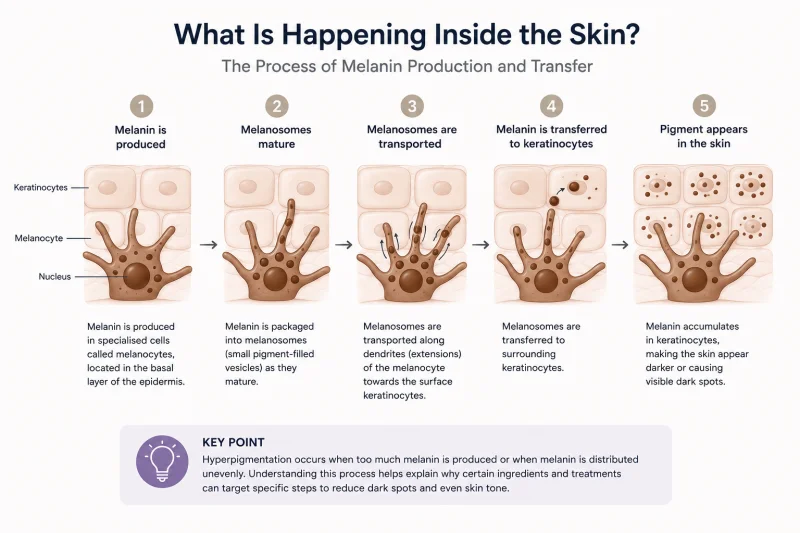
Melanocytes produce melanin through a process called melanogenesis. The key driver is an enzyme called tyrosinase, which converts the amino acid tyrosine into melanin pigment. That pigment is then packaged into small organelles called melanosomes and transferred to the surrounding skin cells - keratinocytes - which carry it toward the skin's surface.
Under normal circumstances, this process is tightly regulated. But when the skin is exposed to a trigger - UV radiation, inflammation, injury, or a hormonal signal - the system can be pushed into overdrive. Inflammatory mediators such as cytokines and prostaglandins stimulate melanocytes to produce far more melanin than the skin requires, and that excess accumulates in localised patches rather than distributing evenly.
Does it matter where in the skin the pigment sits?
Yes - and this is a detail that most consumer-facing content overlooks entirely.
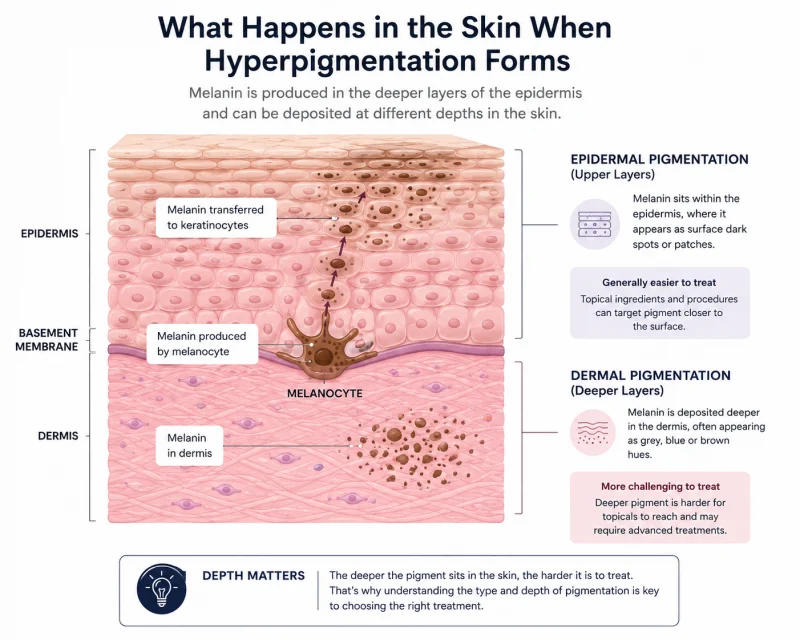
Hyperpigmentation can occur in two distinct layers of the skin, and the depth of the pigment has a direct bearing on how it looks, how long it lasts, and how well it responds to treatment.
- Epidermal hyperpigmentation sits in the upper layers of the skin. It tends to present as tan, brown, or dark brown patches, and while it can persist for months without treatment, it is generally more responsive to topical skincare and time. As the skin naturally sheds and renews, epidermal pigmentation has a reasonable chance of fading - particularly if the original trigger is addressed.
- Dermal hyperpigmentation is more complex. Here, melanin has migrated deeper into the dermis, where it is taken up by immune cells called macrophages. This produces a distinctly different appearance - often blue-grey rather than brown - and the pigment is far less accessible to topical treatments. Dermal hyperpigmentation can be very persistent, and in some cases, it does not fully resolve.
In practice, both types can be present at the same time, which is part of why assessing hyperpigmentation properly - rather than treating all dark marks as equivalent - matters.
What Causes Hyperpigmentation?
Hyperpigmentation has a wide range of causes, and in many cases, more than one factor is involved. Broadly, triggers fall into a few main categories: sun exposure, inflammation, hormonal changes, medications, and, in rare cases, underlying health conditions.
Sun exposure
UV radiation is one of the most common drivers of hyperpigmentation. When the skin is exposed to sunlight, melanocytes produce more melanin as a protective response. Over time - particularly with repeated, unprotected exposure - this leads to the uneven patches commonly known as sun spots, age spots, or solar lentigines. These tend to appear on areas that receive the most sun: the face, neck, hands, and forearms.
Inflammation and skin injury
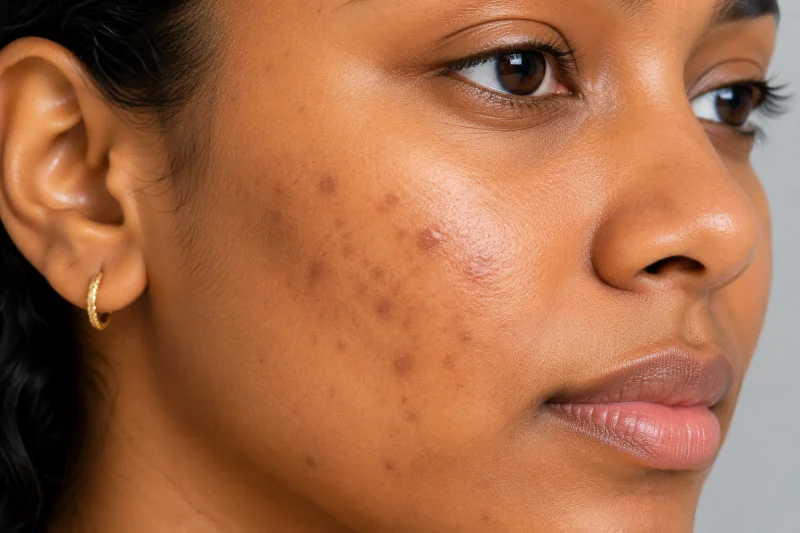
When the skin experiences inflammation - from acne, eczema, a cut, a burn, or any kind of trauma - the healing process can trigger melanocyte activity in the affected area. The resulting dark marks are known as post-inflammatory hyperpigmentation (PIH). This is one of the most common types, and it can follow even a relatively minor skin disruption.
Hormonal changes
Shifts in hormone levels - particularly oestrogen and progesterone - can directly stimulate melanin production. This is the most common mechanism behind melasma, the type of hyperpigmentation that often develops during pregnancy, while taking the combined oral contraceptive pill, or during perimenopause. Hormonal hyperpigmentation is covered in more detail in the next section.
Medication
Several medications can trigger or worsen hyperpigmentation as a side effect. These include certain antimalarial drugs, some antibiotics, tricyclic antidepressants, and chemotherapy agents. Some topical products - particularly those containing irritating ingredients used incorrectly - can also cause localised darkening.
Can my medication be causing it?
If pigmentation has developed or worsened since starting a new medication, it is worth raising with a GP or pharmacist. The relationship between medication and skin colour change is not always well publicised, and it is an easy factor to overlook.
When is pigmentation a sign of something more serious?
In most cases, hyperpigmentation is a cosmetic concern with no underlying health implications. That said, two conditions are worth knowing about.
Addison's disease - a condition affecting the adrenal glands - can cause widespread skin darkening, particularly in skin creases, on scars, and inside the mouth. Haemochromatosis, an inherited condition involving iron overload, can give the skin a bronze or grey-brown appearance. Both are rare, but both warrant medical investigation if other symptoms are present. These are covered in more detail in the section on when to see a doctor.
How Do Hormones Affect Skin Pigmentation?
Hormones play a more significant role in hyperpigmentation than many people realise - and the connection goes well beyond pregnancy. Several hormonal pathways can influence melanocyte activity, which helps explain why pigmentation sometimes appears or worsens at life stages or during periods seemingly unrelated to sun exposure or skin damage.
Oestrogen, progesterone, and melasma
The most well-documented hormonal trigger is the relationship between oestrogen and progesterone and a type of hyperpigmentation called melasma. These hormones can stimulate melanocytes directly, encouraging excess melanin production - particularly in sun-exposed areas of the face such as the cheeks, forehead, and upper lip.
Melasma is significantly more common in women, and it frequently develops during pregnancy, when taking the combined oral contraceptive pill, or during perimenopause - all points at which oestrogen and progesterone levels shift. It can also occur in people taking hormone replacement therapy (HRT). That said, not everyone who experiences these hormonal changes will develop melasma. Genetics, sun exposure, and skin type all influence whether the condition appears and how pronounced it becomes.
The contraceptive pill and HRT
It is worth being specific here, because this is something many people are uncertain about. The combined pill - which contains both oestrogen and progesterone - carries a higher association with melasma than the progesterone-only pill. If pigmentation has developed or worsened since starting hormonal contraception, it is reasonable to raise this with a GP, as alternatives may be worth considering.
HRT carries a similar but less extensively studied association. Given that perimenopause itself can trigger hormonal pigmentation, this can make the picture harder to unpick - and it is another reason why a clinical assessment is useful rather than assuming sun damage is the sole cause.
Does stress really affect skin pigmentation?
This is an angle that rarely appears in consumer-facing content, but the evidence behind it is genuine.
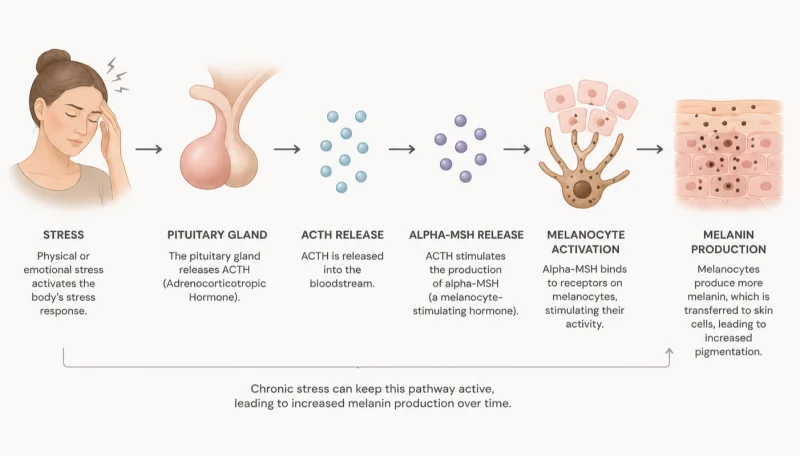
Chronic stress triggers the release of a hormone called adrenocorticotropic hormone (ACTH) from the pituitary gland. ACTH is part of the same hormonal pathway that regulates melanin production - specifically, it stimulates the production of alpha-melanocyte-stimulating hormone (alpha-MSH), which directly activates melanocytes. In other words, sustained psychological stress can, over time, contribute to increased pigment production through a measurable hormonal mechanism.
Separately, stress-driven inflammation can also trigger post-inflammatory hyperpigmentation even without an obvious skin injury. The two pathways - hormonal and inflammatory - can compound one another.
This does not mean that stress alone will cause visible dark patches overnight. But for people who notice pigmentation worsening during particularly pressured periods, there is a plausible biological explanation - not just a coincidence.
Why Does Hyperpigmentation Affect Darker Skin Tones More Severely?
For people with deeper skin tones, hyperpigmentation is not just more common - it can be more intense, more persistent, and more difficult to treat. This is not a matter of perception. There are clear biological reasons why the same trigger that leaves little trace on fair skin can produce months or years of visible darkening in someone with a deeper complexion.
The biology behind the difference
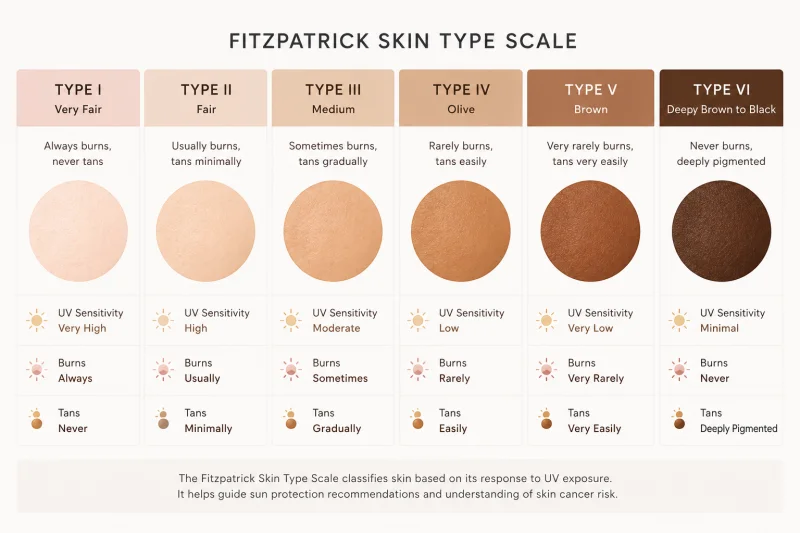
Skin tone is determined by the activity of melanocytes, not their number. People with Fitzpatrick skin types III to VI - a clinical scale used to classify skin from very fair to very deep - have melanocytes that are more reactive and produce melanin more readily in response to any form of stimulation. When inflammation, injury, or a hormonal trigger occurs, the melanocyte response in deeper skin tones tends to be stronger and more sustained.
Research published in StatPearls notes that the incidence of post-inflammatory hyperpigmentation in darker-skinned individuals with acne can be as high as 65%. That is a significant figure - and it helps explain why PIH following acne is one of the most common reasons people with skin of colour seek dermatological care in the UK.
Why do some dark marks last for years while others fade in weeks?
Two factors determine this: the depth of the pigment and the skin type of the person affected.
As discussed earlier in this article, epidermal pigmentation is closer to the surface and is more likely to fade over time as the skin renews. Dermal pigmentation - where melanin has migrated deeper - is considerably more resistant. In deeper skin tones, dermal involvement is more likely, in part because more reactive melanocytes produce larger volumes of melanin that the skin's upper layers cannot fully contain.
There is also the matter of what triggered the pigmentation in the first place. Deeper or more prolonged inflammation tends to drive melanin deeper into the dermis. For someone managing a long-standing inflammatory condition such as eczema or cystic acne - both of which disproportionately affect people with skin of colour - the cumulative effect on pigmentation can be considerable.
A gap in UK clinical care
This is worth stating plainly. Research into hyperpigmentation treatments has historically been conducted predominantly on lighter skin types, meaning the evidence base for managing PIH in skin of colour is thinner than it should be. A 2022 paper in Clinical and Experimental Dermatology noted limited training in ethnic dermatology in UK clinical settings, despite a growing population of people with skin of colour. A 2025 piece in the Pharmaceutical Journal highlighted that delayed diagnosis in darker skin tones leads to prolonged inflammation, which, in turn, worsens hyperpigmentation.
The practical implication is that people with deeper skin tones may need to be more proactive in seeking assessment from a practitioner with specific experience in skin of colour. Not all treatments appropriate for lighter skin are safe or effective across all skin types - a point covered in the next section.
Can A Skin Treatment Or Procedure Cause Hyperpigmentation?
It is a question that does not get asked often enough before treatment - and one that can cause significant distress when the answer turns out to be yes. Certain aesthetic and dermatological procedures can trigger hyperpigmentation as a direct consequence of their mechanism of action, rather than as a sign that something has gone wrong.
Which treatments carry a risk?
Any procedure that causes controlled injury or inflammation to the skin carries a potential risk of post-inflammatory hyperpigmentation. This includes:
- Laser and light-based treatments - including resurfacing lasers, IPL (intense pulsed light), and some pigmentation-targeting devices
- Chemical peels - particularly medium and deep peels that penetrate beyond the superficial skin layer
- Microneedling - which creates micro-injuries to stimulate collagen production
- Cryotherapy - the use of extreme cold to treat localised skin lesions
- Dermabrasion - mechanical exfoliation at a clinical depth
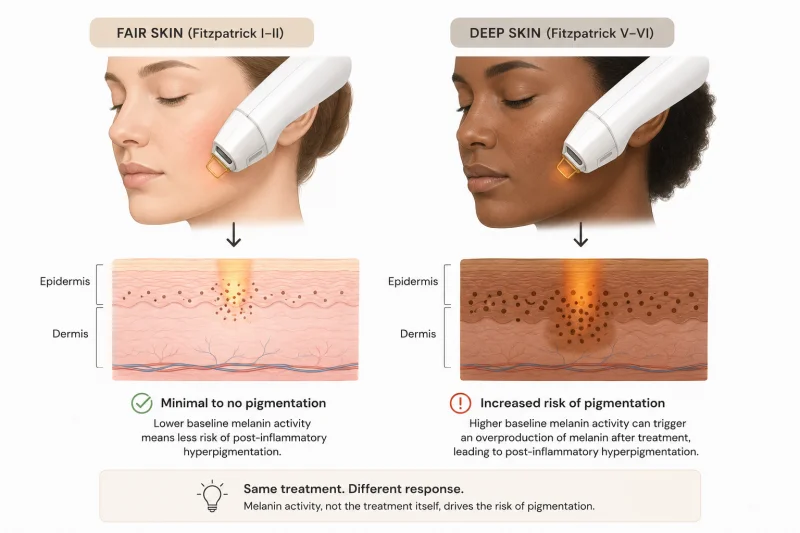
This is not a list of treatments to avoid. Many of these procedures are effective, evidence-based options for a range of skin concerns. The point is that they all involve a degree of skin trauma, and in some individuals - particularly those with deeper skin tones - that trauma can stimulate excess melanin production in the treated area.
Why is the risk higher in deeper skin tones?
As covered in the previous section, people with Fitzpatrick skin types III to VI have more reactive melanocytes. A laser wavelength or peel depth that produces minimal pigmentation response in a fair-skinned patient can cause significant and persistent PIH in someone with a deeper complexion. This is not a rare complication - it is a predictable biological response when treatment parameters are not adjusted appropriately for skin type.
Importantly, this risk can be substantially reduced with the right assessment and approach. Patch testing, appropriate device selection, adjusted energy settings, and thorough pre-treatment preparation all matter. In practice, it means that the practitioner's experience and skin-type expertise are at least as important as the treatment itself.
What about topical products?
Some skincare ingredients can also cause or worsen hyperpigmentation if used incorrectly. Certain acids used at too high a concentration, products that cause irritation or allergic contact dermatitis, and - counterintuitively - some brightening ingredients used without adequate sun protection can all contribute to pigmentation changes. Riehl melanosis, a form of contact pigmentation, is a specific example noted in UK clinical guidance, caused by photocontact allergic reactions to certain ingredients.
If a new product or treatment coincides with the onset of pigmentation, that timing is worth noting and raising with a practitioner.
How Do I Know What Type Of Hyperpigmentation I Have?
Not all hyperpigmentation is the same, and the distinction matters. The type present influences how it is likely to behave, how long it may last, and which approaches are most likely to help. A reasonable starting point is looking at where the pigmentation is, when it appeared, and what, if anything, preceded it.
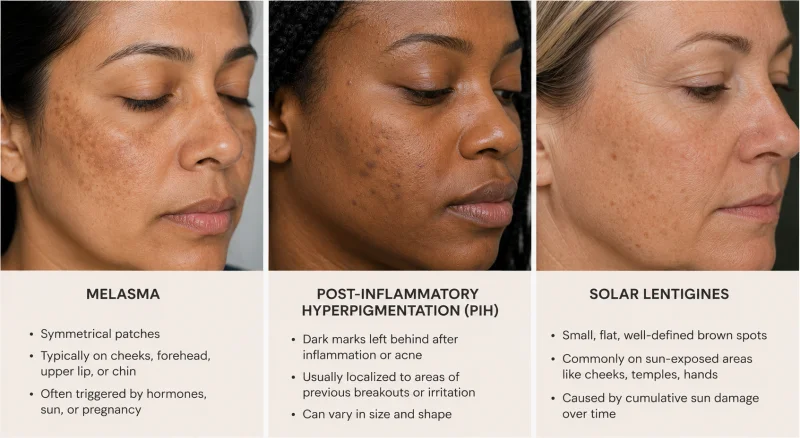
The main types and how they differ
Melasma tends to appear as larger, symmetrical patches on sun-exposed areas of the face - most commonly the cheeks, forehead, upper lip, and chin. It has a characteristic patterned quality and often affects both sides of the face in a broadly similar way. It is strongly associated with hormonal triggers and tends to worsen with sun exposure. Melasma can be particularly stubborn because even when it fades, it often returns - especially if the hormonal or UV triggers are not managed.
Post-inflammatory hyperpigmentation (PIH) follows a period of skin inflammation or injury. The marks appear in the same location as the original breakout, wound, or skin reaction, which makes the history a useful diagnostic clue. PIH can range from light tan to very dark brown, and in deeper skin tones, it may present as grey or near-black. Unlike melasma, it does not tend to be symmetrical.
Solar lentigines and age spots are flat, well-defined patches that develop gradually from cumulative sun exposure. They are most common on the face, hands, and forearms - areas that receive consistent UV over the years. They tend to have clear edges and a fairly uniform colour within each mark.
Freckles (ephelides) are genetically determined and typically appear in childhood or adolescence. They are more common in fair skin types and tend to fade in winter and deepen in summer - behaviour that distinguishes them from other forms of hyperpigmentation.
Can I assess this myself?
To a degree, yes - particularly if the cause is fairly clear. PIH following a known bout of acne, or sun spots on sun-exposed areas in someone with significant cumulative exposure, are reasonably identifiable without clinical input.
That said, self-assessment has limits. Melasma in particular can be difficult to distinguish from other types, and its depth - epidermal or dermal - affects both appearance and treatment response. A Wood lamp examination, available in a clinical setting, uses ultraviolet light to help determine where in the skin the pigment sits. Epidermal pigmentation tends to fluoresce under Wood lamp light; dermal pigmentation does not, which provides a useful diagnostic indicator.
If there is any uncertainty about the cause, if the pigmentation is widespread, or if previous treatment has not produced the expected result, a clinical assessment is worthwhile - and in some cases, important.
Will It Fade Without Treatment?
Whether hyperpigmentation fades on its own depends on several factors: the type and depth of the pigment, the original trigger, and the individual's skin type. For some people, marks improve noticeably within a few months once the cause is addressed. For others, they persist for years or do not fully resolve without intervention. Honest expectation-setting here matters because many people wait longer than necessary before seeking advice.
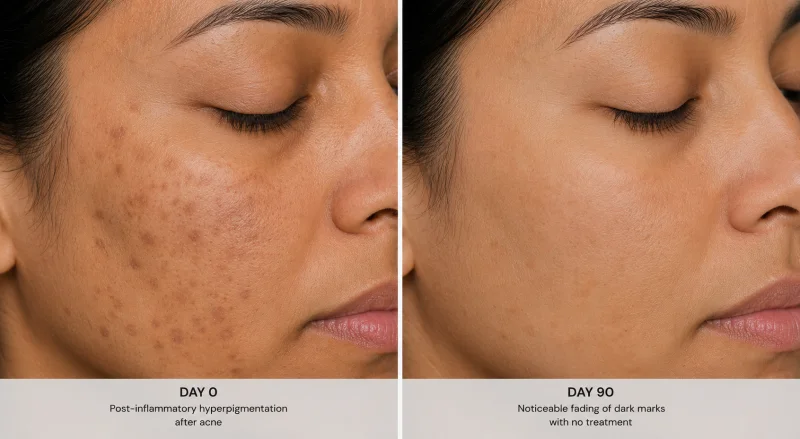
Epidermal hyperpigmentation
Epidermal pigmentation, located in the upper layers of the skin, has a reasonable chance of fading over time. As the skin naturally sheds and renews, excess melanin in the epidermis gradually moves toward the surface and is shed with dead skin cells. This process can take anywhere from a few months to well over a year, and it is significantly influenced by two things: whether the original trigger has been resolved, and whether consistent sun protection is in place.
Sun exposure is worth emphasising here. UV light actively stimulates melanocyte activity, meaning that even incidental sun exposure - a daily commute, sitting near a window - can slow or reverse the fading process. Epidermal hyperpigmentation that might otherwise improve can persist indefinitely if sun protection is not a consistent part of daily routine.
Dermal hyperpigmentation
Dermal pigmentation is considerably less likely to resolve on its own. Because the melanin has been taken up by macrophages deep in the dermis, it is beyond the reach of the skin's natural renewal process and largely inaccessible to most topical treatments. In some cases, it does fade slowly over a long period. In others, it is effectively permanent without clinical intervention.
The blue-grey appearance associated with dermal hyperpigmentation can sometimes be mistaken for bruising or vascular changes - another reason why a proper assessment is useful if pigmentation does not behave as expected.
Skin type and fading timelines
Skin type plays a direct role in how quickly - or whether - hyperpigmentation fades. As discussed in the earlier section on darker skin tones, people with Fitzpatrick types III to VI tend to experience more sustained pigmentation responses. The fading process, even for epidermal marks, can take considerably longer than in fairer skin. In some cases, marks that would resolve within weeks in lighter skin persist for a year or more.
That said, fading is not impossible, and timeline should not be mistaken for permanence. Managing the original trigger, protecting the skin consistently from UV, and - where appropriate - seeking clinical advice can all make a meaningful difference.
When Should I See A Doctor?
Most hyperpigmentation is a cosmetic concern rather than a medical one, and in many cases, it does not require clinical input to manage. That said, there are situations where getting a professional assessment is genuinely important - and a few where it is urgent.
Signs that warrant a GP appointment
The following are worth raising with a GP, particularly if they are new or unexplained:
- Pigmentation that has appeared suddenly or spread quickly across a wide area
- Darkening that is not confined to sun-exposed areas, or that affects skin folds, the gums, or the inside of the mouth
- Pigmentation accompanied by other symptoms - persistent fatigue, unexplained weight loss, dizziness, or digestive changes
- Skin that has darkened significantly without an obvious trigger, such as sun exposure, inflammation, or medication
- A mark that has changed in colour, shape, or size over a period of weeks
The first three points in particular may indicate an underlying systemic condition. As noted earlier in this article, Addison's disease and haemochromatosis are both associated with generalised skin darkening and require medical investigation. Neither is common, but both are conditions that should not be missed - and both are manageable when identified and treated appropriately.

When to seek a dermatologist or specialist
Beyond GP-level concerns, there are also situations where a dermatologist or aesthetics practitioner with skin pigmentation expertise is the more appropriate route:
- Hyperpigmentation that has not improved after several months of consistent sun protection and basic skincare
- Pigmentation in deeper skin tones where previous treatment has had a limited effect or caused worsening
- Melasma that is recurrent, widespread, or has not responded to standard topical approaches
- Any uncertainty about which type of hyperpigmentation is present, particularly where clinical assessment tools such as Wood lamp examination may be helpful
In the UK, referral to NHS dermatology for cosmetic pigmentation concerns is generally not available through standard GP pathways. Private dermatology appointments and aesthetic clinics with specialised expertise in skin pigmentation are typically the practical route for those seeking a more in-depth assessment or treatment.
A specific note on the skin colour
It is worth repeating a point made earlier. Research has shown that skin conditions in people with darker skin tones are more likely to be missed or misidentified in primary care settings. If a GP assessment does not feel adequate - or if a diagnosis does not fit the pattern of what is being experienced - seeking a second opinion from a practitioner with specific experience in skin of colour is a reasonable and legitimate step.
Your Hyperpigmentation Questions
Real Questions from Real People — Answered
Straightforward answers to the questions people like you are asking right now about Hyperpigmentation.

Be the first to ask a Hyperpigmentation question.
Click here to ask your own question.
Find A Verified Clinic
Trusted Hyperpigmentation Experts, Local to You
Easily connect with qualified, verified professionals for safe, reliable treatment.

Skin Redefined Ltd
Skin Redefined is a Cheltenham-based aesthetics clinic specialising in regenerative skin treatments, anti-ageing solutions, and natural-looking results led by Nurse Prescriber Kelly Whittaker.

Dr Ed Robinson Clinics
Doctor-led medical aesthetics, skin & laser clinic in Hale, Cheshire
To find a Hyperpigmentation clinic near you, please click here.
Grow Your Practice with Hyperpigmentation
Whether you are already using Hyperpigmentation or considering adding it to your treatment menu, here is how to make the most of it.

Are you a practitioner? If you'd like to link your practice to Hyperpigmentation and become part of ConsultingRoom.com, you can register as a verified specialist using the information on our specialist registration page.
Once verified, your profile can feature Hyperpigmentation alongside the other treatments, conditions and products you support, helping patients searching ConsultingRoom.com find you directly.
Our Preferred Partner:
As more patients research hyperpigmentation online before booking a consultation, having your clinic listed against this condition on ConsultingRoom.com is becoming an increasingly valuable way to reach them. From melasma and post-inflammatory pigmentation to sun damage and age spots, patients turn to pages like this to understand their options before choosing a practitioner.
If your clinic treats hyperpigmentation, our dedicated practitioner resource explains everything you need to know, including how to get listed, showcase your expertise and connect with patients actively searching for treatment.
Find out how being listed here could help grow your clinic and connect you with patients seeking trusted, qualified care.