

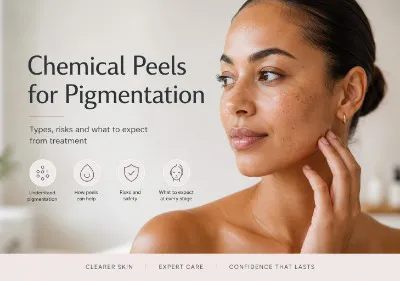
Chemical peels have been used in dermatology and aesthetic medicine for decades, and they remain one of the more accessible professional options for people dealing with uneven skin tone, dark spots, or post-acne marks. In recent years, their availability has expanded considerably - from medical clinics and dermatology practices through to high street aesthetic centres - which means more people than ever are considering them as part of a pigmentation management plan.
That wider availability is broadly a good thing, but it does introduce some complexity. Not every peel is the same, not every provider has the same level of training or experience, and not every type of pigmentation responds in the same way. Melasma, for instance, is frequently treated with chemical peels, yet clinical guidance consistently classifies them as a secondary approach for that condition - useful as part of a managed plan, but unlikely to produce lasting change without addressing the underlying triggers. Similarly, the risk profile of chemical peels varies meaningfully with skin tone, an area that generic guides tend to handle poorly or avoid entirely.
There is also the question of regulation. In England, the framework governing who can legally perform a chemical peel is still being developed. Understanding what that means in practice is a useful part of making an informed decision about where to seek treatment.
This guide covers how chemical peels work, which pigmentation types are likely to respond and which require more caution, what to expect from a course of treatment, and how to evaluate a provider in the current UK regulatory landscape.
To understand how chemical peels actually reduce pigmentation - and why the depth of that pigmentation matters more than most guides acknowledge - it helps to start with the mechanism itself.
Our Preferred Partner - LaserMe by Neauvia
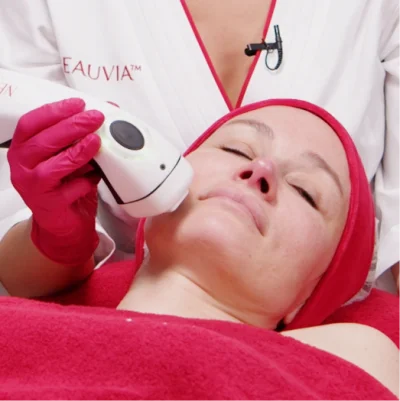
LaserMe is a non-ablative fractional diode laser used in medical aesthetics clinics across the UK to support skin regeneration and pigmentation management. This guide is for anyone trying to understand what it is, how it works, and whether it may be relevant to their hyperpigmentation concern.
- What LaserMe is, and how it differs from ablative laser treatments
- Which pigmentation concerns it is commonly used for, including PIH, melasma, and sun damage
- What to consider around suitability, recovery, costs, and choosing a qualified practitioner
How Chemical Peels Target Pigmentation
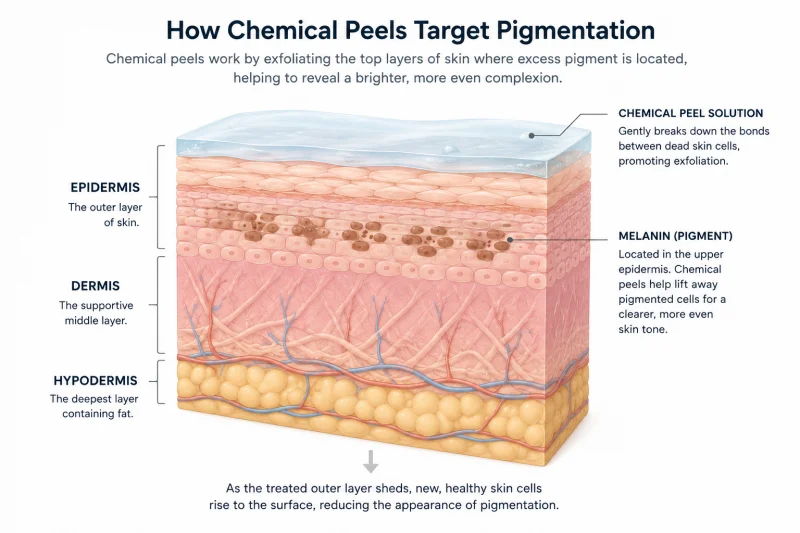
Chemical peels for pigmentation work by using an acid solution to remove the upper layers of skin - the layers where excess melanin tends to accumulate. It sounds more dramatic than it is in practice, but the principle is straightforward: by encouraging the skin to shed more quickly, peels help clear pigmented cells and allow newer, more evenly toned skin to come through.
What happens to melanin during a peel
Melanin - the pigment that gives skin its colour - is produced by cells called melanocytes and stored in the skin's outer layers. When something triggers overproduction, whether that is sun exposure, inflammation, or hormones, those layers build up more pigment than usual. A chemical peel speeds up the natural process of skin cell turnover, removing those pigment-heavy surface cells and interrupting the cycle.
Some peels also improve how well topical treatments absorb into the skin, which is why they are often used alongside brightening skincare rather than as a standalone fix.
Why the depth of your pigmentation matters
Not all pigmentation sits at the same level. Epidermal pigmentation - the kind found in the outer skin layers - responds well to chemical peels. Dermal pigmentation, which sits deeper below the surface, is much harder to reach with any kind of peel. This distinction matters because it affects how much improvement is realistic and how many sessions might be needed.
Before any treatment, a practitioner should assess whether your pigmentation is epidermal, dermal, or mixed. It changes the approach considerably.
The Types Of Chemical Peel Used For Dark Spots
Not all chemical peels work in the same way, and the acid used - along with its concentration and depth of penetration - makes a significant difference when it comes to treating pigmentation specifically.
Glycolic acid peels
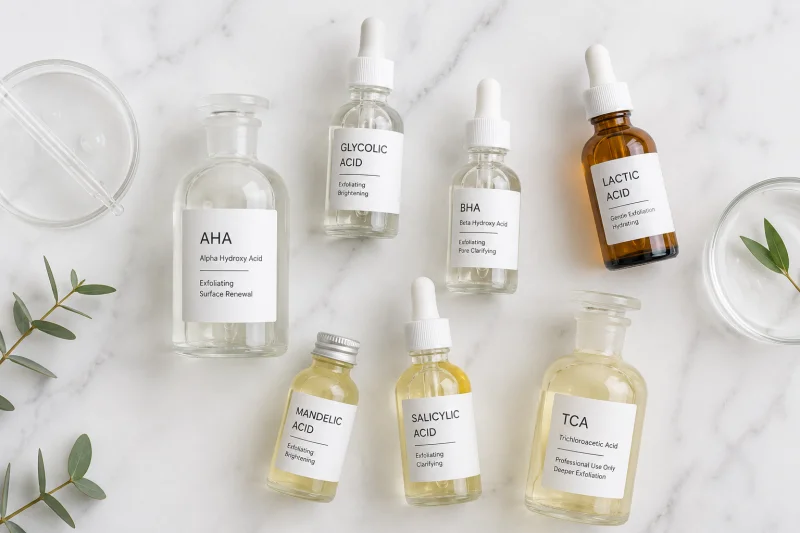
Glycolic acid is one of the most widely used acids in pigmentation treatment. It belongs to the alpha-hydroxy acid (AHA) family and works by loosening the bonds between dead skin cells, encouraging them to shed more quickly. Its small molecular size means it penetrates the skin relatively efficiently, making it effective for mild to moderate epidermal pigmentation, including sun damage and post-inflammatory marks. Concentration matters - lower strengths offer gentle exfoliation, while higher concentrations produce a more pronounced peeling effect.
Salicylic acid peels
Salicylic acid is a beta-hydroxy acid (BHA) with both exfoliating and anti-inflammatory properties, making it a common choice when pigmentation is linked to acne or oily skin. It works on the skin's surface and within the pore lining, helping reduce inflammation that can trigger post-inflammatory hyperpigmentation. That said, evidence for salicylic acid specifically in PIH is mixed, and it tends to perform better as part of a broader treatment plan than as a sole intervention for pigmentation.
Lactic and mandelic acid peels
Both lactic and mandelic acid are gentler options within the AHA family. Lactic acid has shown good results in reducing pigmentation in darker skin tones, with studies showing meaningful reductions in melasma severity scores. Mandelic acid has a larger molecular size, meaning it penetrates more slowly and with less irritation potential - a useful characteristic for sensitive skin or where the risk of post-inflammatory hyperpigmentation needs to be minimised.
TCA and combination formulas
Trichloroacetic acid (TCA) penetrates more deeply than AHAs and is typically used for more stubborn or established pigmentation. At higher concentrations, it becomes a medium-depth peel, which increases both the potential for results and the risk of complications - particularly post-inflammatory hyperpigmentation in darker skin tones. Combination formulas, such as Jessner's solution (a blend of salicylic acid, lactic acid, and resorcinol), are also used in clinical settings and have a reasonable evidence base for melasma treatment. Some newer combination approaches pair multiple acids to achieve a more potent effect than any single ingredient alone.
In practice, a well-chosen peel for pigmentation is rarely a one-size-fits-all decision. The right formula depends on the type of pigmentation, skin tone, and how the skin has responded to previous treatments.
Which Pigmentation Types Respond Best To Peels?
Chemical peels can be effective for several types of hyperpigmentation, but how well they work - and how safely - depends considerably on what is causing the pigmentation in the first place. Understanding the distinction before booking is genuinely useful.
Sun damage and age spots
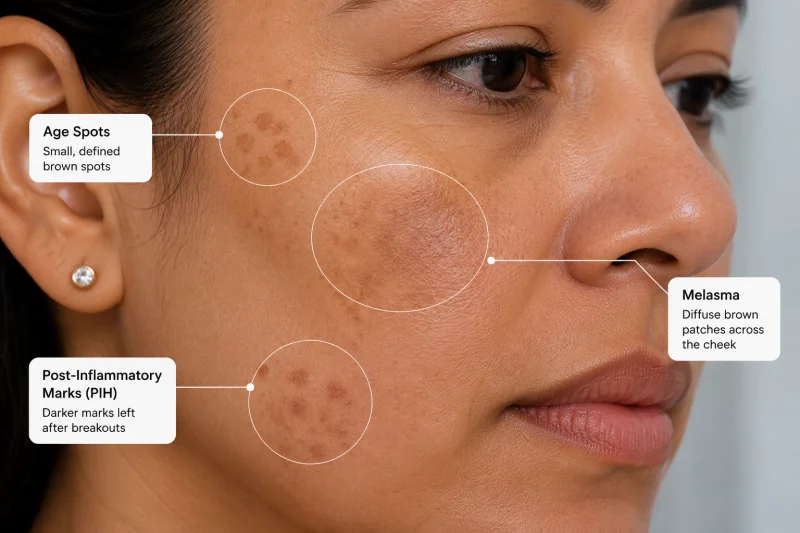
Superficial sun damage and age spots (also called solar lentigines) are among the pigmentation types that tend to respond most predictably to chemical peels. They are typically epidermal, meaning the excess melanin sits within the layers a peel can reasonably reach. A course of light-to-medium peels, combined with consistent sun protection, can produce a visible improvement in tone and clarity over time.
Post-inflammatory hyperpigmentation (PIH)
PIH - the dark marks left behind after acne, injury, or skin irritation - can also respond well to peels, though results vary depending on skin tone and how deep the pigmentation has settled. Clinical guidance positions chemical peels as an option for moderate-to-severe PIH, typically after topical treatments have been tried first. It is worth noting that the skin's sensitivity following inflammation means that peel strength and timing need careful consideration; an overly aggressive approach can extend the problem rather than resolve it.
Melasma - why it is more complicated
Melasma is one of the most common reasons people seek chemical peels for pigmentation, and also one of the most nuanced. It is a hormonally influenced condition, often triggered or worsened by sun exposure, which means its underlying drivers do not respond to peels the way surface pigmentation does. Clinical sources consistently classify peels as a secondary treatment for melasma - useful as part of a managed plan, but unlikely to produce lasting results on their own.
A 2024 meta-analysis comparing chemical peels and laser treatments for melasma found that peels reduced pigmentation severity, but more slowly than laser treatments, and with a safer side-effect profile, particularly for those prone to post-inflammatory reactions. The practical implication is that peels can play a meaningful role in melasma management, but they work best alongside topical brightening agents and rigorous daily SPF use. Without addressing those triggers, improvement tends to be temporary.
That is not a reason to dismiss peels as an option for melasma - it is a reason to approach them as part of a broader plan rather than a standalone solution.
Are Chemical Peels Suitable For Darker Skin Tones?
Chemical peels can be used safely on darker skin tones, but this is an area where the choice of acid, concentration, and practitioner experience genuinely matters. The risk profile is different, and it is worth understanding why before making any decisions.
How does darker skin respond differently to acids
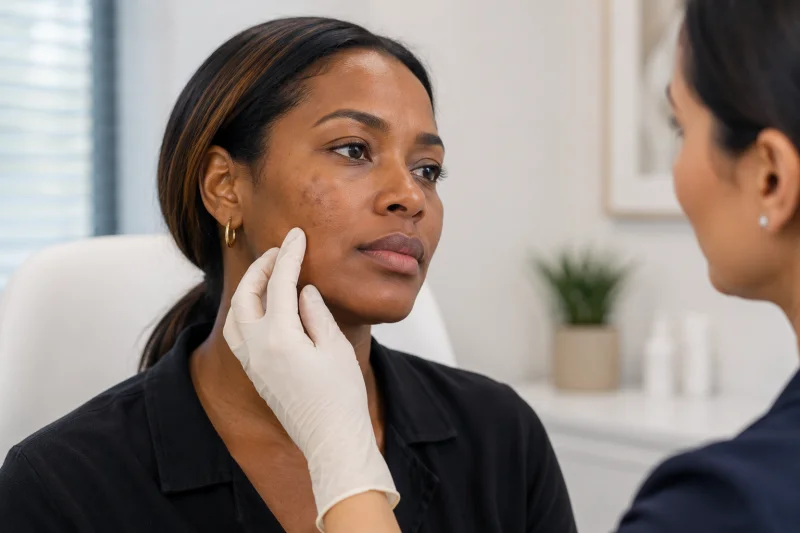
Skin that is naturally richer in melanin is more reactive to inflammatory triggers, including those produced by controlled exfoliation in a chemical peel. When melanocytes (the cells that produce melanin) are stimulated by inflammation, they can respond by producing more pigment. This means that a peel intended to reduce dark spots can, in some cases, cause new or worsened pigmentation in the treated area - a complication known as post-inflammatory hyperpigmentation (PIH).
This is not a reason to rule out peels entirely. It is a reason to approach them differently. A 2024 systematic review examining PIH treatment outcomes in skin of colour - covering 1,356 patients across 48 studies - confirmed that PIH has a heightened predilection for darker skin tones and, once established, can be chronic and difficult to treat. Separately, research on the safety of superficial peels found that patients with deeper skin tones experienced higher rates of post-peel hyperpigmentation than those with lighter skin tones, particularly at higher acid concentrations.
The core principle across clinical guidance is consistent: several lighter peels spaced weeks apart tend to be both safer and more effective for darker skin than a single aggressive session.
Which peel types carry a lower risk
Superficial peels are generally considered the safer option for melanin-rich skin. Within that category, lactic acid and mandelic acid are often preferred - both have lower irritation potential and penetrate more slowly, reducing the likelihood of triggering an inflammatory response. Low-concentration glycolic acid can also be appropriate when used conservatively.
Medium-depth peels - including higher-concentration TCA - carry a meaningfully greater risk of PIH and scarring in darker skin tones and should only be considered under the guidance of a practitioner with relevant experience in treating diverse skin. Deep peels are rarely appropriate in this context.
What to ask your practitioner before proceeding
A practitioner experienced in treating darker skin tones will approach things differently from the outset. They should assess your Fitzpatrick skin type, ask about your history of scarring or previous peel reactions, and discuss a pre-treatment skincare protocol - often including a topical brightening agent used in the weeks before the peel to help stabilise melanocyte activity.
If a practitioner does not ask about your skin's history with inflammation or previous treatments, that is worth noting. Patch testing before a full treatment is also a reasonable expectation, not an optional extra.
This section of the market is underserved by generic advice. Darker skin tones are not a contraindication to chemical peels, but they do require a more considered, individualised approach than lighter skin tones typically need.
What Happens During A Chemical Peel Appointment?
For most people, knowing what to expect before they arrive makes the whole process feel considerably less daunting. A chemical peel appointment for pigmentation typically follows a clear sequence, and understanding each stage helps you ask better questions and make a more informed assessment of the clinic you are considering.
Before the treatment begins
A responsible practitioner will not go straight to treatment. The appointment should start with a consultation or, if you have already had a separate consultation, a brief review of your skin on the day. Expect questions about your medical history, any medications you are taking, recent sun exposure, and whether you have had previous peels or skin treatments. Some medications - including certain antibiotics and retinoids - can increase skin sensitivity and may affect whether the peel can go ahead as planned.
If the practitioner asks none of these questions, that is a meaningful signal about their approach.
Your skin will then be cleansed to remove any traces of product or oil. Some practitioners apply a pre-peel preparation solution to help the acid penetrate evenly.
The treatment itself
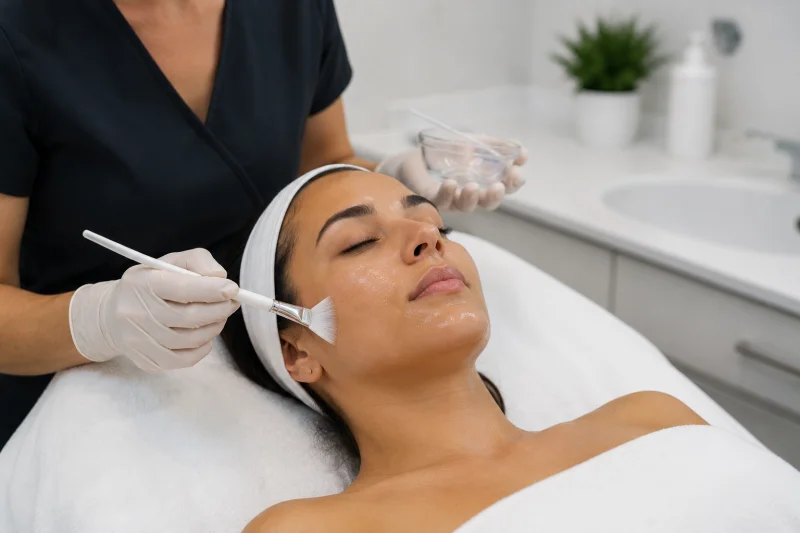
The acid solution is applied to the skin using a brush, gauze, or cotton pad, and left for a set contact time. This varies depending on the type and concentration of the acid. You may notice a mild tingling or warming sensation during this stage - this is normal for superficial peels. Any more pronounced stinging or discomfort should be reported to your practitioner immediately.
Depending on the formula used, the peel may be neutralised with a separate solution or self-neutralise over time. A soothing or barrier product is typically applied once the acid has been removed.
A superficial peel appointment generally takes between 30 and 60 minutes from start to finish, including preparation and aftercare application.
What to expect immediately after
Your skin may look slightly flushed or feel tight immediately after treatment - both are normal short-term responses. Visible peeling or flaking does not always occur with superficial peels, and its absence does not mean the treatment has not worked. Your practitioner should provide clear written aftercare instructions before you leave, including guidance on sun protection and which products to avoid in the days that follow.
What Does A Chemical Peel Cost In The UK?
Cost is a practical consideration that most clinic pages either gloss over or present selectively. The honest picture is that prices vary widely depending on the type of peel, the practitioner's background, and the clinic's location in the UK.
Typical price ranges by peel depth
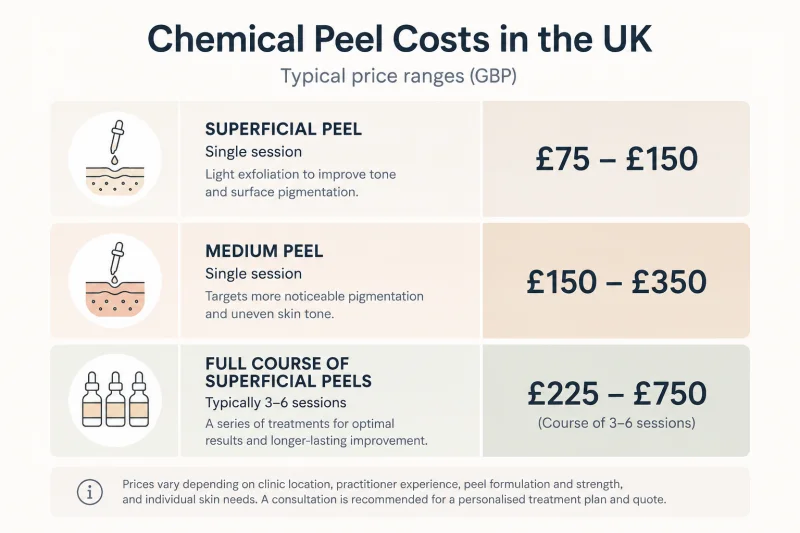
Superficial peels - the kind most commonly used for pigmentation - generally start from around £60 to £100 at beauty salons and aesthetic clinics. At dermatology practices or medical clinics, the same peel may cost £100-£200 or more, depending on the clinical setting and practitioner expertise.
Medium-depth peels, which involve stronger acids and carry a higher risk profile, typically range from £150 to £400 per session. These are less commonly offered outside medical aesthetic or dermatology settings, and the higher price generally reflects both the formulation and the level of clinical oversight involved.
Why costs vary
Several factors influence what you will pay beyond the peel type itself. Clinic location is one of the most significant - London and other major cities tend to command higher prices than regional clinics offering comparable treatments. The practitioner's qualifications and experience also play a role, as does the specific formula used; some combination peels or branded protocols carry a premium over standard single-acid treatments.
It is also worth factoring in any pre-treatment skincare recommended by the clinic, which may be charged separately or included in a package.
Thinking about the total course cost
A single peel session is rarely sufficient for meaningful improvement in pigmentation. Most people will need a course of three to six sessions, which means the total investment looks quite different from the headline per-session price. At the lower end, a full course of superficial peels might cost £200-£500. At a medical clinic or with a more specialised formula, the same course could reach £600 to £1,200 or beyond.
Some clinics offer course packages at a reduced rate per session, which can be worth asking about - though it is sensible to complete at least one session before committing to a full course, particularly if you have not had a peel before or are trying a new clinic.
What is not always included
Pre-treatment skincare, SPF products, and any follow-up consultations may or may not be built into the quoted price. Asking for a clear breakdown before you book helps avoid unexpected costs and gives you a useful indication of how thorough the clinic's approach is likely to be.
How Many Sessions Will I Need, And When Will I See Results?
This is one of the most common questions people have before starting a course of chemical peels for pigmentation - and one that clinic pages often answer vaguely. The honest answer involves a few variables, but a reasonable picture is possible.
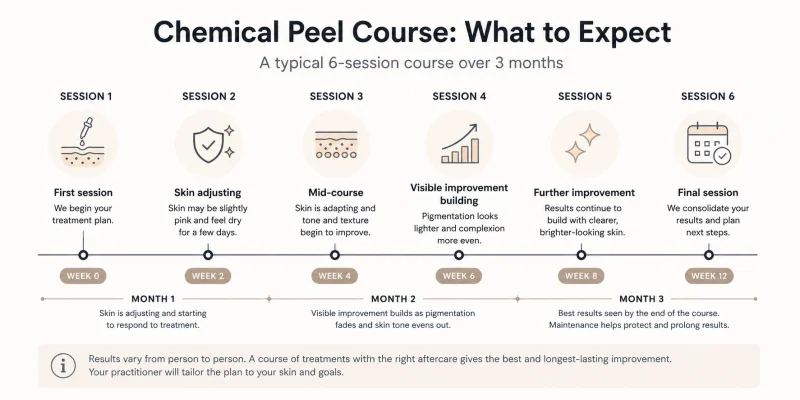
How a course of peels typically works
A single peel session rarely produces significant or lasting change in established pigmentation. Most people will need a course of three to six superficial peel sessions to see meaningful improvement, with sessions spaced roughly two to four weeks apart to allow the skin adequate time to recover and renew between treatments.
The reasoning is straightforward. Each session removes a layer of pigmented surface cells and encourages renewal, but the process is cumulative. Results build over the course rather than arriving all at once after a single treatment. This is particularly true for post-inflammatory hyperpigmentation and sun damage, where the pigment has accumulated over time and requires more than one cycle of exfoliation to clear meaningfully.
When you might start to notice a difference
Some people notice a brighter or more even skin tone after two or three sessions. For others, particularly where pigmentation is more established or the skin tone is deeper, improvement may take longer to become visible. It is also worth accounting for the fact that newly revealed skin needs consistent sun protection to maintain any progress - without it, UV exposure can restimulate pigment production and undo the benefit of earlier sessions.
Melasma and realistic timelines
For melasma specifically, expectations need to be calibrated carefully. Because melasma has hormonal and UV-related triggers that peels cannot address, results may be slower and less predictable than with other pigmentation types. Clinical evidence suggests peels can reduce melasma severity over a course of treatment, but recurrence is common - particularly if sun protection lapses or hormonal factors remain active. Ongoing maintenance, rather than a fixed endpoint, is often a more realistic framing.
What affects how quickly you see results
Several factors influence the pace of improvement beyond the number of sessions. The depth and type of your pigmentation matter, as does the acid used and its concentration. Adherence to aftercare - especially daily SPF use - has a significant bearing on whether progress is maintained between sessions. Starting with a pre-treatment skincare routine, as some practitioners recommend, can also influence how the skin responds from the outset.
In practice, a realistic expectation for most people is gradual, incremental improvement over two to three months rather than a rapid, visible change after one or two appointments.
Recovery And Aftercare - What You Need To Know
What happens in the days after a chemical peel has a direct bearing on the results you see - and on whether any complications arise. Aftercare is not a secondary consideration; for pigmentation treatment specifically, it is as important as the peel itself.
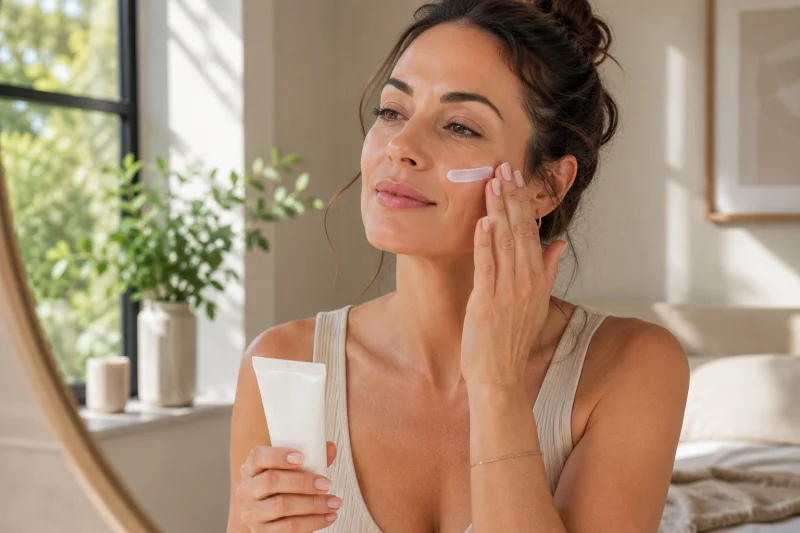
What to expect in the first week
The immediate post-peel period varies depending on the depth of the peel. After a superficial peel, most people experience some redness and tightness for the first 24 to 48 hours, followed by mild flaking or peeling that typically resolves within three to five days. This is the skin shedding the treated surface cells - the process the peel was designed to trigger.
It is worth noting that visible peeling does not always occur with lighter superficial peels, and its absence does not mean the treatment has not worked. Skin may simply feel slightly dry or look a little dull before it begins to clear.
Medium-depth peels involve a more pronounced response - more significant peeling, greater sensitivity, and a longer recovery window of around seven to ten days. During this period, the skin needs to be treated gently. Avoid exfoliating products, retinoids, vitamin C serums, and any products containing active acids until the practitioner confirms it is safe to reintroduce them.
Picking or pulling at peeling skin should be avoided entirely, both because it disrupts the healing process and because it can trigger skin trauma that leads to post-inflammatory hyperpigmentation, which is particularly counterproductive when treating pigmentation in the first place.
Sun protection after a chemical peel
This is the most critical element of post-peel aftercare, and it is non-negotiable regardless of the season. Freshly treated skin is significantly more sensitive to UV radiation than usual, and unprotected sun exposure in the weeks after a peel can cause new pigmentation, reverse treatment progress, or cause burning more easily than it otherwise would.
A broad-spectrum SPF 30 or higher should be applied daily starting the day after treatment, including on overcast days, which still allow meaningful UV exposure through cloud cover. UK-specific guidance from established aesthetic clinics recommends maintaining SPF use for at least six weeks post-peel. Physical sunscreens containing zinc oxide or titanium dioxide are generally better tolerated on sensitised post-peel skin than chemical sunscreen formulations, which can occasionally cause irritation during the healing period.
It is also sensible to avoid prolonged direct sun exposure during peak UV hours - broadly 11 am to 3 pm - for at least the first two weeks after treatment. This applies in the UK year-round, not only in summer.
Other aftercare essentials
Beyond sun protection, the key principles are straightforward. Keep the skin clean using a gentle, non-foaming cleanser. Moisturise regularly to support the skin barrier while it heals. Avoid heat - saunas, steam rooms, and strenuous exercise that causes significant flushing - for at least 48 hours after treatment, as heat can exacerbate redness and sensitivity.
Your practitioner should provide written aftercare instructions specific to the peel you have had. If they do not, it is entirely reasonable to ask for them before leaving the clinic.
Can A Peel Make Pigmentation Worse?
Yes - and this is one of the most important things to understand before booking. It is not a reason to avoid chemical peels, but it is a reason to go in informed. The risk is real, clinically documented, and more common in certain skin types and circumstances than most clinic pages acknowledge.
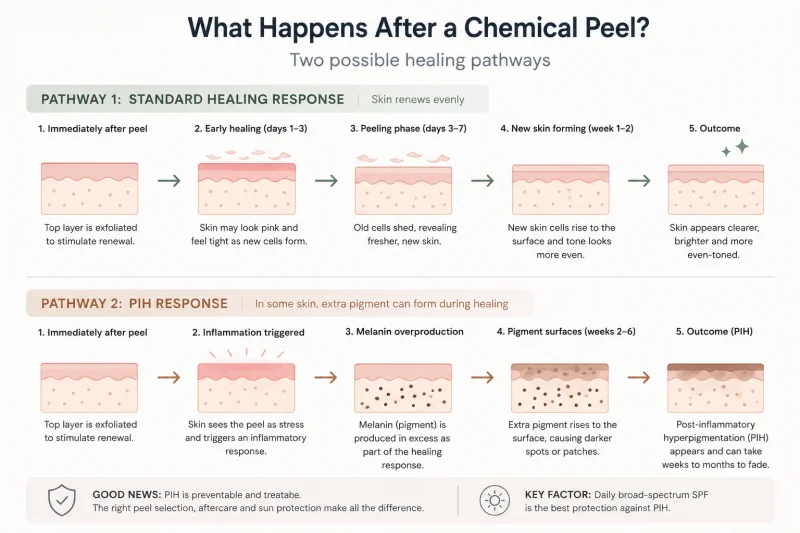
Why peels can trigger new or worsened pigmentation
The mechanism comes back to inflammation. Chemical peels work by creating a controlled injury to the skin surface, prompting it to shed and renew. In most cases, this process proceeds without complication. But in skin that is prone to pigmentation - whether because of skin tone, hormonal sensitivity, or a history of post-inflammatory hyperpigmentation - that inflammatory response can stimulate melanocytes to produce more pigment rather than less.
The result is post-inflammatory hyperpigmentation (PIH): new dark marks that appear in the treated area as the skin heals. In some cases these fade over time with appropriate management. In others, particularly in deeper skin tones, they can be persistent and difficult to treat. Clinical guidance is consistent on this point: PIH has a heightened predilection for darker skin tones and, once established, can follow a chronic course.
When the risk is higher
Several factors increase the likelihood that a peel will trigger PIH or worsen existing pigmentation.
- Using too high an acid concentration for the skin type, or leaving the peel on for longer than appropriate
- Treating skin that is already sensitised - from recent sun exposure, active acne, eczema, or use of retinoids
- Inadequate pre-treatment preparation, particularly in darker skin tones, where a priming skincare routine is often recommended in advance
- Insufficient sun protection after the peel, which can restimulate pigment production in newly sensitised skin
- Overlapping melasma with peel-induced inflammation - a combination that can produce particularly stubborn pigmentation
The specific challenge with melasma
Melasma deserves a separate mention here because the risk is particularly nuanced. Melasma is driven partly by melanocyte sensitivity to oestrogen and UV exposure. When peel-related inflammation occurs in melasma-prone areas - the cheeks, forehead, and upper lip - it can overlap with and amplify that underlying hormonal activity. The result can be pigmentation that is harder to categorise and treat than either melasma or PIH in isolation.
Clinical sources note that alpha and beta hydroxy acids used in peels should be used with caution in melasma patients, specifically, given the risk of exacerbation or relapse. This does not mean peels are unsuitable for melasma - but it does mean the approach needs to be carefully managed.
What this means in practice
A well-chosen peel, applied by a practitioner experienced in pigmentation and diverse skin tones, carries a manageable risk of PIH. The key variables are acid selection, concentration, skin preparation, and aftercare - all things that should be discussed in detail at consultation.
If a practitioner does not raise the possibility of PIH before treating you for pigmentation, it is worth raising it yourself. Understanding the risk profile is part of making an informed decision, and any reputable provider should be able to discuss it openly.
How To Find A Reputable Provider In The UK
Choosing where to have a chemical peel for pigmentation is not simply a matter of finding a convenient clinic or a competitive price. In the UK, the regulatory landscape for aesthetic treatments is still evolving - and understanding what that means in practice helps you ask the right questions before committing to treatment.
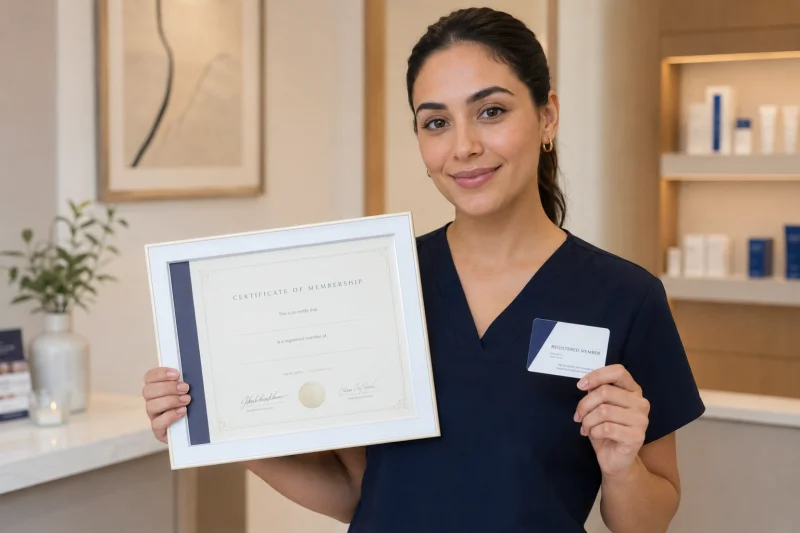
What the current regulatory landscape looks like
At present, there are no enforceable restrictions in England on who can perform a chemical peel. Unlike botulinum toxin injections, which are prescription-only and therefore restricted to regulated healthcare professionals, chemical peels currently sit outside that framework. In principle, any person can legally offer them.
This is not a permanent state of affairs. Following a public consultation in 2023, the government published its response in August 2025, proposing a traffic light classification system for non-surgical aesthetic procedures. Under this framework, superficial peels would likely fall into the Green category - meaning any licensed practitioner meeting agreed standards could perform them - while deeper or more complex procedures would require medical oversight or be restricted to qualified healthcare professionals entirely. Scotland has moved faster, already reclassifying superficial peels as low-risk under its own regulatory process, with formal legislation expected before 2026.
That framework has not yet been enacted into law in England. Until it is, the onus falls on the consumer to do their own due diligence.
What to look for in a provider
The absence of mandatory regulation does not mean that standards do not exist - it means they are voluntary. Reputable practitioners working in aesthetic medicine in the UK typically hold membership of recognised professional bodies such as the Joint Council for Cosmetic Practitioners (JCCP), the British Association of Cosmetic Nurses (BACN), or are registered healthcare professionals with the General Medical Council (GMC) or Nursing and Midwifery Council (NMC).
Beyond credentials, there are practical signals worth paying attention to.
- The practitioner asks about your medical history, medications, and previous skin treatments before recommending anything
- A patch test or skin assessment is offered, particularly if you have a deeper skin tone or a history of PIH
- The consultation feels unhurried and includes an honest discussion of what peels can and cannot achieve for your specific concern
- Written aftercare instructions are provided as standard
- The clinic can clearly explain which acid they are using, at what concentration, and why it is appropriate for your skin
If a clinic's primary focus at consultation is booking rather than assessing, that is worth noting.
Questions to ask before booking
A few direct questions can tell you a great deal about a provider's approach.
- What training have you completed specifically in chemical peels and pigmentation treatment?
- Have you treated my skin type before, and what is your experience with darker skin tones if relevant?
- What acid and concentration would you use, and why is that appropriate for my concern?
- What is your protocol for an adverse reaction?
- Is a patch test recommended before the full treatment?
A practitioner who answers these questions clearly and without defensiveness is demonstrating the kind of transparency that should be a baseline expectation, not a bonus.
Your Hyperpigmentation Questions
Real Questions from Real People — Answered
Straightforward answers to the questions people like you are asking right now about Hyperpigmentation.

Be the first to ask a Hyperpigmentation question.
Click here to ask your own question.
Find A Verified Clinic
Trusted Hyperpigmentation Experts, Local to You
Easily connect with qualified, verified professionals for safe, reliable treatment.

Skin Redefined Ltd
Skin Redefined is a Cheltenham-based aesthetics clinic specialising in regenerative skin treatments, anti-ageing solutions, and natural-looking results led by Nurse Prescriber Kelly Whittaker.
Dr Ed Robinson Clinics
Doctor-led medical aesthetics, skin & laser clinic in Hale, Cheshire
To find a Hyperpigmentation clinic near you, please click here.
Grow Your Practice with Hyperpigmentation
Whether you are already using Hyperpigmentation or considering adding it to your treatment menu, here is how to make the most of it.

Are you a practitioner? If you'd like to link your practice to Hyperpigmentation and become part of ConsultingRoom.com, you can register as a verified specialist using the information on our specialist registration page.
Once verified, your profile can feature Hyperpigmentation alongside the other treatments, conditions and products you support, helping patients searching ConsultingRoom.com find you directly.
Our Preferred Partner:
As more patients research hyperpigmentation online before booking a consultation, having your clinic listed against this condition on ConsultingRoom.com is becoming an increasingly valuable way to reach them. From melasma and post-inflammatory pigmentation to sun damage and age spots, patients turn to pages like this to understand their options before choosing a practitioner.
If your clinic treats hyperpigmentation, our dedicated practitioner resource explains everything you need to know, including how to get listed, showcase your expertise and connect with patients actively searching for treatment.
Find out how being listed here could help grow your clinic and connect you with patients seeking trusted, qualified care.