


If you've searched for an answer to this, it's probably because a mark you thought might fade hasn't, or one you thought had cleared has come back. Both experiences are common and have a logical explanation rooted in how pigmentation behaves in the skin, rather than anything going "wrong" with your treatment or routine.
Hyperpigmentation is often discussed as though it's a single condition with a single outcome, but it covers a range of presentations, from mild post-acne marks to melasma, each with quite different timelines and tendencies. This matters because the right expectations and approach depend heavily on the type you're dealing with. Treating a mark that would have faded naturally is unnecessary, while assuming a stubborn patch will simply disappear on its own can lead to disappointment.
This guide walks through what determines whether pigmentation fades, why some marks persist while others don't, how long realistic timelines tend to look like, and why recurrence is so often part of the picture, particularly with melasma. It also covers the less-discussed risk that some treatments can temporarily worsen pigmentation, which tends to help reduce the chances of marks returning, and when it's worth seeking a professional opinion rather than waiting it out.
To understand what's realistic for your own skin, it helps to start with the most basic question: is hyperpigmentation permanent at all?
Our Preferred Partner - LaserMe by Neauvia
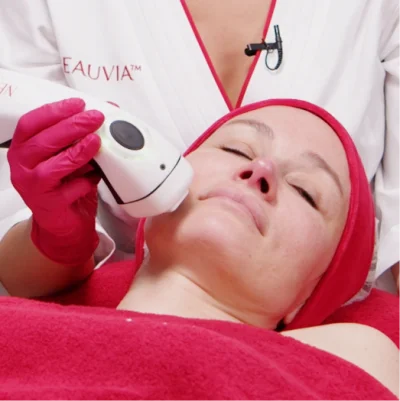
LaserMe is a non-ablative fractional diode laser used in medical aesthetics clinics across the UK to support skin regeneration and pigmentation management. This guide is for anyone trying to understand what it is, how it works, and whether it may be relevant to their hyperpigmentation concern.
- What LaserMe is, and how it differs from ablative laser treatments
- Which pigmentation concerns it is commonly used for, including PIH, melasma, and sun damage
- What to consider around suitability, recovery, costs, and choosing a qualified practitioner
So, Is Hyperpigmentation Permanent?
If you've been staring at a dark mark wondering whether it's here to stay, the honest answer is: it depends. Hyperpigmentation isn't a single condition with a single outcome, and whether it fades, lingers, or returns depends on a few specific factors.
What "permanent" actually means here
In practice, very few cases of hyperpigmentation are truly fixed and unchangeable from day one. What varies enormously is:
- How deeply the excess pigment sits in the skin
- What caused it in the first place
- How consistently it's protected from further sun exposure
- Whether the original trigger (acne, hormones, inflammation) is still active
Some marks fade quietly over a few months without any intervention. Others, particularly those linked to melasma or deeper skin injury, can persist for years or return after appearing to clear. That doesn't mean nothing can be done, but it does mean "permanent" is rarely a simple yes-or-no.

Why this matters before you start treatment
Understanding which category your pigmentation falls into can save a lot of frustration, time, and money. Treating a mark that would have faded on its own is unnecessary, while waiting on one that needs proper management can mean it settles in more deeply. The next sections walk through what actually determines this, so you can set realistic expectations from the start.
Why Some Pigmentation Fades And Other Marks Don't
The single biggest factor in whether a mark fades is how deep the excess melanin lies within the skin, which comes down to two broad categories: epidermal and dermal pigmentation.
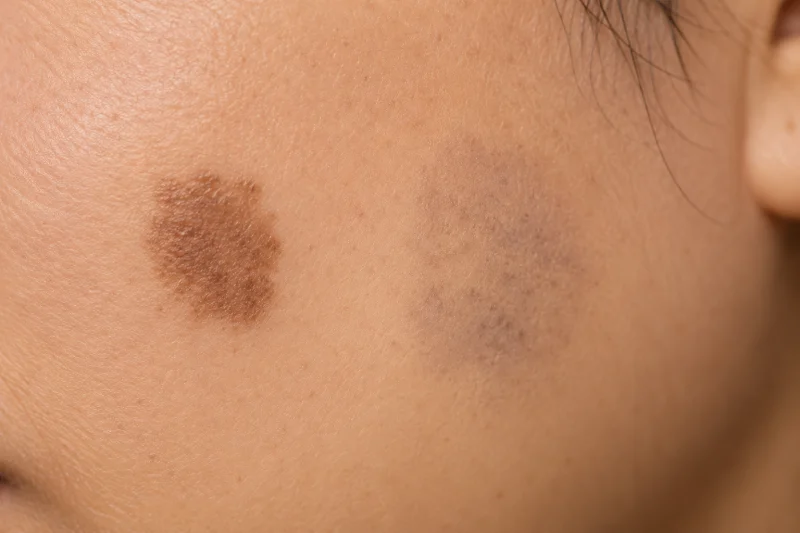
Epidermal pigmentation: closer to the surface
Epidermal pigmentation sits in the outer layer of the skin, where cells are constantly being renewed and shed. This is good news, because:
- It tends to appear as well-defined brown or tan patches
- It often improves naturally as skin cells turn over
- Sun protection plays a major role in preventing it from darkening further
This is the type most commonly seen with early post-acne marks, mild sun spots, and some forms of melasma.
Dermal pigmentation: deeper and more stubborn
Dermal pigmentation occurs when melanin escapes into the deeper layer of skin, where it's absorbed by cells called macrophages. Once there, it's much harder to shift. Marks tend to:
- Appear more grey-brown or blue-grey, with softer, less defined edges
- Persist for longer, sometimes for years
- Respond more slowly, or only partially, to treatment
In some cases, dermal pigmentation can be permanent regardless of skin tone, and it doesn't fade through the usual skin renewal process.
Why this distinction matters for treatment
A dermatologist or aesthetic practitioner can sometimes use a Wood's lamp (a type of UV light) during consultation to get a clearer sense of where pigment sits, which helps inform what's realistic to expect. That said, many marks involve a mix of both, which is part of why pigmentation can be so unpredictable to treat.
How Long Does Hyperpigmentation Usually Take To Fade?
One of the most common questions people ask is simply how long they should expect to wait, and the answer varies considerably depending on the type and depth of pigmentation involved.
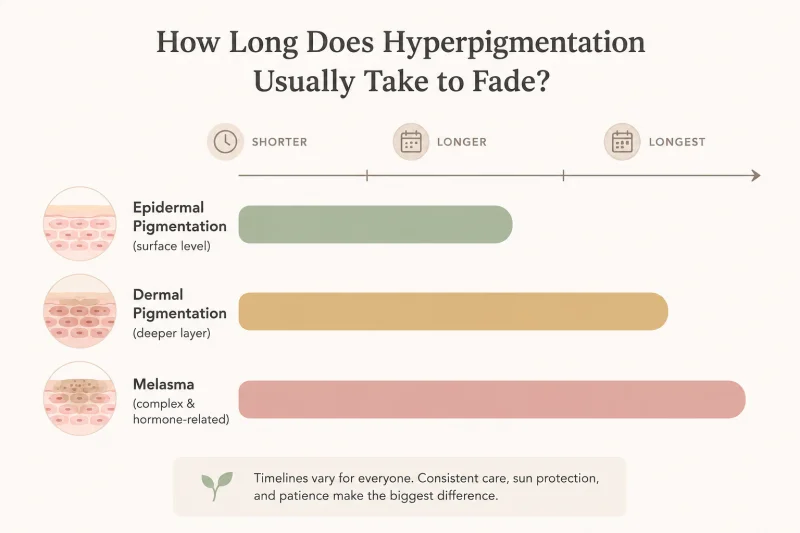
Typical timeframes for fading
As a general guide:
- Epidermal pigmentation often improves within 6 to 12 months, particularly with consistent sun protection
- Dermal pigmentation fades much more slowly, sometimes taking years, and may never fully resolve
- Topical treatments such as hydroquinone or retinoids typically need several months of regular use before changes become visible
- Melasma tends to follow a less predictable pattern, often improving and then resurfacing depending on hormonal or seasonal factors
It's worth noting that "fading" rarely means a mark disappears overnight. More often, it gradually becomes lighter and less noticeable over weeks and months.
Why patience matters
Many people stop using a treatment too early, assuming it isn't working, when in fact pigmentation changes are usually slow and incremental. Switching products frequently can also make it harder to judge what's actually helping. In practice, giving a consistent routine at least a few months before reassessing tends to give a much clearer picture.
Setting realistic expectations
It can help to think of fading as a gradual improvement in tone and evenness, rather than a complete return to a "blank" complexion. For melasma in particular, the goal is often better described as long-term management rather than a single endpoint.
Does Hyperpigmentation Come Back After It's Faded?
For many people, the more frustrating question isn't whether pigmentation will fade, but whether it will stay away once it has. The answer is that recurrence is genuinely common, and understanding why can make it far less discouraging.
Why pigmentation can return
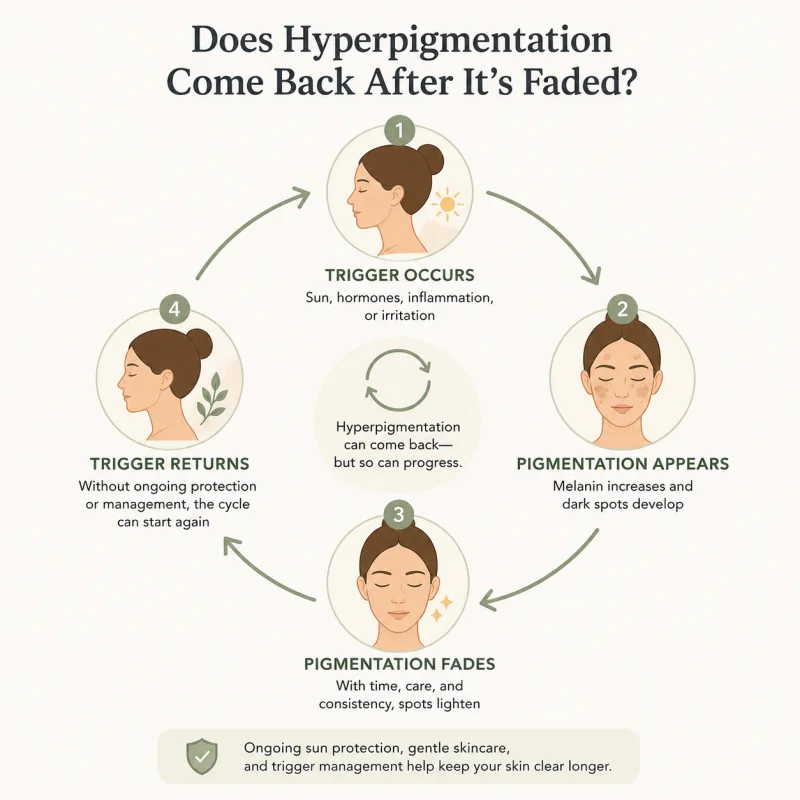
Hyperpigmentation often returns because the original trigger remains, or it reappears later. Common reasons include:
- Sun exposure reactivates melanin production in previously affected areas
- Hormonal changes, such as those linked to pregnancy, contraception, or menopause
- New episodes of inflammation, for example, a fresh breakout in the same area as an old mark
- Inconsistent or discontinued sun protection after a mark has faded
This is particularly well documented with postinflammatory hyperpigmentation, where recurrences are common, especially without adequate ongoing photoprotection.
Reframing "permanent"
This is worth sitting with for a moment: a mark coming back doesn't mean the original treatment failed, or that the pigmentation was never really gone. In many cases, the skin had genuinely cleared, but the same triggers simply led to a new episode of pigmentation in the same area. This distinction matters because it shifts the focus from "why didn't this work" to "what can reduce the chances of this happening again", which is a much more useful question.
What this means in practice
If pigmentation has returned after previously fading, it's often worth considering what may have changed recently, whether that's increased sun exposure, a new medication, hormonal shifts, or a recurrence of an underlying skin condition like acne. Identifying the trigger can be more useful than simply repeating the same treatment.
Is Melasma Different?
Melasma is often grouped together with other types of hyperpigmentation, but it behaves quite differently, and understanding why can help explain why it's so often described as frustrating to manage.
What makes melasma distinct
Unlike sun spots or post-acne marks, melasma is driven by a combination of factors rather than a single trigger:
- Hormonal changes, particularly oestrogen and progesterone fluctuations linked to pregnancy, contraception, or hormone therapy
- Genetic predisposition, with a higher likelihood in those with a family history
- UV and visible light exposure, which can worsen existing patches even with relatively brief sun exposure
- Skin type, as melasma is more frequently seen in Fitzpatrick skin types IV to VI
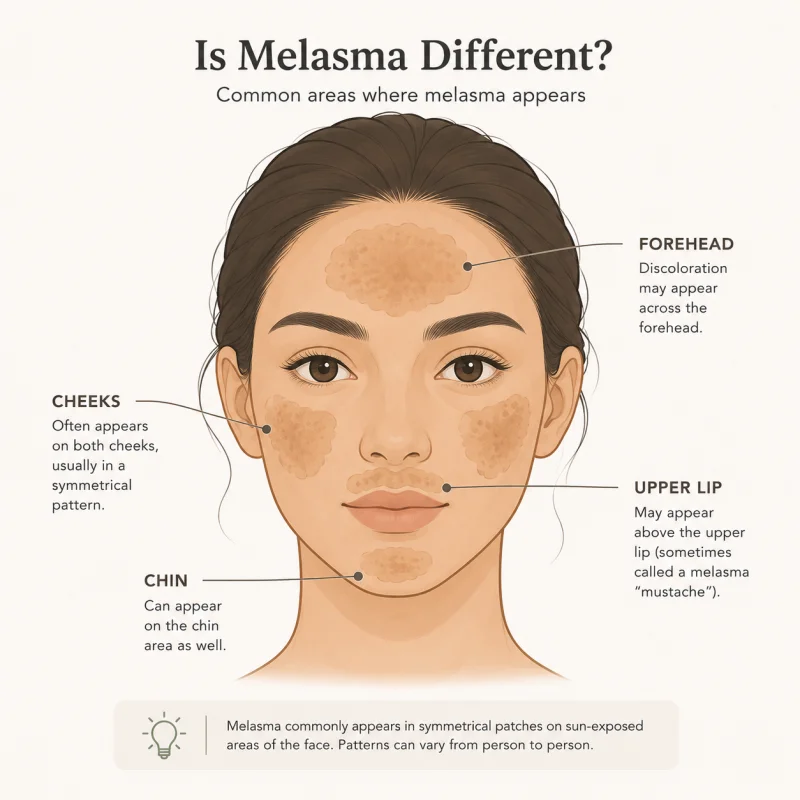
It typically appears as symmetrical brownish patches on the cheeks, forehead, upper lip, and chin.
Why is melasma more likely to return
Melasma has a notably high recurrence rate, even after treatment appears successful. This is partly because the underlying triggers, particularly hormonal ones, are often ongoing or recur over time. A patch that clears during winter, for example, may become more visible again after summer sun exposure, even with sunscreen use.
A different way to think about "permanent" with melasma
For melasma, "permanent" is often less about a single patch never fading and more about melasma being a long-term tendency of the skin, similar to how some people are simply more prone to certain skin reactions than others. Management tends to focus on a stepped approach: starting with sun protection and topical treatments, and considering further options if needed, with the aim of keeping melasma controlled rather than expecting it to disappear permanently in one go.
What this means for expectations
This isn't intended to sound discouraging. Many people manage melasma very effectively with consistent sun protection and a suitable skincare routine, and visible improvement is common. It simply helps to understand from the outset that ongoing management, rather than a one-time fix, is usually part of the picture.
Can Treatment Make Pigmentation Worse?
It might seem counterintuitive, but some treatments aimed at reducing pigmentation can, in certain cases, make it more noticeable, at least temporarily. This is worth understanding before considering professional treatment.

Why can this happen
Many professional treatments work by deliberately creating a controlled level of damage to the skin, which then triggers renewal. However:
- Aggressive resurfacing treatments such as chemical peels, lasers, or dermabrasion can sometimes cause further inflammation, which in turn can trigger new pigmentation
- This is sometimes called rebound pigmentation, and it's a recognised risk rather than a rare side effect
- The risk tends to be higher in darker skin tones, where the skin is more reactive to inflammation
This doesn't mean these treatments aren't effective for many people, but it does explain why a cautious, gradual approach is often recommended, particularly for those with skin types more prone to pigmentation.
The role of practitioner experience
Choosing a practitioner with specific experience treating pigmentation in a range of skin tones can make a meaningful difference. An experienced practitioner is more likely to:
- Start with lower-intensity options before considering stronger interventions
- Recommend appropriate patch testing
- Adjust settings or products based on how the skin responds
A note on over-the-counter products
This isn't limited to in-clinic treatments. Topical products containing strong active ingredients can also cause irritation if introduced too quickly or used too frequently, which can sometimes lead to new pigmentation forming as the skin reacts. Introducing new products gradually and giving skin time to adjust is generally a sensible approach.
Keeping this in perspective
None of this means treatment should be avoided. It simply means that "stronger" doesn't always equate to "better" when it comes to pigmentation, and that a measured approach, ideally guided by someone experienced in treating a range of skin tones, tends to yield more reliable results over time.
How To Help Stop It Coming Back
While there's no guaranteed way to prevent hyperpigmentation entirely, certain habits can meaningfully reduce the likelihood of it returning, particularly once existing marks have started to fade.
Daily sun protection
This is consistently highlighted as the most important factor:
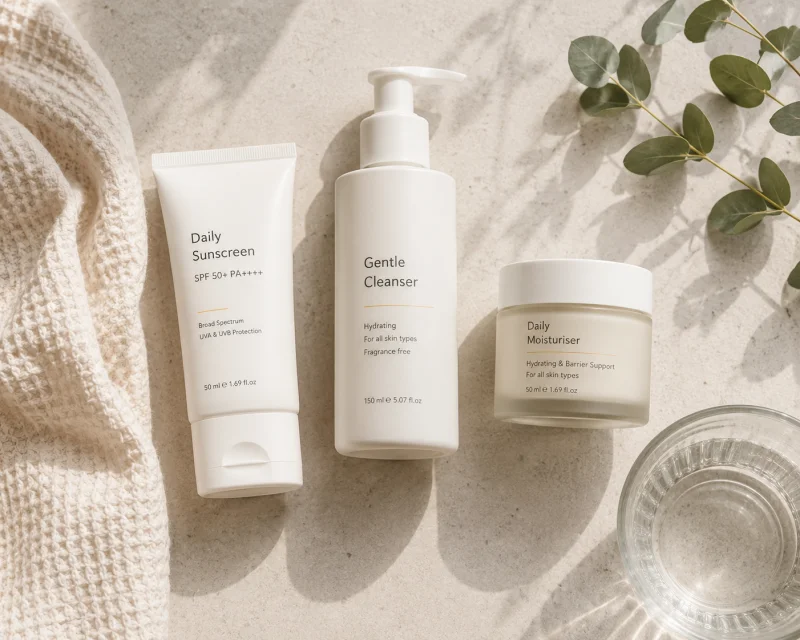
- A broad-spectrum SPF 50 sunscreen, applied daily regardless of weather, helps prevent UV rays from reactivating melanin production
- For melasma specifically, sunscreens containing iron oxide can offer additional protection, as they help block visible light as well as UV
- Reapplication matters, particularly during prolonged outdoor exposure
It's worth noting that sunscreen alone won't address pigment that's already settled in the deeper layers of skin, but it plays a significant role in preventing new or returning pigmentation.
Avoiding unnecessary skin trauma
Picking, scratching, or aggressively exfoliating areas prone to pigmentation can trigger inflammation, which in turn can lead to new marks. This is particularly relevant for anyone prone to acne, where the temptation to pick at spots can inadvertently extend the problem.
Managing underlying conditions early
If pigmentation tends to follow breakouts, addressing acne or other inflammatory skin conditions promptly can reduce how often new marks form. This isn't about achieving perfectly clear skin, but about reducing the frequency and severity of inflammation where possible.
Building a consistent, gentle routine
A simple, consistent skincare routine, introduced gradually, tends to support the skin's natural renewal process without causing the irritation that can lead to new pigmentation. Sudden changes or combining too many active ingredients at once can sometimes do more harm than good.
When To Get Professional Advice
While most hyperpigmentation can be safely monitored and managed at home, there are situations where it's worth getting a professional opinion, both for peace of mind and to access more targeted options if needed.
Signs it may be worth a consultation
It's generally sensible to seek advice if:
- Pigmentation appears suddenly, changes shape, or grows quickly
- A patch becomes raised, itchy, or starts bleeding, as these aren't typical features of hyperpigmentation and warrant proper assessment
- Melasma or other pigmentation is persistent despite consistent sun protection and several months of a suitable routine
- Pigmentation is having a noticeable impact on confidence or wellbeing
- Over-the-counter products haven't made any difference after a reasonable trial period
What can a consultation offer?
A dermatologist or experienced practitioner can help confirm what type of pigmentation is present, which, as covered earlier, makes a real difference to what's realistic to expect. This might involve a visual assessment, sometimes supported by a Wood's lamp, and a discussion of any recent changes, such as new medications, hormonal shifts, or skincare products.
For more complex or treatment-resistant cases, particularly with melasma, specialist input can help tailor an approach to reduce the risk of side effects such as rebound pigmentation or uneven results, especially for those with darker skin tones.

A balanced final thought
Hyperpigmentation is rarely a sign of anything serious, and in many cases, it improves with time, patience, and consistent sun protection. Where it doesn't, or where something about a mark feels different or concerning, getting it properly assessed is a sensible next step rather than something to put off. Understanding the type of pigmentation involved and what realistically influences its course puts you in a much better position to make informed decisions about what, if anything, to do next.
Your Hyperpigmentation Questions
Real Questions from Real People — Answered
Straightforward answers to the questions people like you are asking right now about Hyperpigmentation.

Be the first to ask a Hyperpigmentation question.
Click here to ask your own question.
Find A Verified Clinic
Trusted Hyperpigmentation Experts, Local to You
Easily connect with qualified, verified professionals for safe, reliable treatment.


Skin Redefined Ltd
Skin Redefined is a Cheltenham-based aesthetics clinic specialising in regenerative skin treatments, anti-ageing solutions, and natural-looking results led by Nurse Prescriber Kelly Whittaker.

Dr Ed Robinson Clinics
Doctor-led medical aesthetics, skin & laser clinic in Hale, Cheshire
To find a Hyperpigmentation clinic near you, please click here.
Grow Your Practice with Hyperpigmentation
Whether you are already using Hyperpigmentation or considering adding it to your treatment menu, here is how to make the most of it.

Are you a practitioner? If you'd like to link your practice to Hyperpigmentation and become part of ConsultingRoom.com, you can register as a verified specialist using the information on our specialist registration page.
Once verified, your profile can feature Hyperpigmentation alongside the other treatments, conditions and products you support, helping patients searching ConsultingRoom.com find you directly.
Our Preferred Partner:
As more patients research hyperpigmentation online before booking a consultation, having your clinic listed against this condition on ConsultingRoom.com is becoming an increasingly valuable way to reach them. From melasma and post-inflammatory pigmentation to sun damage and age spots, patients turn to pages like this to understand their options before choosing a practitioner.
If your clinic treats hyperpigmentation, our dedicated practitioner resource explains everything you need to know, including how to get listed, showcase your expertise and connect with patients actively searching for treatment.
Find out how being listed here could help grow your clinic and connect you with patients seeking trusted, qualified care.