

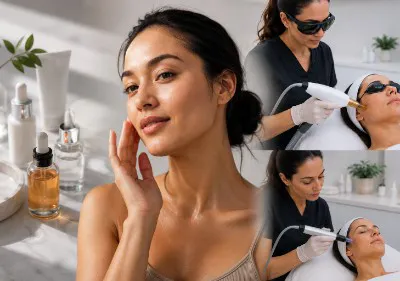
Hyperpigmentation is one of those terms that covers a lot of ground. It might mean sun spots that have built up over the years, dark marks left behind after a breakout, or the broader patches associated with melasma, often linked to hormonal changes. Because the causes differ, so does the most appropriate way to approach treatment, and this is where a lot of confusion tends to creep in.
Part of the difficulty is that much of the skincare advice circulating online is not written with UK regulations in mind. Ingredients sold over the counter in other countries, hydroquinone being the clearest example, are available here only on prescription. At the same time, professional treatments such as laser, peels, and microneedling are widely promoted, but not always with sufficient attention to how skin tone affects both suitability and risk.
This guide works through the main treatment options available in the UK, from everyday skincare ingredients through to prescription medicines and in-clinic procedures. It looks at how each option works, who it tends to suit, and what realistic expectations are for timeframes and results. It also considers who is more likely to experience hyperpigmentation, and why that can affect which approach makes sense, so that any decisions made, whether at home or with a professional, are grounded in a clearer understanding of the skin involved.
Before looking at specific treatments, it helps to understand what hyperpigmentation actually is and what tends to cause it.
Our Preferred Partner - LaserMe by Neauvia
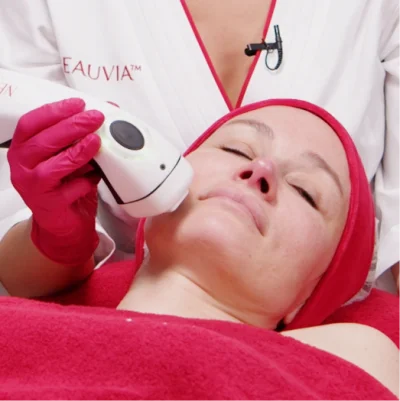
LaserMe is a non-ablative fractional diode laser used in medical aesthetics clinics across the UK to support skin regeneration and pigmentation management. This guide is for anyone trying to understand what it is, how it works, and whether it may be relevant to their hyperpigmentation concern.
- What LaserMe is, and how it differs from ablative laser treatments
- Which pigmentation concerns it is commonly used for, including PIH, melasma, and sun damage
- What to consider around suitability, recovery, costs, and choosing a qualified practitioner
What Is Hyperpigmentation And What Causes It?
Hyperpigmentation is one of the most common skin concerns people seek help for, and understanding what it actually is can make treatment options much easier to navigate.
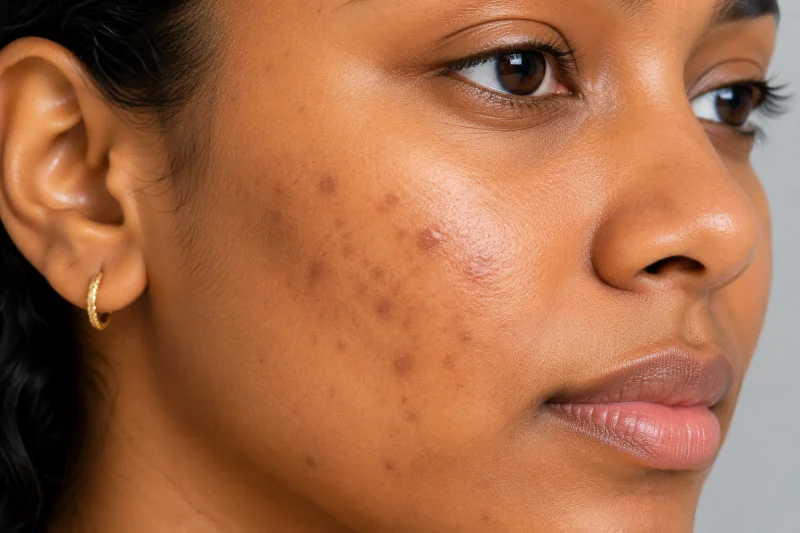
What causes patches of darker skin?
Hyperpigmentation happens when certain areas of skin produce more melanin than usual, the pigment responsible for skin colour. This can happen for several reasons:
- Sun exposure, which stimulates melanin production as a protective response
- Hormonal changes, particularly those linked to pregnancy, contraception, or hormone therapy
- Inflammation or injury, including acne, eczema, cuts, or cosmetic procedures
- Certain medications, which can trigger pigment changes as a side effect
- Genetic and skin type factors, which influence how reactive your skin is to the triggers above
In practice, most people experience a combination of these factors rather than just one. Someone with acne-prone skin who also spends a lot of time outdoors, for example, may notice pigmentation building from both inflammation and sun exposure at once.
Why some skin types are more affected
Hyperpigmentation is particularly common in people with Fitzpatrick skin types III to VI, which broadly covers olive, brown, and darker skin tones. This is because these skin types tend to have more reactive melanocytes, the cells that produce melanin, making them more likely to respond to inflammation or UV exposure with visible pigment changes.
This does not mean lighter skin types are unaffected. Sun spots and freckles, for instance, are more commonly seen in fairer skin. The difference often comes down to which type of pigmentation is more likely, rather than whether pigmentation happens at all.
Understanding what is driving your pigmentation is often the first step towards choosing a treatment approach that actually fits your skin.
Skincare Ingredients That May Help, And What's Available Without A Prescription In The UK
If you have started looking into hyperpigmentation treatment, you have probably noticed that some ingredients which are easy to buy in other countries are harder to access here, and this section explains why.
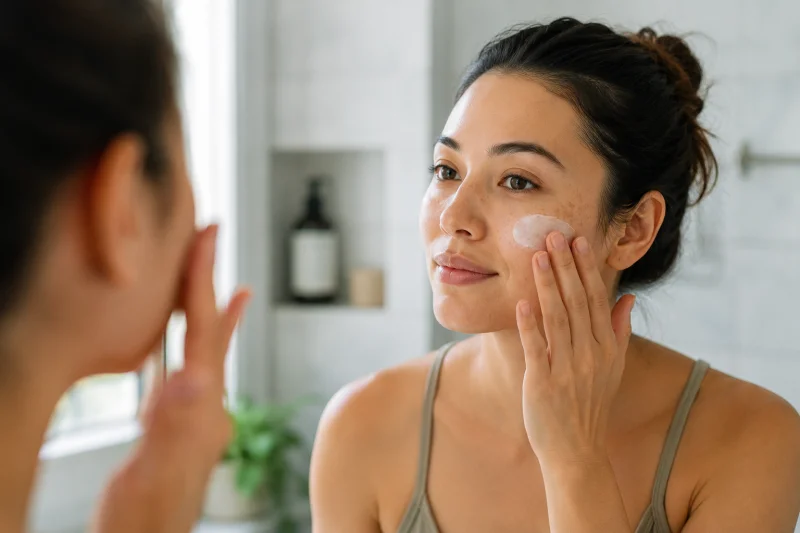
Vitamin C, niacinamide and azelaic acid
These three ingredients are commonly recommended for pigmentation and are widely available without a prescription in the UK:
- Vitamin C is an antioxidant that can help reduce the appearance of dark spots over time and support overall skin tone
- Niacinamide is gentle and can help calm inflammation while also supporting the skin barrier, which is useful if pigmentation is linked to irritation
- Azelaic acid is often used for both acne and pigmentation, and lower-strength versions (around 10 per cent) are available over the counter
That said, results from these ingredients tend to build gradually, often over several weeks or months of consistent use, rather than producing a quick change.
Hydroquinone and why it's prescription-only in the UK
Hydroquinone is frequently mentioned in discussions of pigmentation, particularly in content from the US, where lower strengths are sold over the counter. In the UK, the picture is different.
Hydroquinone is classified as a prescription-only medicine here, meaning it can only be obtained through a GP or another licensed prescriber. The same applies to higher-strength azelaic acid products, such as 15 to 20 per cent formulations, which are typically only available with a prescription.
If you have read about hydroquinone online and wondered why you cannot simply buy it from a UK pharmacy, this difference in regulation is the reason. It does not mean the ingredient is unsafe, but UK guidelines treat it as something that should be used under medical guidance.
Why daily SPF matters regardless of treatment
Whichever ingredients or treatments you use, daily sun protection plays a central role. UV exposure can trigger new pigmentation and make existing patches darker, which can undo progress from other treatments. A broad-spectrum SPF, applied daily and reapplied when needed, is generally considered an essential part of any pigmentation routine rather than an optional extra.
Prescription And Specialist Treatment Options
When over-the-counter ingredients are not enough, or pigmentation is more stubborn, a GP or dermatologist may suggest prescription-based options.

Prescription creams and combination formulations
Several creams that combine active ingredients are available only through a prescriber:
- Higher strength azelaic acid (15 to 20 percent) is often prescribed for acne-related pigmentation and rosacea, and can also help with general skin tone
- Combination creams containing hydroquinone alongside other ingredients, such as a retinoid and a mild corticosteroid, may be prescribed by dermatology specialists for more persistent pigmentation
- These combination formulations are generally used for a defined period under medical supervision, rather than long-term, due to the potential for side effects with extended use
Your GP may start with a more accessible option and refer you to a dermatologist if the pigmentation does not improve or is widespread.
Oral tranexamic acid: what it is and what to expect
Oral tranexamic acid is increasingly discussed as an option for melasma, particularly when topical treatments alone have not been effective. It is taken as a tablet and is thought to work by reducing some of the processes that contribute to pigment production.
A few things worth knowing if this comes up in conversation with a clinician:
- It is generally considered under specialist guidance rather than prescribed routinely by GPs for pigmentation
- Clinical reviews have found side effects to be generally mild, though some women report changes to their menstrual cycle, such as lighter or shorter periods, while taking it
- As with any oral medication, your medical history will be reviewed before this is considered, particularly around blood clotting risk
This option tends to come up later in a treatment journey, often after other approaches have been tried, and would always involve a discussion with a healthcare professional about whether it is appropriate for you.
In practice, prescription options are not necessarily "stronger" in a way that guarantees faster results, but they do involve oversight that allows for monitoring and adjustment if needed.
Chemical Peels For Pigmentation
Chemical peels are among the more established professional treatments for pigmentation, and understanding how they work can help you assess whether one might suit you.
How peels work and what's involved
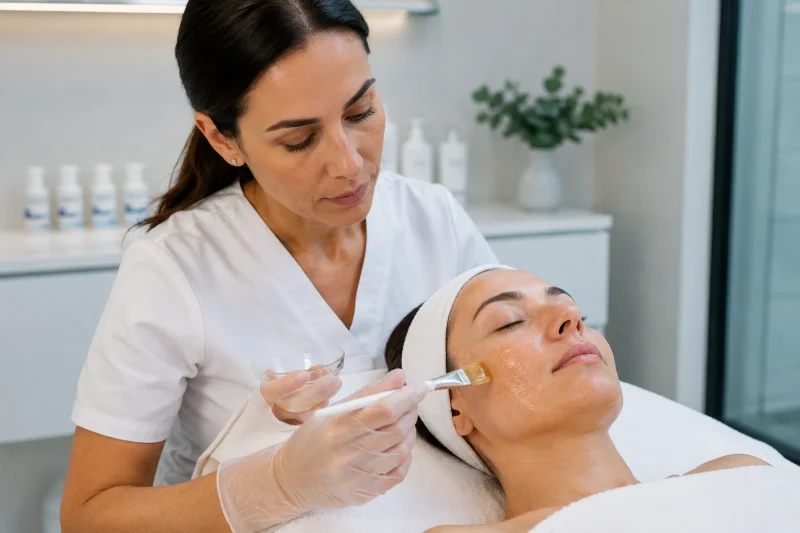
A chemical peel involves applying an acid solution to the skin, which causes the outer layers to lift away over the following days. This encourages new skin to form beneath the surface, which can appear more evenly toned.
Peels vary in depth and strength:
- Superficial peels target only the outermost layer of skin and typically involve minimal downtime, often just mild redness or flaking for a day or two
- Medium-depth peels reach further into the skin and may involve more noticeable peeling over several days, with some redness during recovery
- The acids used vary, and may include glycolic acid, lactic acid, or salicylic acid, sometimes in combination
Suitability for melasma and PIH, and risks of over-treatment
Peels can be used for both melasma and post-inflammatory hyperpigmentation, though the approach often differs:
- For melasma, peels are usually approached cautiously, as overly aggressive treatment can sometimes trigger more pigmentation rather than less, particularly in darker skin tones
- For post-inflammatory hyperpigmentation, peels may help speed up the fading process, though results still depend on how deep the pigment sits in the skin
- A practitioner will usually start with a milder peel and assess how your skin responds before considering anything stronger
Over-treatment, whether through peels that are too strong or sessions that are too frequent, can sometimes cause irritation that leads to new pigmentation forming. This is one of the reasons peels for pigmentation are best performed by an experienced practitioner who can determine the right strength and frequency for your skin.
Recovery from a course of peels can take several weeks, with results building gradually rather than appearing after a single session.
Laser And Light-Based Treatments, And Why Skin Tone Matters
Laser and light-based treatments are often associated with pigmentation removal, but they are not suitable for everyone; skin tone plays a significant role in determining their appropriateness.
What lasers and light treatments can and cannot treat
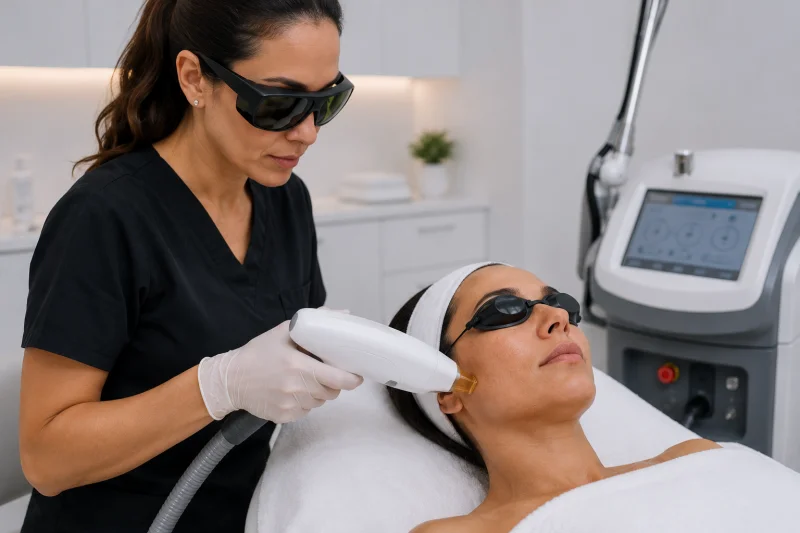
These treatments work by targeting pigment in the skin with concentrated light, which the body then breaks down and clears over time.
- They tend to work best on pigment that sits closer to the surface of the skin, such as sun spots and some types of post-inflammatory hyperpigmentation
- Melasma is more complicated, as the pigment can sit deeper in the skin, and laser treatment alone does not always provide lasting improvement
- Most people need a course of several sessions rather than a single treatment, and gaps between sessions allow the skin to recover
- Devices vary considerably. Non-ablative fractional lasers, such as LaserMe, work by treating tiny columns of skin while leaving the surrounding tissue intact, which is one approach used for general skin tone and texture concerns
Risks in darker skin tones
This is one of the most important considerations for laser and light-based treatments. In darker skin tones, certain lasers can actually trigger new pigmentation rather than reduce it, sometimes making the original concern more noticeable.
- This happens because the laser can affect melanin in the surrounding skin, not just the targeted pigment
- The risk varies depending on the type of laser or device used, with some technologies considered more suitable for darker skin tones than others
- This is not a reason to avoid treatment altogether, but it does mean the choice of practitioner and equipment matters more for some skin tones than others
If you have a darker skin tone, it is worth asking a practitioner specifically about their experience treating similar skin tones and which device they would recommend, rather than assuming all lasers work the same way.
Sessions, downtime and aftercare
Downtime varies depending on the treatment used, but it is common to experience some redness or sensitivity for a short period afterwards. Sun protection becomes especially important during this time, as treated skin can be more reactive to UV exposure.
Laser and light-based treatments can be effective for the right type of pigmentation and skin tone, but they are not a one-size-fits-all solution, and getting the assessment right at the start matters more than the treatment itself.
Microneedling And Combination Treatments
Microneedling is often mentioned alongside other pigmentation treatments, sometimes as a standalone option and sometimes as part of a wider treatment plan.
How microneedling works
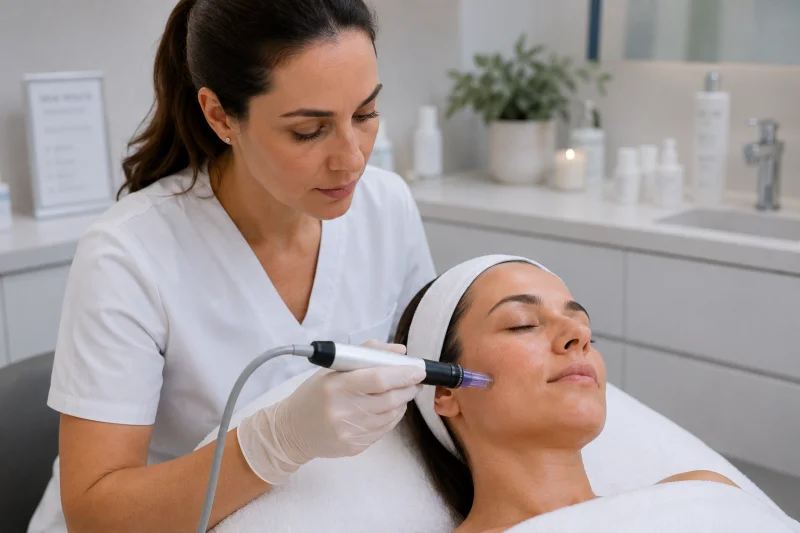
Microneedling involves using fine needles to create tiny, controlled punctures in the skin. This triggers the skin's natural repair process, which can support a more even tone and texture over time.
- On its own, microneedling tends to produce gradual improvements rather than dramatic changes
- It is generally considered suitable for a range of skin tones, though, as with any treatment that affects the skin's surface, aftercare matters for reducing the risk of new pigmentation forming
- A course of sessions, spaced several weeks apart, is typical rather than a single treatment
Combination approaches
Microneedling is sometimes used alongside other treatments to support results:
- Combining microneedling with topical treatments, such as tranexamic acid, has been studied as a way to help active ingredients penetrate more effectively
- Some practitioners use microneedling alongside other professional treatments, such as peels or lasers, though this would be planned carefully to avoid over-treating the skin
- Combination approaches are generally considered on a case by case basis, depending on the type of pigmentation, skin tone, and how the skin has responded to previous treatments
It is worth noting that combining treatments does not necessarily mean faster results. In some cases, a more gradual, single-treatment approach may be recommended, particularly where there is a higher risk of triggering further pigmentation.
Microneedling and combination treatments can have a place in a broader pigmentation plan, but, as with other professional treatments, the right approach depends on your individual skin and is best discussed with a practitioner who can assess your specific concern.
Who Is Most Affected By Hyperpigmentation, And Does That Change Treatment?
Hyperpigmentation does not affect everyone equally, and understanding who is more likely to experience it can help explain why treatment recommendations sometimes vary from person to person.
Skin tone and Fitzpatrick type
As mentioned earlier, people with Fitzpatrick skin types III to VI, which covers olive, brown and darker skin tones, tend to experience hyperpigmentation more often and find it more persistent once it develops.
- This is partly because melanocytes in these skin types tend to respond more readily to inflammation or injury
- It does not mean treatment is unavailable, but it often means treatments need to be chosen and monitored more carefully to avoid triggering further pigmentation
- Patch testing and a more cautious, gradual approach are often recommended for darker skin tones, particularly with peels, lasers and topical retinoids

Hormonal factors
Hormonal changes are a significant factor for many people, particularly women:
- Pregnancy can trigger melasma, sometimes referred to as the "mask of pregnancy", due to hormonal shifts affecting melanin production
- Hormonal contraception and hormone replacement therapy have also been linked to melasma in some people
- Menopause can bring its own changes to skin, including how pigmentation behaves, though this varies considerably between individuals
Acne-prone skin
For people who experience acne, pigmentation can be an additional concern alongside the acne itself:
- Post-inflammatory hyperpigmentation often follows acne lesions, particularly if they are picked or squeezed
- This type of pigmentation can sometimes take longer to fade than the acne itself, which can be frustrating
- Treating the acne and the pigmentation often needs to be considered together, as ongoing breakouts can continue to trigger new pigmentation
Men and pigmentation
While pigmentation concerns are often discussed in relation to women, men experience hyperpigmentation too, commonly linked to sun exposure, acne, or shaving-related irritation. The treatment approach is generally similar, though men may be less likely to have previously used skincare routines that include SPF or active ingredients.
Recognising which of these factors applies to you can help guide a more tailored conversation with a GP, dermatologist or practitioner about the right starting point.
Choosing The Right Path: Self-Care, GP, Or Specialist Referral
With so many options available, deciding where to start can feel overwhelming, but breaking it down into a few simple questions can make the decision much clearer.
When self-care and over-the-counter options make sense
For many people, particularly those with mild or recently developed pigmentation, starting with accessible options is a reasonable first step:
- Consistent use of SPF, alongside ingredients like vitamin C, niacinamide or lower-strength azelaic acid, can be a sensible starting point
- This approach often suits pigmentation linked to sun exposure or mild post-acne marks, where the pigment is likely to be sitting closer to the skin's surface
- Giving these changes time to work, generally several weeks at a minimum, is important before judging whether they are helping
When to consider seeing a GP
A GP visit may be worth considering if:
- Pigmentation has not improved after a reasonable period of consistent self-care
- You are interested in prescription options, such as higher strength azelaic acid or, in some cases, oral tranexamic acid
- Pigmentation appeared suddenly, is widespread, or you are unsure what type of pigmentation you are dealing with
A GP can also help rule out other skin conditions that may resemble hyperpigmentation but require a different approach.
When specialist or clinic-based treatment may be appropriate
For pigmentation that has not responded to topical treatments, or where professional procedures are being considered, a referral to a dermatologist or a consultation with a qualified aesthetic practitioner may be the next step:
- This is often the route for melasma that has not improved with topical treatment alone
- It is also relevant if you are considering chemical peels, laser treatments such as LaserMe, or microneedling, where a professional assessment of your skin tone and pigmentation type is important
- A practitioner can help determine which treatment, or combination of treatments, is likely to be appropriate for your specific skin
There is no single correct starting point for everyone, and what works well for one person's pigmentation may not be the right fit for another. The most useful first step is often an honest assessment of what you are dealing with, whether that is at home, with a GP, or with a specialist, so that any treatment chosen is appropriate for your skin and your expectations are realistic from the outset.
Your Hyperpigmentation Questions
Real Questions from Real People — Answered
Straightforward answers to the questions people like you are asking right now about Hyperpigmentation.

Be the first to ask a Hyperpigmentation question.
Click here to ask your own question.
Find A Verified Clinic
Trusted Hyperpigmentation Experts, Local to You
Easily connect with qualified, verified professionals for safe, reliable treatment.

Skin Redefined Ltd
Skin Redefined is a Cheltenham-based aesthetics clinic specialising in regenerative skin treatments, anti-ageing solutions, and natural-looking results led by Nurse Prescriber Kelly Whittaker.

Dr Ed Robinson Clinics
Doctor-led medical aesthetics, skin & laser clinic in Hale, Cheshire
To find a Hyperpigmentation clinic near you, please click here.
Grow Your Practice with Hyperpigmentation
Whether you are already using Hyperpigmentation or considering adding it to your treatment menu, here is how to make the most of it.

Are you a practitioner? If you'd like to link your practice to Hyperpigmentation and become part of ConsultingRoom.com, you can register as a verified specialist using the information on our specialist registration page.
Once verified, your profile can feature Hyperpigmentation alongside the other treatments, conditions and products you support, helping patients searching ConsultingRoom.com find you directly.
Our Preferred Partner:
As more patients research hyperpigmentation online before booking a consultation, having your clinic listed against this condition on ConsultingRoom.com is becoming an increasingly valuable way to reach them. From melasma and post-inflammatory pigmentation to sun damage and age spots, patients turn to pages like this to understand their options before choosing a practitioner.
If your clinic treats hyperpigmentation, our dedicated practitioner resource explains everything you need to know, including how to get listed, showcase your expertise and connect with patients actively searching for treatment.
Find out how being listed here could help grow your clinic and connect you with patients seeking trusted, qualified care.