


Searching for information on hyperpigmentation treatment side effects often turns up two extremes: reassuring lists of minor reactions on one hand, and alarming warnings on the other, with very little in between that reflects how these treatments actually behave in practice. The reality sits somewhere more nuanced. Most side effects are mild, predictable, and manageable, but the level of risk depends heavily on the treatment chosen, the skin type being treated, and who administers it.
This matters because hyperpigmentation treatments, whether topical, chemical or laser-based, work by deliberately affecting the skin, and that process can occasionally cause the very reaction it is meant to resolve, at least temporarily. Understanding why this happens and which factors increase or reduce the risk makes it far easier to distinguish what is a normal part of recovery and what is not.
This guide covers the side effects associated with common treatment types, including hydroquinone, chemical peels and laser therapy, with particular attention to how risk changes across different skin tones. It also looks at two UK-specific issues rarely covered elsewhere: the current gaps in regulation around who can legally provide these treatments, and the ongoing presence of illegal, unregulated skin-lightening products. The aim throughout is to help you approach treatment with realistic expectations and the right questions, rather than either apprehension or unearned confidence.
Understanding why these treatments can cause side effects in the first place is the natural place to start.
Our Preferred Partner - LaserMe by Neauvia
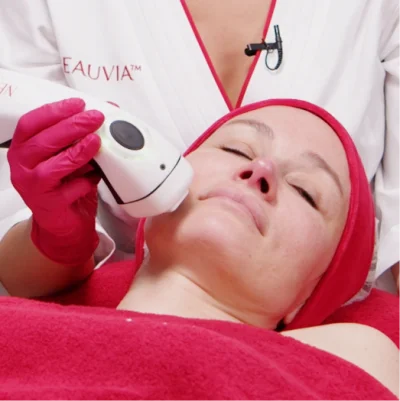
LaserMe is a non-ablative fractional diode laser used in medical aesthetics clinics across the UK to support skin regeneration and pigmentation management. This guide is for anyone trying to understand what it is, how it works, and whether it may be relevant to their hyperpigmentation concern.
- What LaserMe is, and how it differs from ablative laser treatments
- Which pigmentation concerns it is commonly used for, including PIH, melasma, and sun damage
- What to consider around suitability, recovery, costs, and choosing a qualified practitioner
Why Pigmentation Treatments Can Cause Side Effects In The First Place
Most treatments for hyperpigmentation work by deliberately disrupting the skin, whether through controlled inflammation, exfoliation or targeted heat, and that process can sometimes cause the very reaction it is meant to resolve.
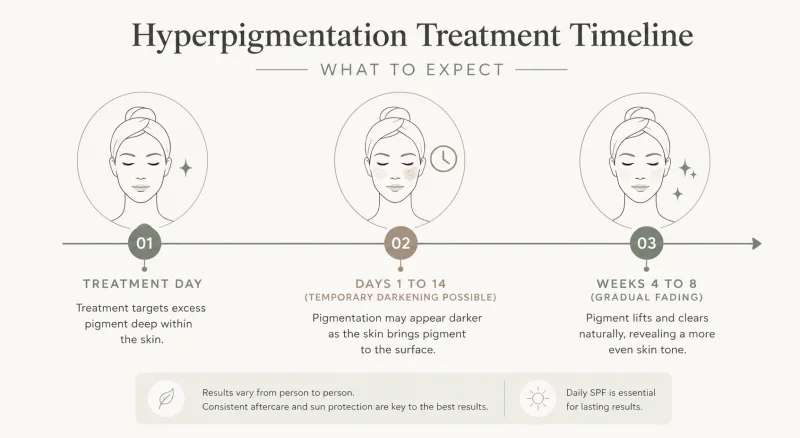
Why pigmentation can look worse before it improves
It helps to understand what is actually happening beneath the surface:
- Many treatments (peels, lasers, even some active ingredients) work by creating a mild injury response in the skin.
- In melanin-rich skin, this inflammation can trigger extra pigment production, known as post-inflammatory hyperpigmentation, or PIH.
- This means the treated area may appear darker in the days or weeks after treatment, as it settles.
- It is a recognised, temporary phase for many people rather than a sign that treatment has failed.
- The risk of this happening varies by skin type, treatment intensity, and aftercare, which is why a proper consultation matters before starting treatment.
For someone who has just had a peel or laser session and is looking at darker skin than before, this can understandably be alarming. In most cases, though, it reflects the skin's own healing response rather than a complication. What matters more is how the pigmentation behaves over the following weeks: gradual fading is expected, while worsening, spreading, or failure to settle after a reasonable period is worth raising with the provider or a GP.
Understanding this mechanism is the first step to reading the rest of this guide with the right context. The sections that follow look at what side effects are common, which treatments carry more risk, and what to watch for with each.
Common Side Effects Across Topical, Peel And Laser Treatments
While each treatment type carries its own specific risks, several side effects recur across topical, peel, and laser approaches to hyperpigmentation, most of them mild and short-lived.
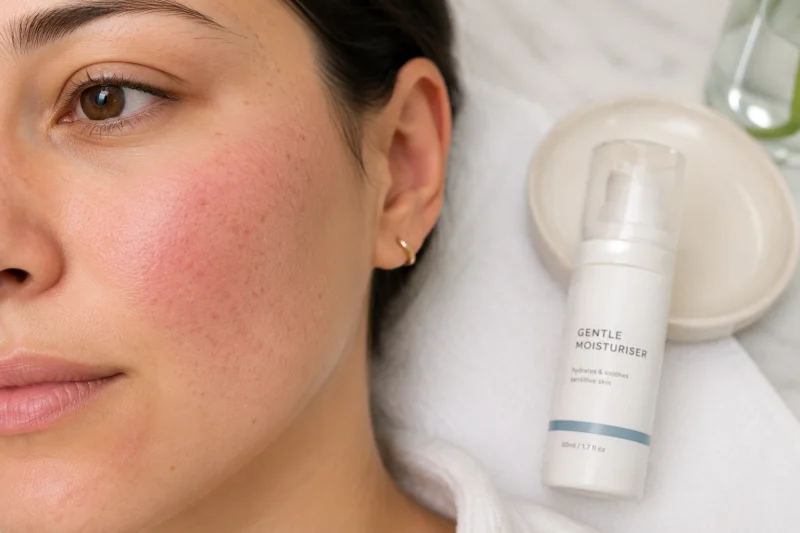
What's normal, and how long it usually lasts
In the days immediately after treatment, it is common to notice:
- Redness and warmth in the treated area, similar to mild sunburn.
- Dryness, tightness or flaking, particularly with topical retinoids or peels.
- Mild stinging or a burning sensation, usually settling within hours to a few days.
- Temporary swelling, more likely after laser or deeper peel treatments.
- Sensitivity to sun exposure while the skin recovers.
These reactions typically ease within a week with topical treatments and within 1 to 3 weeks with peels or laser sessions, depending on intensity. Gentle, consistent aftercare tends to support recovery: fragrance-free moisturisers, avoiding active ingredients until the skin has settled, and daily SPF regardless of the season.
Less commonly, some people notice temporary darkening or lightening of the treated skin before it evens out, which links back to the healing response covered in the previous section. It is worth noting that reactions can vary considerably between individuals, and what counts as a normal response for one person's skin may look different for another's. In practice, this is where a proper patch test and a clear aftercare plan from a qualified provider make a genuine difference to comfort and outcome.
If redness, swelling or discomfort worsens rather than improves after the first few days, or if there are signs of infection such as pus or increasing pain, this falls outside the range of a typical reaction and is worth checking with the treating clinic or a GP.
Hydroquinone: Safety Considerations And UK Prescription Rules
Hydroquinone remains one of the most effective ingredients for treating stubborn hyperpigmentation, but its strength comes with safety considerations that shape how it can legally be accessed in the UK.

Why it works, and why it is tightly controlled
Hydroquinone works by inhibiting the enzyme responsible for melanin production, which is what makes it effective against melasma, post-inflammatory hyperpigmentation and other stubborn dark patches. That same potency is why its use is closely regulated:
- In the UK, hydroquinone is available by prescription only, not as an over-the-counter cosmetic ingredient.
- It has been banned as an ingredient in cosmetic products across Europe, reflecting concerns about misuse and long-term safety.
- Short-term side effects can include irritant contact dermatitis, stinging or dryness, usually dose-related.
- With prolonged, high-strength or unsupervised use, it can cause exogenous ochronosis, a blue-black discolouration that is difficult to treat and can be more visible than the original pigmentation.
- It is often prescribed as part of a combination formula (alongside a retinoid and mild steroid) to improve results and reduce irritation, rather than used alone at high strength.
Using it safely
Prescription-only status exists precisely so that use can be supervised: monitored for duration, strength and skin response, rather than left to guesswork. Anyone considering hydroquinone should expect a proper consultation covering skin type, medical history and realistic timelines, since results generally take weeks to become visible and overuse does not speed this up.
It is worth making clear that hydroquinone, used correctly under medical guidance, has a well-established safety record. The concerns above relate largely to unsupervised or prolonged high-strength use, which is a different picture to a short, monitored course prescribed by a clinician. The next section looks at a related but distinct risk: unregulated products that contain hydroquinone, mercury, or steroids without any prescription or safety oversight.
Laser And Light-Based Treatment Risks, Particularly In Darker Skin Tones
Laser and light-based treatments can be highly effective for hyperpigmentation, but they also carry some of the more significant risks in this category, particularly when skin type and practitioner experience are not properly matched to the technology used.
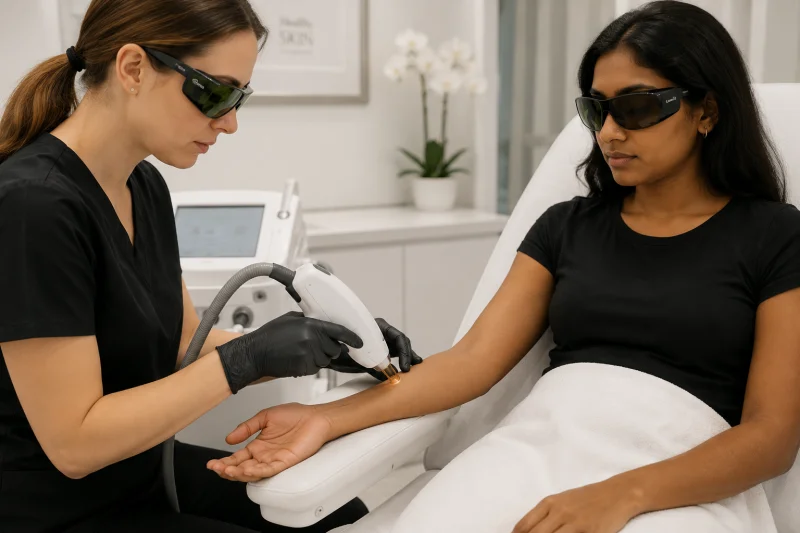
Why Fitzpatrick skin type changes the risk profile
Lasers work by targeting melanin in the skin, which is precisely why higher Fitzpatrick skin types (IV to VI) require more careful handling:
- Melanin-rich skin absorbs laser energy more readily, which increases the risk of the surrounding skin being affected, not just the pigmented area.
- This increases the likelihood of post-inflammatory hyperpigmentation and, in some cases, hypopigmentation, in which the treated area becomes lighter than the surrounding skin.
- Poorly calibrated settings or an inexperienced practitioner substantially increase this risk, more so than the technology itself.
- A test patch before full treatment is widely recommended for darker skin tones, allowing the skin's response to be assessed before committing to a larger area.
- Ablative lasers, which remove the outer layer of skin, generally carry higher risk than non-ablative options, which work beneath the surface without breaking the skin.
Non-ablative fractional lasers, such as LaserMe, are often considered a gentler starting point for pigmentation concerns, since they deliver energy beneath the skin's surface rather than removing it, which can mean less downtime and a comparatively lower risk profile than more aggressive ablative options. That said, "lower risk" does not mean "no risk", and outcomes still depend heavily on correct settings and an accurate skin assessment beforehand.
What to expect and watch for
Redness, mild swelling and temporary darkening are common in the days following treatment. More concerning signs, such as blistering, prolonged burning pain, or pigmentation changes that worsen after several weeks rather than settle, warrant a follow-up with the treating clinic. Multiple sessions are often needed for visible improvement, and results should be expected gradually rather than immediately.
Chemical Peel Risks And The Limits Of Over-Treatment
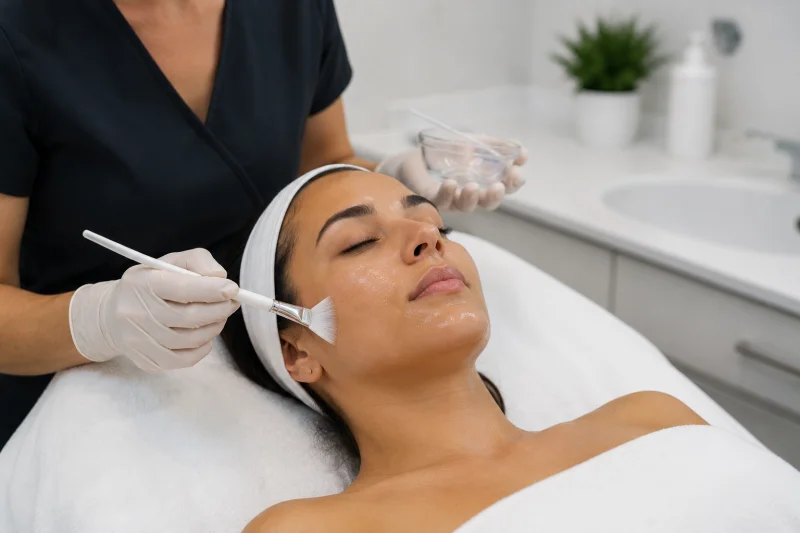
Chemical peels are a widely used option for hyperpigmentation, working by removing the outer layers of skin to encourage renewal, but their effectiveness is closely tied to concentration, and stronger is not automatically safer or better.
Where the risk increases
Peel-related risk tends to rise in step with depth and strength:
- Superficial peels (lower-strength acids that affect only the outermost skin layer) generally carry a lower risk of complications and a shorter recovery time.
- Medium and deeper peels penetrate more deeply into the skin and can produce faster or more visible results, but with a higher risk of irritation, prolonged redness, or PIH.
- Higher-concentration acids, such as stronger trichloroacetic acid formulations, carry a specific risk of triggering post-inflammatory hyperpigmentation in darker skin tones if used at depth.
- Over-treatment (peeling too frequently, or using a stronger acid than the skin is ready for) increases the likelihood of inflammation, uneven pigmentation or, rarely, scarring.
- Timing matters too: peeling during high-UV months increases the chance that the skin will darken rather than even out, since freshly exfoliated skin is more vulnerable to sun exposure.
Matching the peel to the skin
A peel that works well for one person's pigmentation may be entirely wrong for another's, depending on skin type, sensitivity and the depth of the pigment being treated. This is why peel strength and frequency should be judged by a practitioner rather than chosen based on marketing claims of "fast results." In practice, a cautious, incremental approach, starting with a lower strength and adjusting based on how the skin responds, tends to carry less risk than an aggressive first treatment.
Chemical peels can be genuinely effective for melasma and post-inflammatory hyperpigmentation when matched correctly to the individual, but the limits of over-treatment are worth taking seriously rather than viewing stronger acids as a shortcut to quicker results.
Illegal And Unregulated Skin-Lightening Products
Separate from prescribed, clinically supervised treatment, there is a distinct and ongoing risk in the UK posed by illegal skin-lightening products, and it is worth clearly understanding the difference before comparing options.
What these products can contain
Trading standards enforcement across the UK continues to uncover skin-lightening creams sold outside proper regulation, often through informal retailers or online marketplaces rather than pharmacies or clinics. These products have been found to contain:
- Mercury, which has been banned from cosmetic products in the UK and EU since 1996 and can cause serious harm to the kidneys, liver and nervous system with prolonged use.
- Unlicensed, unsupervised hydroquinone, at unknown or excessive strength, without the medical oversight that makes prescribed use safer.
- Potent corticosteroids, which are not licensed for skin lightening and can cause permanent thinning of the skin, stretch marks and broken blood vessels with continued use.
Because these products are frequently unlabelled or mislabelled, users often have no way of knowing what they are actually applying to their skin, which is part of what makes this risk distinct from the supervised, dose-controlled risks discussed elsewhere in this guide.
How to spot the difference
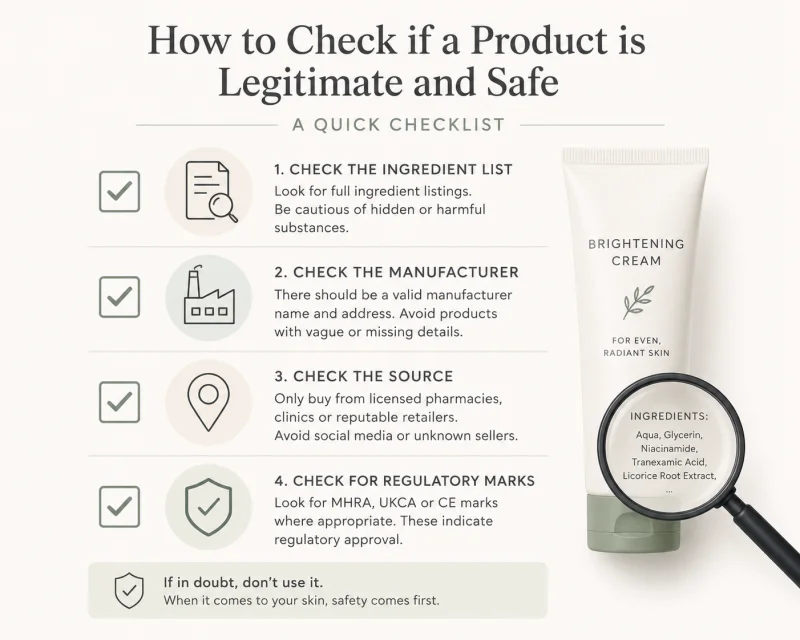
A few practical checks can help distinguish a legitimate product from an illegal one:
- Legitimate cosmetic products sold in the UK must include a full ingredient list, along with the manufacturer's or importer's name and address.
- Products with no labelling, vague "miracle cream" claims, or unusually dramatic lightening promises are worth treating with caution.
- Prescription-strength ingredients such as hydroquinone or potent steroids should only be obtained through a GP, dermatologist or registered pharmacy, never through informal sellers or unregulated online listings.
This is not a reason to avoid legitimate treatment, but it is a reason to be selective about where products and prescriptions come from. The safety considerations covered earlier in this guide, around hydroquinone, peels and laser, all assume supervised, licensed use; the risks multiply considerably once that supervision is removed.
Gaps In UK Regulation: Why
It is easy to assume that booking a treatment at a clinic automatically means the person performing it is regulated and qualified, but in the UK, that is not yet guaranteed by law.
The current state of regulation
Non-surgical cosmetic procedures, including many laser and peel treatments, sit in a genuinely unusual regulatory position:
- There is currently no specific legal requirement for practitioners to hold particular qualifications before offering treatments such as laser therapy or chemical peels in England.
- The Health and Care Act 2022 created powers for a new licensing scheme, and the government published its response to a public consultation in August 2025, setting out how procedures will eventually be categorised by risk level.
- Under the proposed scheme, procedures will fall into green, amber or red risk categories, with lower-risk treatments requiring a licence and higher-risk ones requiring oversight from a regulated healthcare professional.
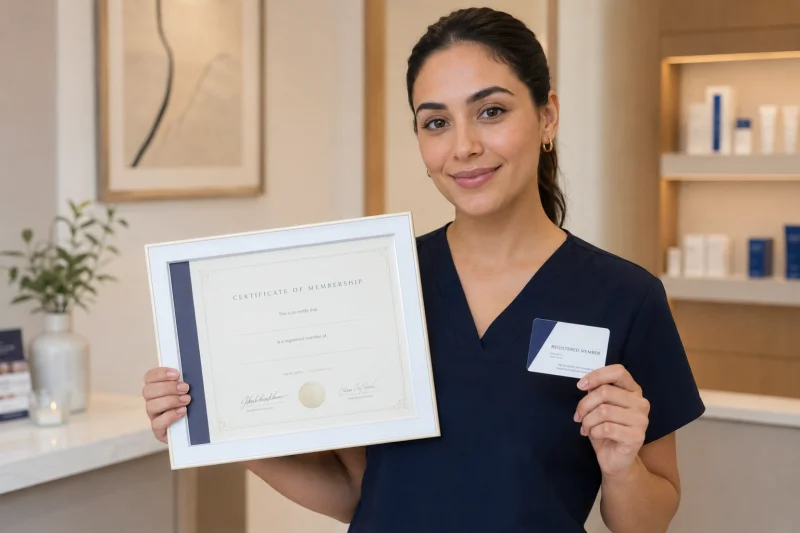
- This scheme is still being implemented, meaning that at present practitioners can choose to join voluntary registers, but nothing legally compels them to do so.
- Wales and Northern Ireland have not yet announced equivalent plans, creating inconsistency across the UK.
What this means in practice
Voluntary registers do exist and are worth checking, since providers who choose to join them have agreed to meet defined training and conduct standards. In the meantime, asking direct questions before booking, about a practitioner's training, experience with different skin types, and how complications are handled, remains one of the most reliable ways to assess a provider, regardless of how polished a clinic's marketing looks.
None of this means non-surgical treatments are inherently unsafe. It does mean that, for now, the responsibility for checking a provider's credentials sits more with the individual than with a guaranteed regulatory system. For a fuller look at what to check and ask before choosing a provider, see our guide to choosing a clinic or practitioner.
Why Results And Risk Vary Between Individuals
No two cases of hyperpigmentation respond to treatment in exactly the same way, and understanding why helps set realistic expectations from the outset.

What influences outcome and risk
Several factors shape both how well a treatment works and how likely side effects are:
- Skin type and Fitzpatrick classification affect sensitivity to inflammation and the likelihood of PIH or hypopigmentation.
- The depth of the pigment matters: epidermal (surface-level) pigmentation generally responds faster and more predictably than dermal pigmentation, which sits deeper and can be more stubborn.
- The underlying cause plays a role too; melasma, for example, is hormonally driven and prone to recurrence, unlike pigmentation caused by a single injury or breakout.
- Consistency with aftercare, particularly daily SPF, has a meaningful effect on whether results are maintained or gradually undone by further sun exposure.
- Combination approaches (pairing topical treatment with in-clinic procedures, for instance) are often more effective than any single treatment alone, though this also means more variables to manage.
Setting realistic expectations
This variability is precisely why no treatment, however well-regarded, can guarantee identical results across different people. Some pigmentation responds well within weeks; other cases take months of consistent treatment and maintenance, and some level of recurrence over time is common, particularly with melasma. This is not a reflection of treatment failure so much as the underlying nature of how pigmentation forms and behaves in different skin types.
The most reliable path through this uncertainty is an accurate diagnosis and a treatment plan matched to the individual, rather than a one-size-fits-all approach chosen from a product shelf or a generic online guide.
Next Step Guidance
If you are weighing up treatment options, it is worth speaking with a qualified dermatologist or registered aesthetic practitioner who can assess your specific skin type, the depth and likely cause of your pigmentation, and any risk factors before recommending a course of action. Our guide to [choosing a clinic or practitioner] covers what to look for and which questions to ask at that stage, and our [treatment options overview] provides a broader comparison of the approaches covered throughout this guide.
Your Hyperpigmentation Questions
Real Questions from Real People — Answered
Straightforward answers to the questions people like you are asking right now about Hyperpigmentation.

Be the first to ask a Hyperpigmentation question.
Click here to ask your own question.
Find A Verified Clinic
Trusted Hyperpigmentation Experts, Local to You
Easily connect with qualified, verified professionals for safe, reliable treatment.

Skin Redefined Ltd
Skin Redefined is a Cheltenham-based aesthetics clinic specialising in regenerative skin treatments, anti-ageing solutions, and natural-looking results led by Nurse Prescriber Kelly Whittaker.

Dr Ed Robinson Clinics
Doctor-led medical aesthetics, skin & laser clinic in Hale, Cheshire
To find a Hyperpigmentation clinic near you, please click here.
Grow Your Practice with Hyperpigmentation
Whether you are already using Hyperpigmentation or considering adding it to your treatment menu, here is how to make the most of it.

Are you a practitioner? If you'd like to link your practice to Hyperpigmentation and become part of ConsultingRoom.com, you can register as a verified specialist using the information on our specialist registration page.
Once verified, your profile can feature Hyperpigmentation alongside the other treatments, conditions and products you support, helping patients searching ConsultingRoom.com find you directly.
Our Preferred Partner:
As more patients research hyperpigmentation online before booking a consultation, having your clinic listed against this condition on ConsultingRoom.com is becoming an increasingly valuable way to reach them. From melasma and post-inflammatory pigmentation to sun damage and age spots, patients turn to pages like this to understand their options before choosing a practitioner.
If your clinic treats hyperpigmentation, our dedicated practitioner resource explains everything you need to know, including how to get listed, showcase your expertise and connect with patients actively searching for treatment.
Find out how being listed here could help grow your clinic and connect you with patients seeking trusted, qualified care.