


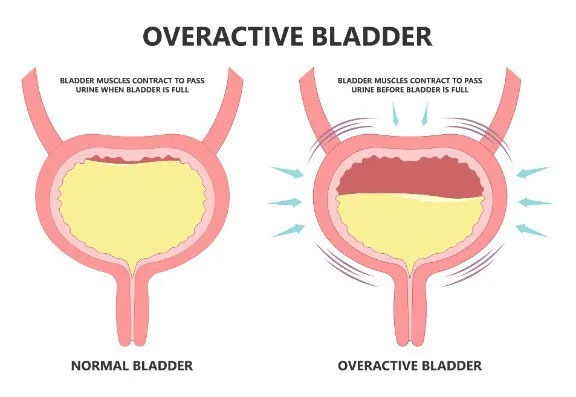
How Can Botox Help Overactive Bladders?
Botox is a brand name for botulinum toxin – a neurotoxin which blocks the messages sent by nerves to the bladder muscles.
When botulinum toxin is used to treat an overactive bladder these signals are blocked and the muscles relax, which reduces the frequency of the muscles contracting which causes an overactive bladder.
Botulinum toxin also relieves symptoms such as an urgent need to urinate and leaking urine.
How Does Using Botox for an Overactive Bladder Work?
An anaesthetic gel will be placed into the urethra to numb the area of the Botox injections. A thin tube called a cystoscope is then inserted into the bladder, before your practitioner injections the botulinum toxin through this tube into specific areas of the wall of the bladder muscle.
Botox injections take approximately five minutes and you may feel a pricking sensation or slight discomfort.
Before you go home, your practitioner may ask you to pass urine and want to scan your bladder to ensure it is emptying appropriately.
You may also be prescribed antibiotics to go home with. Normal activities can usually resume the day after Botox injections.
You should start noticing a difference in your bladder activity after two weeks. Botox injection results to treat an overactive bladder treatment generally last three to six months.

How Much Does It Cost to Treat an Overactive Bladder With Botox?
Botox for overactive bladder treatment is sometimes available for free on the NHS.
Speak to your GP to see if you qualify.
Private botulinum toxin treatment is generally around £500 but will depend on the location and experience of the practitioner.
Botox side effects are rare, but can include:
-
Urinary retention: difficulty or inability to empty your bladder – can be treated with a catheter
-
Blood in urine: usually minor and settles down
-
Urinary tract infection: treatable with antibiotics
In extreme circumstances, you may experience difficulty breathing, swallowing or speaking.
If you experience any Botox side effects or complications, contact your practitioner immediately.
As using botulinum toxin to treat an overactive bladder is a medical treatment, it's really important you see a medically-qualified practitioner with specific training in this area.
They should have undergone training in anatomy and physiology, as well as being accountable to a regulatory body such as the General Medical Council (GMC), Nursing and Midwifery Council (NMC), or General Dental Council (GDC).
They should also be able to advise you of the risks of injectable botulinum toxin treatment and be confident in handling complications if they arise.
Check out our handy guide for finding a trusted Botox for an overactive bladder practitioner.
Book a Botox Consultation Today!
Botox for an overactive bladder is available on the NHS, but only in specific circumstances. See your GP to find out if you're eligible, or if you want to look for your nearest accredited and verified Botox clinic, you can search your local clinics below.
As always, if you have any questions you can use our Botox Q&A where you can ask for more advice direct from a trusted, experienced medical practitioner.