

In our previous blog we looked at identifying hair loss and some initial considerations to make. In this blog we focus our attention to achieving a hair loss diagnosis in men.
Although there are many shared diagnoses affecting both men and women, there are other factors which can cause hair loss in females, so we explore it in a separate blog.
What is causing my hair loss?
Establishing the correct cause of hair loss is important as this will determine which treatment options are available. Hair loss can occur as an isolated health problem or may occur as a symptom of an underlying medical condition. Answering the following questions can help differentiate the two:
- Have you developed any new symptoms alongside your hair loss?
- Have you recently been diagnosed with a new medical condition?
- Have you recently suffered from burns or a new skin problem?
- Have you started a new medication or supplement, either prescribed or over the counter?
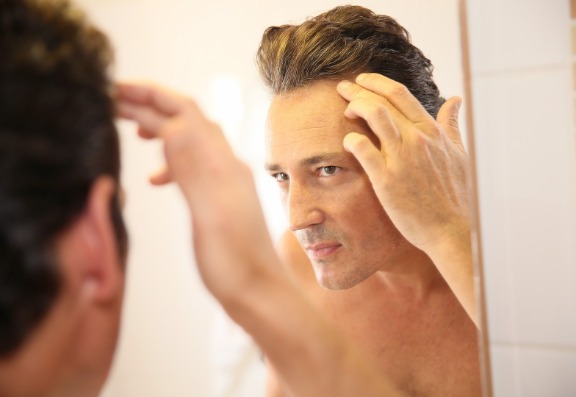
Answering yes to any of these questions could warrant a visit to the general practitioner where further investigations and blood tests may be performed to reach a diagnosis. Resolving any underlying health problems or stopping medication may actually be enough to reverse the hair loss process.
Common medical conditions associated with hair loss include:
- Thyroid disease
- Anaemia
- Lupus erythematosus
- Eating disorders
I am confident that my hair loss is an isolated problem
If this is the case, it’s time to explore the nature of the hair loss itself. At the end of our last blog we asked the following questions:
- Is the whole scalp involved or does hair loss occur in specific areas?
- Does hair loss follow a specific pattern?
- Is there evidence of scarring or inflammation to the scalp?
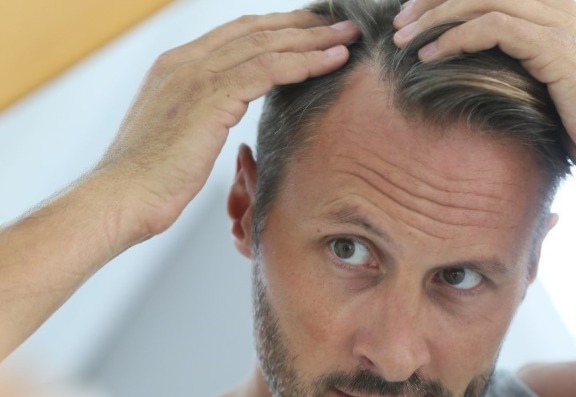
Finding out the answer to these questions may help identify some of the most common causes of hair loss. However, you may need help from a medical specialist to confidently know the answer. Taking a thorough history of the events surrounding hair loss is essential. A specialist will be able to tease important information that establishes a definitive diagnosis. In some cases, a biopsy of the scalp may be also be needed to help attain a correct diagnosis.
What are the most common causes of isolated hair loss in men?
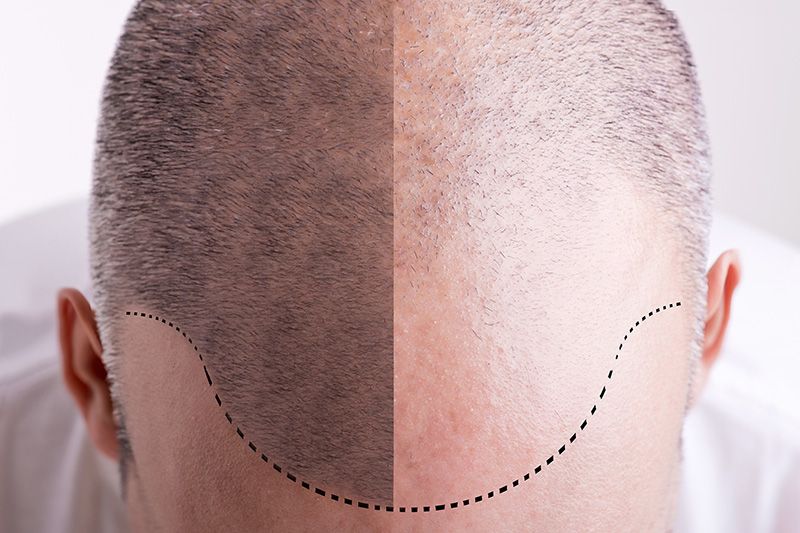
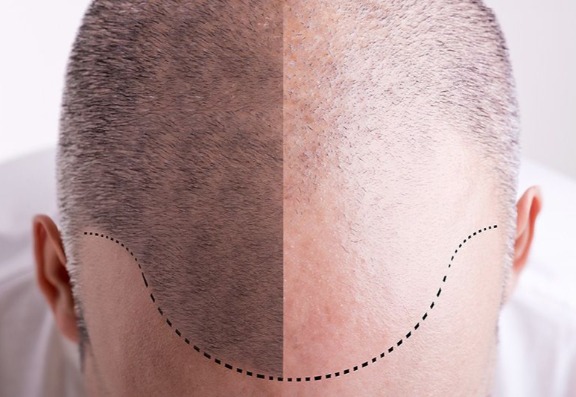
Male pattern baldness (androgenic alopecia): This is the most common cause of hair loss in men. It is caused as a result of both genetics and hormones. Men can inherit different genes which make their hair more prone to a process in which hair follicles shrink from thick healthy hairs, to small friable hairs and eventually fall out. The actual process itself is driven by the hormone testosterone. In men, this results in recession of the frontal hairline and temples, as well as the thinning of hair in the crown and top of the scalp. This gives rise to a pattern of balding commonly associated with male hair loss.
Acute/chronic telogen effluvium: In our first blog we discussed the stages of the hair growth cycle. In this condition a sudden change in our physical or psychological health drives hair follicles into the telogen phase. This results in more hairs falling out than growing and gives rise to generalised hair loss over the entire scalp with no specific pattern. In the acute form of the condition, this shedding occurs over six months and often resolves on its own. However, if the hair loss is sustained this is described as chronic telogen effluvium.
Alopecia areata: Patients develop small bald patches in their hair which occurs as a result of the body’s immune system overreacting to its own hair follicles. They then become thin, discoloured and fall out. Given time they will often grow back without the need for treatment. In rare cases the hair loss may develop into loss of all scalp hair (alopecia totalis) or the entire body (alopecia universalis).
Lichen planopilaris: This presents with an intensely itchy red scalp mainly affecting the crown and top of the head. The condition involves inflammation around the hair follicle causing patchy hair loss. After hair is lost the skin becomes scarred, making this condition very difficult to treat.
Trichotillomania (compulsive hair pulling): In this condition patients suffer with patchy hair loss as a result of habitual hair pulling. This is often associated with psychological stress.
What else could cause my hair loss?
Stress, diet and other lifestyle factors can contribute to problems with hair loss. They can influence hair condition resulting in hair breakage which worsens any existing hair loss. It is therefore doubly beneficial to ensure lifestyle factors for hair loss are appropriately managed. For more information see our lifestyle blog to come.
Having now worked our way through the hair loss journey, the majority of men will find that it is male pattern baldness which is likely to be their diagnosis as this is incredibly common. Read our next blog to find out more about this condition.
Resolving any underlying health problems or stopping the medication may actually be enough to reverse the hair loss process.
Common medical conditions associated with hair loss include:
- Thyroid disease
- Anaemia
- Lupus erythematosus
- Eating disorders
"I am confident that my hair loss is an isolated problem"
If this is the case, it’s time to explore the nature of the hair loss itself. At the end of our last blog we asked the following questions:
- Is the whole scalp involved or does hair loss occur in specific areas?
- Does hair loss follow a specific pattern?
- Is there evidence of scarring or inflammation to the scalp?
Finding out the answer to these questions may help identify some of the most common causes of hair loss.
However, you may need help from a medical specialist to confidently know the answer.
Taking a thorough history of the events surrounding hair loss is essential.
A specialist will be able to tease important information that establishes a definitive diagnosis. In some cases, a biopsy of the scalp may be also be needed to help attain a correct diagnosis.

What are the most common causes of isolated hair loss in men?
Male pattern baldness (androgenic alopecia): This is the most common cause of hair loss in men. It is caused as a result of both genetics and hormones.
Men can inherit different genes which make their hair more prone to a process in which hair follicles shrink from thick healthy hairs to small friable hairs and eventually fall out.
The actual process itself is driven by the hormone testosterone. In men, this results in recession of the frontal hairline and temples, as well as the thinning of hair in the crown and top of the scalp.
This gives rise to a pattern of balding commonly associated with male hair loss.
Acute/chronic telogen effluvium: In our first blog we discussed the stages of the hair growth cycle. In this condition, a sudden change in our physical or psychological health drives hair follicles into the telogen phase.
This results in more hairs falling out than growing and gives rise to generalised hair loss over the entire scalp with no specific pattern.
In the acute form of the condition, this shedding occurs over six months and often resolves on its own. However, if the hair loss is sustained this is described as chronic telogen effluvium.
Alopecia areata: Patients develop small bald patches in their hair which occurs as a result of the body’s immune system overreacting to its own hair follicles.
They then become thin, discoloured and fall out. Given time they will often grow back without the need for treatment. In rare cases, the hair loss may develop into a loss of all scalp hair (alopecia totalis) or the entire body (alopecia Universalis).
Lichen planopilaris: This presents with an intensely itchy red scalp mainly affecting the crown and top of the head.
The condition involves inflammation around the hair follicle causing patchy hair loss.
After hair is lost the skin becomes scarred, making this condition very difficult to treat.
Trichotillomania (compulsive hair-pulling): In this condition, patients suffer from patchy hair loss as a result of habitual hair pulling.
This is often associated with psychological stress.
What else could cause my hair loss?
Stress, diet and other lifestyle factors can contribute to problems with hair loss.
They can influence hair condition resulting in hair breakage which worsens any existing hair loss.
It is therefore doubly beneficial to ensure lifestyle factors for hair loss are appropriately managed. For more information see our lifestyle blog to come.
Having now worked our way through the hair loss journey, the majority of men will find that it is male pattern baldness which is likely to be their diagnosis as this is incredibly common. Read our next blog to find out more about male pattern badness.
If you want to read more, the experts at Consulting Room really know what they're talking about and have put together non-surgical hair loss, hair transplant, hair loss drugs and Hair loss FAQs just for you.
If you have more questions, you can use the non-surgical hair loss, hair transplant, hair loss drugs and Hair loss questions feature to talk to our panel of trained medical experts.
If you're keen to get started with any of these treatments right away then you're in luck - those clever folks also have a list of trusted, accredited non-surgical hair loss, hair transplant, hair loss drugs and Hair loss clinics in your area.
Many thanks to the author Dr Dilan Fernando.
As lead hair transplant surgeon at The Treatment Rooms London, he has seen first hand the life-changing results surgery can have.
Undergoing the procedure is a highly personalised choice and Dr Fernando goes the extra mile to ensure high-quality natural hair growth results that account for the future.