


Why skin quality matters as much as lesion reduction
Acne remains one of the most common concerns encountered in aesthetic and dermatology clinics, affecting up to 95% of people at some stage in their lives. Despite advances in skincare, pharmaceuticals and in-clinic procedures, many patients continue to struggle with persistent breakouts, prolonged redness and recurring inflammation.
Traditionally, acne management has focused on controlling excess sebum production, reducing bacterial activity and accelerating skin cell turnover. Whilst these factors remain important, our understanding of acne has evolved significantly in recent years.
Today, acne is increasingly recognised as a chronic inflammatory skin condition. As a result, practitioners are beginning to look beyond the visible blemish and focus instead on the biological environment that allows inflammation to develop and persist.
Looking beyond bacteria
For many years, Cutibacterium acnes was considered one of the primary drivers of acne. Whilst bacterial involvement remains relevant, research has shown that inflammatory processes are often active long before visible lesions appear.
This helps explain why some patients continue to struggle despite prescription medications, active skincare products and repeated treatment programmes. Reducing bacterial populations alone may not be enough if the skin remains trapped in a cycle of chronic inflammation.
For practitioners, this shift in understanding is significant. The goal is no longer simply to clear existing lesions, but to create an environment in which the skin can regulate, repair and heal more effectively.
The skin barrier: An overlooked piece of the puzzle
The skin barrier plays a vital role in maintaining hydration, protecting against environmental stressors and regulating immune activity within the skin.
Unfortunately, many acne patients present with a compromised barrier.
Years of exfoliating acids, prescription retinoids, harsh cleansers and multiple treatment modalities can leave the skin vulnerable to irritation, sensitivity and persistent redness. When the barrier becomes impaired, inflammation becomes more difficult to control, creating a frustrating cycle for both patient and practitioner.
As a result, many clinics are increasingly incorporating skin barrier support and recovery-focused treatments into their acne protocols.
The conversation is shifting from simply treating acne to improving overall skin health.
The rise of regenerative thinking
Patient expectations have changed dramatically over the last decade.
Influenced by advances in regenerative medicine and the popularity of Korean skincare, today’s patients are often seeking more than lesion reduction alone. They want healthier skin, improved texture, reduced redness and long-term resilience.
This has encouraged practitioners to explore therapies that support the skin’s natural repair processes rather than relying solely on aggressive treatment strategies.
Rather than focusing exclusively on destruction and subsequent healing, regenerative approaches aim to optimise cellular function and create an environment in which healthy skin can thrive.
Understanding CAV-1 and skin regeneration
One area attracting growing scientific interest is Caveolin-1 (CAV-1), a structural protein found within the cell membrane.
CAV-1 plays an important role in cellular communication, inflammation regulation, tissue remodelling and wound healing. Research has demonstrated altered CAV-1 expression in a number of inflammatory skin conditions, including acne, whilst dysregulation has also been associated with fibrosis, scarring and accelerated skin ageing.
Although this remains an evolving area of research, CAV-1 is increasingly being recognised as a key regulator of skin health and regeneration. Understanding how inflammatory processes influence proteins such as CAV-1 may help practitioners better understand why some patients heal quickly whilst others experience prolonged inflammation, redness and scarring.
The emerging role of Dermal White Adipose Tissue (DWAT)
Another area of growing interest is Dermal White Adipose Tissue (DWAT).
Historically viewed simply as a fat layer beneath the skin, DWAT is now recognised as an active participant in skin immunity, wound healing and inflammatory regulation. Research has shown that adipocytes communicate with surrounding skin structures, contribute to antimicrobial defence and influence the skin’s response to injury.
Whilst the relationship between DWAT and acne continues to be explored, these findings highlight an important shift in thinking. Healthy skin relies on a complex interaction between immune cells, connective tissue, adipose tissue and cellular signalling pathways.
The future of acne management may therefore involve supporting these biological systems rather than focusing exclusively on visible symptoms.
Clinical insight: A long-term approach to acne management
At Filo Aesthetics in Ireland, founder and skin specialist Ryan Jay Lumor approaches acne management as a long-term skin health journey rather than a quick fix.
The patient shown below underwent a personalised treatment programme in August 2025, with 9 sessions over 6 weeks. Over the course of treatment, significant improvements were observed in inflammatory lesions, skin congestion, post-inflammatory redness and overall skin quality.
Perhaps most striking is that the improvement extends beyond acne reduction alone. Improvements in skin texture, luminosity and overall skin health demonstrate the importance of supporting the skin throughout the healing process rather than focusing solely on lesion clearance.
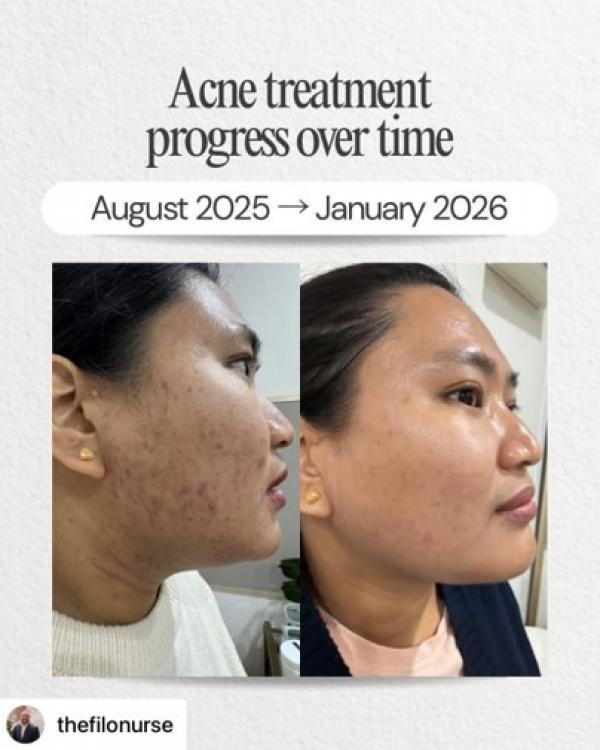
Figure 1. Acne treatment progress between August 2025 and follow-up January 2026. Image courtesy of Ryan Jay Lumor, Founder of Filo Aesthetics, Ireland.
Where does regenerative ultrasound fit?
As clinics seek more holistic approaches to acne management, technologies that support inflammation control, tissue repair and skin recovery are becoming increasingly relevant.
One such technology is Local Dynamic Micro-Massage® (LDM®), a regenerative ultrasound platform developed in Germany and now widely used throughout South Korea.
Unlike conventional ultrasound systems, LDM rapidly alternates between multiple ultrasound frequencies, creating unique mechanical stimulation within the tissue.
Research suggests this may influence inflammatory pathways, extracellular matrix dynamics and regenerative processes associated with skin repair.
Many clinics are now incorporating regenerative ultrasound alongside established acne therapies to support skin recovery, improve patient comfort and optimise treatment outcomes.
Importantly, these technologies are not intended to replace conventional acne treatments, but to complement them by supporting the biological environment in which healing occurs.
Looking ahead
Our understanding of acne has progressed significantly over the past decade.
Whilst sebum production, bacterial activity and follicular blockage remain important considerations, it is becoming increasingly clear that inflammation, skin barrier function and tissue regeneration also play critical roles.
For practitioners, this presents an opportunity to move beyond symptom management and adopt a more comprehensive approach to skin health. For patients, it offers the possibility of clearer, healthier and more resilient skin.
The future of acne management may not lie in treating the blemish alone, but in supporting the biological systems that allow the skin to heal and thrive.
For more information on adding Acne Treatment into your clinic, please visit angloarab.co.uk.
Unlock a treasure trove of aesthetic knowledge!