
Full Report - Section 1
Forward reflection
We brought together every voice in this report to create a single, collective outlook for the UK aesthetic market over the next 12 months
The UK aesthetic market is entering one of its most structurally important 12-month periods in over a decade.
Across associations, training bodies, brands, business advisers, educators and frontline practitioners, the message is strikingly consistent
The forces shaping 2026 are not about the next trending product. They are about the frameworks that will define how the sector operates long-term.
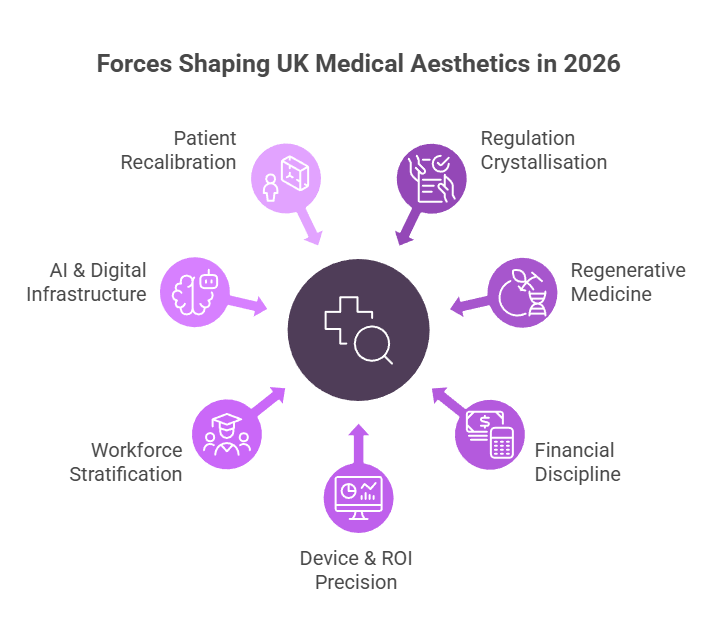
Between now and early 2027, the industry will be shaped less by treatment hype and more by structural clarity:
- Regulatory crystallisation and competency-linked licensing
- Insurance scrutiny and governance tightening
- Margin compression and operational maturity
- Integration of metabolic, hormonal and longevity medicine
- Smarter capital deployment and digital infrastructure
- Workforce stratification and higher educational thresholds
- Consumer recalibration toward preventative and regenerative care
Demand remains robust. Innovation continues. But the defining characteristic of the year ahead is professionalisation.
What follows draws together the collective perspective of the sector, reflecting where it believes the next 12 months will lead and shaped by those influencing it at every level.
1. Regulation: From campaigning to preparation
If you strip away the noise, one thing is clear across associations, educators and business advisers: regulation is no longer hypothetical. It is behavioural.
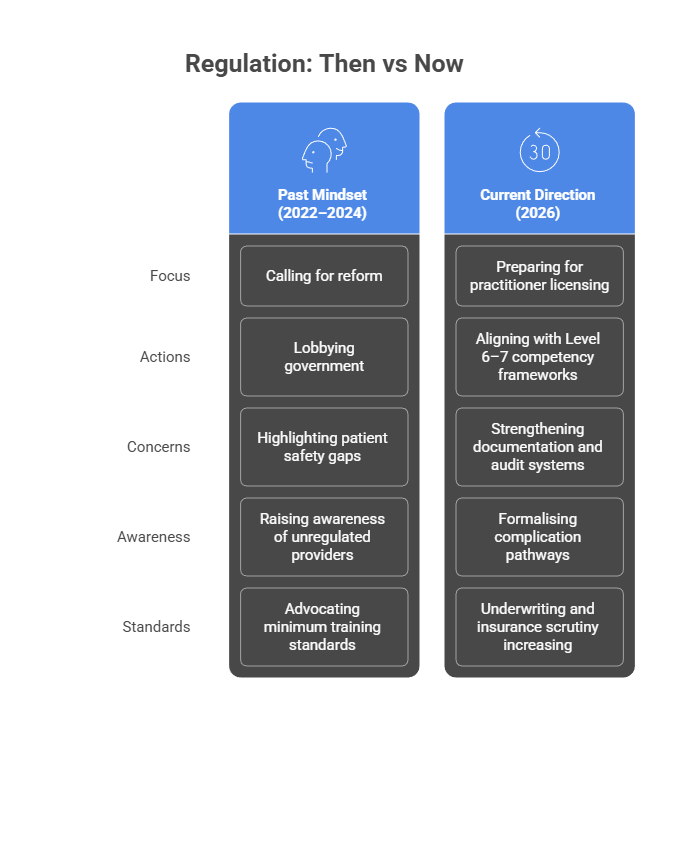
Professional bodies, including BAAPS, BAMAN, BCAM, RAMI and The Menopause Network, are no longer just calling for reform. They are actively preparing members for it
The tone has shifted from campaigning to compliance-readiness.
Training providers are aligning programmes with anticipated licensing structures, higher competency thresholds and formalised documentation pathways.
Business service providers are reporting tighter underwriting scrutiny, more detailed insurance requirements and increased attention to governance gaps.
Even without confirmed dates for every regulatory change, the operating environment has already changed.
Clinics that behave as if regulation is imminent are now setting the pace.
What regulation is likely to mean in practical terms
Across the project sources, several likely structural shifts are repeatedly referenced:
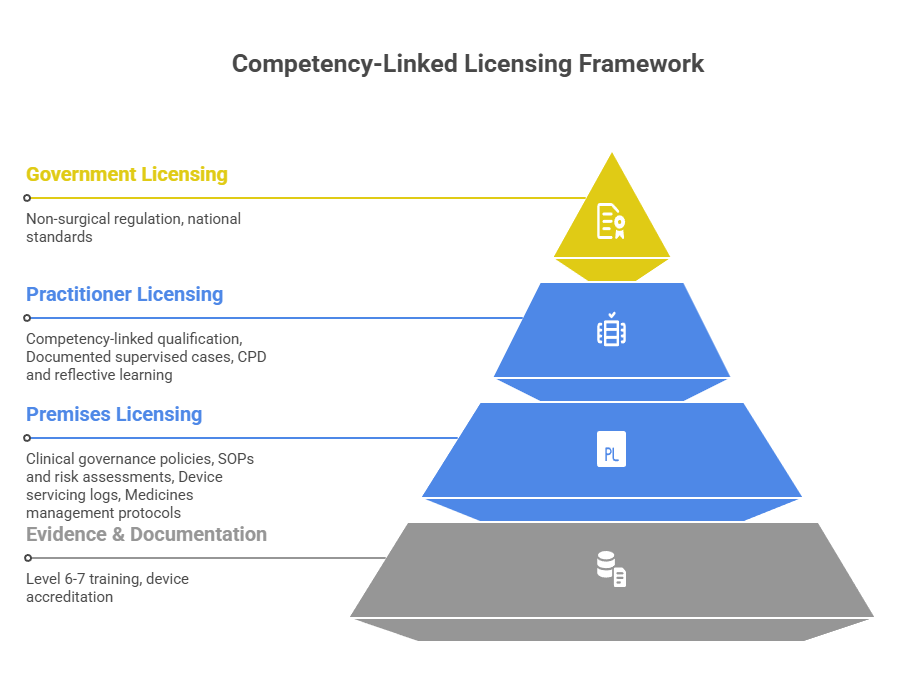
- Practitioner and premises licensing
- Protected titles or defined scopes of practice
- Minimum training thresholds
- Stricter prescribing frameworks
- Stronger complication documentation and escalation pathways
- Greater scrutiny of marketing claims
Associations consistently emphasise patient safety frameworks, complication readiness and documented consent processes. Training providers highlight alignment with anticipated licensing and formal education standards.
The message is simple: informal systems will not survive formal scrutiny.
Why this matters commercially, not just legally
It is tempting to treat regulation as a compliance burden. That would be short-sighted.
In a more selective, trust-driven market, governance is becoming a competitive asset.
Practitioners report that patients are asking more detailed questions about qualifications, complication management and training background while associations highlight the reputational risk of adverse events and unethical marketing.
In other words, patients are already behaving as if regulation exists.
Trust is no longer assumed. It must be evidenced.
The emotional undercurrent: Fear and uncertainty
There is also a quieter theme emerging in the education space.
As licensing discussions reference higher-level qualifications and mapped competencies, some experienced practitioners feel anxious about retrospective judgment or shifting goalposts.
Education leaders are clear that advanced education requirements are about evidencing competence, not discrediting experience
However, perception matters.
Clinics that proactively upgrade documentation, training evidence and scope clarity now will avoid reactive panic later.
Preparedness reduces fear.
The deeper shift
Zooming out, this is not just about compliance.
This is about identity.
Associations are reframing aesthetics as a healthcare-adjacent clinical discipline, not a cosmetic service category. Business advisers describe clinics evolving into structured, data-driven organisations and educators are raising the training bar.
The sector is deciding what it wants to be.
And 2026 is the year behaviour must match rhetoric.