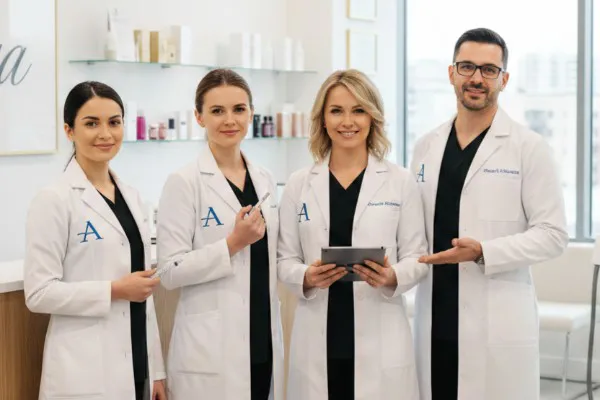
Practitioner Insights
Over the next 12 months, practitioners anticipate a decisive shift towards regenerative and longevity-led treatments, subtler and more natural outcomes, greater integration of technology, and an expansion into areas such as women’s health and holistic wellbeing.
At the same time, increased competition, patient sophistication and the prospect of tighter regulation are driving higher standards of practice and professional accountability.
Together, these insights suggest that aesthetic practitioners in 2026 will operate less as transactional treatment providers and more as medically led, ethically grounded specialists delivering comprehensive, long-term patient care.1. The rise of regenerative and longevity-led aesthetics
A clear shift is underway from traditional “anti-wrinkle” treatments toward regenerative, preventative and longevity-focused medicine. Practitioners are increasingly positioning aesthetic care within a broader health and wellness framework.
Key developments include:
- Growth in regenerative treatments such as PRP, exosomes, polynucleotides and biostimulators
- Greater interest in skin quality over structural alteration
- A stronger link between aesthetic medicine and hormonal, sexual and metabolic health
- Increased patient demand for treatments that stimulate the body’s own repair processes
Practitioners predict that patients will prioritise treatments that improve long-term skin function rather than deliver short-term volume or freezing effects. This reflects a maturing patient demographic seeking subtle, natural outcomes.
There is also a growing crossover between aesthetic practice and longevity medicine. Hormone optimisation, sexual wellness treatments and regenerative therapies are becoming integrated into clinic offerings, reflecting a move toward “whole-person” aesthetics.
2. Subtlety, natural results and the decline of over-treatment
All three responses highlight a decisive move away from exaggerated, high-volume aesthetics. Patients are more informed and increasingly wary of overfilled or artificial results.
Over the next 12 months, practitioners expect:
- Reduced demand for heavy dermal filler use
- Increased focus on skin texture, tone and collagen stimulation
- More conservative treatment plans
- Emphasis on long-term maintenance rather than dramatic transformation
There is a clear narrative around “undetectable” aesthetics — treatments that enhance without signalling intervention. Practitioners anticipate continued demand for subtle tweakments that preserve individuality.
This shift is being driven by:
- Social media fatigue around extreme results
- A more educated patient base
- A growing desire for authenticity
Practitioners foresee corrective work also becoming more common, with patients seeking dissolution and restoration from previous over-treatment.
3. Patient education and ethical practice as differentiators
With increasing scrutiny of the sector, ethical positioning and patient education are becoming key competitive advantages.
Practitioners emphasise that the next year will see:
- Greater transparency around treatment risks
- More detailed consultations and realistic outcome-setting
- Refusal of inappropriate treatments is becoming standard practice
- Clearer communication about longevity and maintenance
There is recognition that informed patients expect medical-grade standards. Clinics that prioritise safety, evidence-based practice and patient wellbeing will stand out.
The industry’s ongoing regulatory uncertainty is also shaping behaviour. Many practitioners anticipate tighter regulation and are proactively raising standards ahead of formal changes.
4. Advanced technology and energy-based devices
Energy-based devices (EBDs) and non-invasive technologies are expected to see strong growth.
Practitioners identify:
- Continued expansion of radiofrequency, ultrasound and laser platforms
- Greater use of combination protocols (injectables + devices)
- Non-surgical skin tightening as a key growth area
- Devices that stimulate collagen without downtime
As patients seek visible but natural improvements, devices that deliver gradual, regenerative outcomes align well with current preferences.
There is also increased interest in treatments with minimal recovery time, reflecting busy lifestyles and the desire for discreet procedures.
5. The expansion of women’s health and intimate aesthetics
One of the strongest emerging themes is the growth of women’s health services within aesthetic practice.
Over the next year, practitioners anticipate:
- Rising demand for intimate rejuvenation treatments
- Greater openness around sexual wellness concerns
- Integration of hormone health discussions into aesthetic consultations
- Increased education around menopause-related changes
This signals a broader cultural shift where aesthetics intersects with functional and emotional wellbeing.
Practitioners specialising in this area expect continued growth, driven by reduced stigma and increased awareness.
6. Male aesthetics: Steady but selective growth
While female patients remain the dominant demographic, male aesthetics continues to grow steadily.
Practitioners report:
- Increased male interest in subtle skin and jawline refinement
- Preference for natural, undetectable results
- Growing awareness of preventative treatments
However, male patients remain cautious, often prioritising minimal downtime and discretion.
Clinics that tailor messaging and consultation style to male concerns are likely to see continued uptake.
7. Holistic consultation and multi-layered treatment planning
The traditional “single-treatment” appointment model is evolving into more comprehensive, layered treatment planning.
Practitioners predict:
- More structured long-term treatment journeys
- Combination protocols targeting skin, structure and quality
- Greater use of photography and digital analysis
- Personalised treatment plans based on ageing patterns
There is a growing emphasis on treating the face (and body) as a dynamic system rather than isolated concerns.
This strategic, phased approach aligns with the move toward longevity aesthetics and subtle refinement.
8. Practitioner training and professional development
With techniques and technologies advancing rapidly, ongoing education remains a priority.
Practitioners highlight:
- Demand for advanced complication management training
- Increased focus on anatomy and regenerative techniques
- Desire for mentorship and higher-level certification
- Greater scrutiny of training standards
As the market becomes more competitive, professional credibility is increasingly central to clinic positioning.
Practitioners anticipate that those investing in higher-level medical training and evidence-based practice will thrive.
9. Business pressures and market maturation
The industry is entering a more mature phase, bringing both opportunity and pressure.
Practitioners note:
- Increased competition within local markets
- Greater patient price sensitivity
- Rising operational costs
- Need for clear brand differentiation
In response, clinics are refining their niche positioning — whether regenerative medicine, women’s health, subtle aesthetics or device-led practice.
There is a sense that the “fast-growth, low-barrier” era is slowing, replaced by a more professionalised environment.
Outlook for the Next 12 Months
Across all three submissions, one overarching theme emerges: a shift from transactional aesthetics to medicalised, regenerative, and ethically grounded practice.
Practitioners expect the coming year to be defined by:
- Natural, regenerative outcomes
- Holistic patient care
- Greater professionalism
- Technological integration
- Expansion into longevity and wellness
The UK aesthetic practitioner of 2026 is positioned less as a cosmetic injector and more as a regenerative medical specialist – blending aesthetics, wellness and long-term health optimisation.
This evolution reflects both patient demand and practitioner ambition, signalling a sector that is maturing, consolidating and raising its standards for the future.