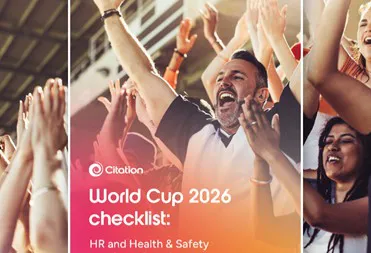


Prepare your workplace for FIFA World Cup 2026 with this practical HR and Health & Safety guide. Learn how to manage annual leave, sickness absence, employee conduct, engagement and compliance during major sporting events.
With the FIFA World Cup 2026 fast approaching, employers across the UK and beyond are already anticipating the ripple effects it can have on the workplace.
While the tournament itself only lasts a few weeks, experience from previous major sporting events shows the same themes tend to appear in workplaces everywhere: late-night viewing, increased annual leave requests, “sick days” after big matches, and occasional challenges around employee conduct.
Handled well, it can actually become a positive moment for engagement and culture. Handled poorly, it can lead to inconsistency, resentment, and even compliance risks.
To help employers stay ahead, a free World Cup 2026 HR & Health & Safety checklist has been created by our partner Citation to support planning, consistency and compliance.
Download the free checklist here: https://tinyurl.com/ah3xuem7
Why the World Cup 2026 matters for employers
Major global tournaments don’t just affect football fans - they affect whole teams, shift patterns, customer service delivery, and productivity.
With matches taking place across multiple time zones, many employees will be watching games late at night, leading to:
-
Increased requests for annual leave
-
Changes in working patterns and shift swaps
-
Tiredness and reduced productivity
-
Higher levels of short-term sickness absence
-
Potential conduct issues linked to alcohol consumption
Without clear policies and consistent communication, these issues can quickly impact morale and fairness across teams.
What the free World Cup 2026 HR checklist covers
The free resource has been designed to help employers stay compliant while keeping teams engaged and productive during the tournament.
It includes practical guidance on:
1. Managing annual leave and working patterns
Clear strategies for handling competing leave requests fairly, avoiding last-minute disruption, and maintaining operational coverage.
Download checklist: https://tinyurl.com/ah3xuem7
2. Handling sickness absence fairly and consistently
Advice on managing “morning after” absences, spotting patterns, and ensuring absence policies are applied consistently across the workforce.
3. Alcohol, conduct and workplace expectations
How to reinforce behavioural standards during high-profile matches and social viewing events without damaging morale.
4. Employee engagement (including non-football fans)
Ideas for keeping all staff engaged - not just those watching the tournament - and avoiding resentment between teams.
5. Health & Safety considerations
Key risks employers should be aware of, including:
-
Lone working
-
Fatigue and reduced concentration
-
Workplace aggression or conflict
-
Safe transport and late-night travel concerns
Why planning ahead matters
The difference between a disruptive tournament and a well-managed one often comes down to preparation.
Clear communication, consistent policy enforcement, and proactive planning can help employers:
-
Reduce absence-related disruption
-
Maintain fairness across teams
-
Protect productivity
-
Strengthen employee trust and engagement
-
Stay compliant with HR and Health & Safety obligations
Expert support for employers
Citation’s HR, Health & Safety, and Employment Law specialists support thousands of UK businesses to manage workplace risk and stay compliant year-round.
To learn more or speak to an expert, call 0345 844 1111.
When enquiring, mention “Consulting Room” to access preferential rates.
Download your free World Cup 2026 checklist
Get your workplace ready for the tournament with practical tools and guidance:
Final thought
The FIFA World Cup 2026 will be a major global event - but for employers, it’s also a test of planning, communication and consistency.
With the right approach, it doesn’t need to be disruptive. In fact, it can be an opportunity to strengthen workplace culture, improve engagement, and demonstrate fairness across your organisation.