


A new peer-reviewed, multinational real-world study by Amado et al. (2026) has reported significant improvements in periorbital hyperpigmentation following treatment with Plinest® Eye.
Published in the Journal of Clinical, Cosmetic and Investigational Dermatology, the study is described as the first multinational real-world study investigating Polynucleotides High Purification Technology (PN-HPT®) for periorbital hyperpigmentation across a diverse international patient cohort.
The findings reported improvements in dark-circle severity, skin quality and patient satisfaction, with outcomes continuing to improve for three months following the final treatment.
Multinational Study of 61 Patients
The study involved 61 patients across the UK, Italy, Malaysia, Turkey and Indonesia, treated by medical aesthetics practitioners including Dr Raquel Amado of Skin & Medical Cosmetics in West Malling, UK, and Dr Yusra Al-Mukhtar of Dr Yusra Clinic in Liverpool, UK.
The patient cohort included most Fitzpatrick skin types (II–VI) and a broad range of periorbital dark-circle subtypes.
Patients received three treatment sessions at two- to three-week intervals, with outcomes assessed one and three months after the final treatment.¹
The findings demonstrated a highly significant reduction in dark-circle severity across the study population (p<0.001), with progressive improvements observed at the one-month follow-up.
Outcomes continued to improve at the three-month follow-up, suggesting an ongoing regenerative effect beyond the treatment period.¹
Practitioner assessments also reported progressive improvements in skin tone evenness, firmness and glow, providing further evidence of broader periorbital skin-quality benefits alongside the reduction in dark-circle severity.
The study identified particularly favourable outcomes among patients presenting with structural dark circles, where volume loss and tissue changes contribute to the appearance of the under-eye area.
Patients treated using a cannula appeared to experience faster and greater improvements than those treated using a needle, although positive outcomes were observed with both delivery methods.
As this was an observational comparison, further controlled research is required before drawing conclusions about the relative performance of either technique.
Patient Satisfaction and Safety
Patient-reported outcomes reflected the clinical findings, with the majority of respondents reporting that they were satisfied or very satisfied with their results at the three-month follow-up.
Satisfaction levels continued to increase between the one- and three-month assessments, mirroring the progressive improvements observed by practitioners.
The treatment also demonstrated an excellent safety profile in the study, with mild, transient injection-related reactions such as erythema and swelling reported in approximately one-third (34%) of patients. Most reactions resolved on the day of treatment, with no unexpected safety concerns identified.
How Does PN-HPT® Work?
According to the information provided by DermaFocus, the regenerative effects of PN-HPT® are thought to occur through two complementary mechanisms.
Immediately following treatment, the injectable provides hydration that can help improve the appearance of tear-trough hollowing.
Over time, passive hydrolysis replenishes tissue pools of nitrogen bases and nucleotide precursors, supporting fibroblast activity and stimulating the production of collagen, elastin and extracellular matrix components that contribute to healthier, more resilient skin.
Dr Raquel Amado on the Findings
Commenting on the study, DermaFocus Faculty Member Dr Raquel Amado of Dr Raquel Skin and Medical Cosmetics said:
“Periorbital dark circles remain one of the most challenging aesthetic concerns to treat because their causes are often multifactorial, encompassing pigmentation, structural changes, skin quality and volume loss. This study provides valuable real-world evidence supporting the use of PN-HPT® in addressing several of these underlying factors simultaneously. The progressive improvements observed beyond the treatment period further reinforce the regenerative potential of polynucleotides within contemporary aesthetic practice."
Milad Bemana, Co-owner of DermaFocus, commented:
“This peer-reviewed study provides compelling evidence for Plinest® Polynucleotides HPT®, demonstrating statistically significant improvements in periorbital hyperpigmentation, alongside progressive improvements in skin quality and high patient satisfaction. By investing in evidence-led innovation and practitioner education, we're helping practitioners confidently address one of the most challenging aesthetic concerns with treatments that prioritise skin quality, tissue health and natural-looking outcomes."
About Plinest® Eye
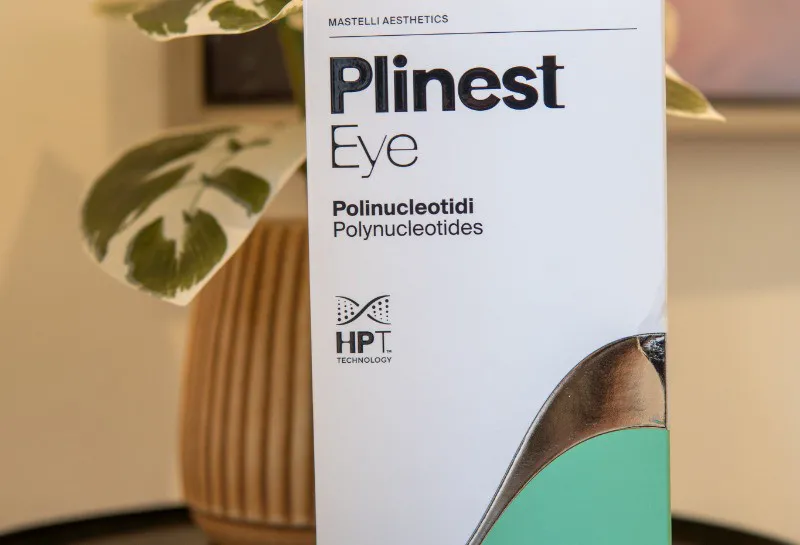
Plinest® Eye is a specialised PN-HPT® formulation developed for the delicate periocular area.
Published studies have reported improvements across outcomes including wrinkle appearance, skin firmness, tone evenness, glow and periorbital hyperpigmentation.
The product is intended for patients with hypotrophic skin, early signs of ageing and difficult-to-treat under-eye concerns.
According to product information, Plinest® Eye is positioned as an alternative to tear-trough filler and is formulated to improve the appearance of dark circles, fine lines and skin laxity, as well as skin thickness and elasticity.
Product data cited by DermaFocus reports a 45.5% reduction in wrinkle severity (mean score across all patients) and a 47% improvement in hypotrophic skin after three treatments (n=48).² ³
The thin periocular skin is an area where Plinest® Eye appears to offer distinctive aesthetic outcomes, with a specific 15 mg in 2 ml protocol.⁴ ⁵ ⁶ Tightening of the periocular skin has been reported, including in areas with more severe sagging.⁴ ⁵
Investigators classified 87.5% of patients as showing clinical improvement in the reduction of fine, superficial wrinkles and overall skin appearance. These results were also supported by objective evaluations using 3D skin analysis (ANTERA 3D).⁷
The Plinest® Polynucleotides HPT® Range
Launched in 2005, the Plinest® Polynucleotides HPT® range is a collection of injectable polynucleotide products manufactured by Italian company Mastelli and distributed exclusively in the UK and Ireland by regenerative aesthetic medicine specialists DermaFocus.
The range is clinically developed and registered as a Class III medical device, with the products CE-certified.
According to DermaFocus, Plinest® was the first polynucleotide-based brand to be registered as a medical device for intradermal injection in 2005.
The Plinest® range uses Polynucleotides High Purification Technology (PN-HPT®), which uses highly purified DNA fragments produced using a patented technology developed exclusively by Mastelli.
Once injected, the DNA fragments are reported to work through several mechanisms:
- They form a 3D gel matrix that immediately increases skin turgidity.
- They act as antioxidants that scavenge free radicals to help prevent cellular damage.
- They are passively degraded into components that stimulate fibroblast activity and proliferation, supporting collagen type I and III, elastin and hyaluronic acid synthesis.
- As cell renewal improves, the skin becomes more hydrated, with improved elasticity and skin quality.
- They may also improve the appearance of scars, stretch marks and overall skin texture, with a mild increase in volume and tightening reported as an overall effect.
The Plinest® Polynucleotides HPT® portfolio includes four polymerised polynucleotide-based injectable gels, each formulated for different clinical indications and patient needs across the face, body and hair.
The portfolio can be used as either a monotherapy or combination therapy alongside other treatments. According to DermaFocus, the PN-HPT® priming process prepares the skin and makes it more receptive to medical, aesthetic and anti-ageing treatments, with reported synergistic use alongside laser, radiofrequency, fillers, peeling, needling and surgery.¹
Where Can Healthcare Practitioners Find Plinest®?
The Plinest® Polynucleotides HPT® portfolio, including Plinest® Eye, is available directly through DermaFocus or through pharmacy partners including ACRE, Church Pharmacy, HealthXchange, John Bannon, Mediva Pharmacy, Medfx, Millennium Pharmacy and Wigmore Medical.
Healthcare practitioners can find further information at DermaFocus or contact DermaFocus directly at info@dermafocus.co.uk.
References
1 Amado F, et al. A real-world study of Polynucleotides High Purification Technology (PN-HPT®) for treating periorbital hyperpigmentation. Journal of Clinical, Cosmetic and Investigational Dermatology. 2026.
2 Plinest Eye IFU (Instruction for use)
3 Isabella Pia Palmieri et al., 2023 - An Innovative PN HPT™-based Medical Device for the Therapy of Deteriorated Periocular Skin Quality
4 Massirone A. Polynucleotides Highly Purified Technology and the face skin, a history of innovative skin priming. Aesthetic Medicine.2021 Jan-Mar;Vol.7(1):25-40.
5 Cavallini M, Papagni M. Trattamento integrato del contorno occhi. L’Ambulatorio Medico. 2013; 39:11-2.
6 Ulgiati S, Pompilio L, Santini S. Polinucleotidi e acido ialuronico: ago tradizionale o cannula? L’Ambulatorio Medico. 2018; 53:11-13
7 Cavallini M, Papagni M. Aesthetic & Anti-Aging Medicine World Congress, Monte Carlo 2018
Download the full guide
Polynucleotides.pdf