


Learning to draw blood, spin a centrifuge and inject the final product is only the beginning. Claudia McGloin asks whether PRP education is focusing enough on the clinical knowledge behind the procedure.
I have been working with PRP for many years, and one thing that continues to surprise me is how differently we approach PRP education compared with other areas of clinical practice.
We can teach someone how to take blood, how to use a particular preparation system and how to inject the resulting product, and somehow that can become a PRP course. But where is the rest of it?
Where is the patient assessment? Where is the understanding of the blood we have just taken? Where is the discussion about what the centrifuge has actually produced, why we are using that particular PRP preparation and whether it is appropriate for the tissue we are treating?
Most importantly, where is the education around what to do when the expected result doesn’t happen?
Not all PRP is the same, and neither are our patients
I often say that not all PRP is the same, but neither are our patients. PRP is an autologous biological treatment, which means our starting material changes every time a new patient walks through the door.
We cannot control human biology in the way a manufacturer can control the contents of a pharmaceutical product. Age, health, medication, haematological parameters and potentially modifiable lifestyle or nutritional factors may all be relevant, depending on the individual patient and indication.
This does not mean that everyone needs an extensive list of blood tests before having PRP, and we need to be careful not to make claims that run ahead of the evidence.
It does mean that taking a proper medical history, understanding the patient in front of us and investigating when clinically indicated should be fundamental parts of PRP practice.
Do we really understand the product we are injecting?
Then there is the PRP itself.
Ask ten practitioners what PRP they use and you may get the names of ten different kits. Ask what those systems actually produce and the conversation can become much more difficult.
What is the platelet concentration? What is the final volume? What is the total platelet dose? Is it leukocyte-rich or leukocyte-poor? What happens to the red cells? What anticoagulant is being used? Is the preparation activated?
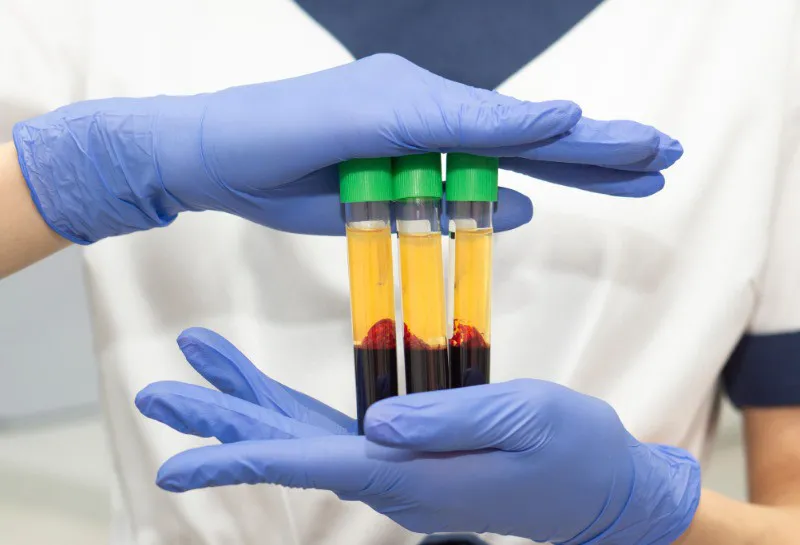
These things matter because PRP is not simply the yellow liquid we see in a syringe. The appearance of the product tells us very little about its biological composition.
If practitioners do not understand what their preparation system produces, how can they confidently explain why they have selected that particular product for a specific indication?
Knowing how to operate a kit is not the same as understanding the biological preparation it produces.
The blood draw is part of the treatment
We also need to become much better at recognising the importance of blood collection.
We are producing a treatment from a patient’s blood, yet venepuncture can almost become the forgotten part of PRP education. How the blood is collected, handled and processed matters.
If we are going to talk seriously about improving consistency in PRP, then we need to look at the entire process rather than starting our quality conversation once the tube reaches the centrifuge.
Blood collection, handling requirements, preparation protocols and the characteristics of the final product all form part of the clinical process. They should not be treated as separate from the treatment itself.
Why are we using PRP in the first place?
I also think we need to become much better at questioning why we are using PRP.
“Because PRP is regenerative” is not enough.
What are we treating? What does the evidence tell us for that indication? What tissue are we targeting? What preparation are we using? What protocol are we following? What outcome are we expecting, and how are we going to measure it?
These are fundamental clinical questions, yet they can receive less attention than the practicalities of performing the procedure.
We need to understand the rationale behind our treatment choices, recognise the limitations of the available evidence and set realistic expectations with patients.
Sometimes the correct clinical decision will be not to inject at all. That is just as much a part of competent PRP practice as performing the procedure.
What happens when PRP doesn’t work?
And then we have the patient who comes back and says, “It didn’t work.”
This is where PRP becomes particularly interesting to me.
Before labelling somebody a non-responder, I want to know what happened throughout that treatment pathway.
Was the diagnosis correct? Was the patient suitable? Was the product appropriate? Was the dose adequate? Was the protocol appropriate for that pathology? Were there biological factors worth investigating? Was enough time allowed to assess the response?
Unless we know those things, saying that PRP failed may be an oversimplification.
A lack of response should prompt us to review the clinical picture rather than automatically repeat the treatment or assume that the patient was simply unsuitable for PRP.
This requires practitioners to understand not only how to perform a treatment, but also how to evaluate outcomes, recognise uncertainty and make informed decisions about what to do next.
Assess. Optimise. Regenerate.
This is why my own approach to regenerative medicine has increasingly become Assess. Optimise. Regenerate.
The injection is almost the easy part. The expertise lies in knowing who to treat, when to treat, what you are treating them with and when not to treat.
Assessment means establishing an appropriate diagnosis, understanding the patient's medical history and considering suitability for treatment.
Optimisation means identifying clinically relevant factors that may be addressed appropriately. It should never become a licence for unsupported testing or supplementation, but neither should we ignore relevant factors simply because they sit outside the injection itself.
Regeneration then takes place within that wider clinical framework, with an appropriate preparation, considered treatment protocol and meaningful follow-up.
This approach places the patient and the clinical decision-making process at the centre of PRP practice, rather than allowing the procedure itself to define the treatment.
PRP education needs to move forward
PRP education has come a long way, but I think it now needs to move into its next phase.
We need less emphasis on simply completing a procedure and more emphasis on understanding the biology behind it.
Teach the kit, absolutely. Teach the centrifuge. Teach anatomy and injection technique. But also teach patient selection, blood collection, product characterisation, evidence, outcomes, complications and treatment failure.
Practitioners need to leave training with more than the ability to prepare and inject PRP. They need the clinical knowledge to understand what they are doing, why they are doing it, how to assess whether it has worked and when an alternative approach may be more appropriate.
Because knowing how to make PRP and knowing how to practise PRP are not quite the same thing.
And perhaps that is where PRP education needs to go next.