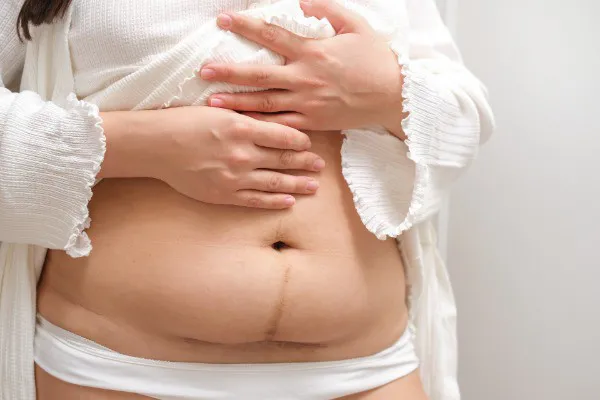
The fault in our scars
Mums over 30 are becoming the norm and now account for 62% of all births, making this the peak age range for having a baby. At the same time, more than one in four babies are now born to mums aged 35 and over1.
The move towards later parenthood also sits alongside another shift in maternity care. C-section births have risen steadily in England. Last year, 45% of births in England were through caesarean section, according to NHS data and it is the most common method of delivery for women aged 30 and over2, reflecting more complex pregnancies and a more cautious approach to risk.
More C-section births clearly leave behind more C-section scars, which, according to a recent study, may negatively affect women’s body image. The study also advised that, ‘healthcare professionals should be aware of these psychosocial consequences and provide appropriate counselling and support services for women after caesarean section. There is also a well-documented connection between delivering via caesarean section and an increased risk of developing postpartum depression (PPD)4.
Whilst research highlights that new mums having children over 35 or 40 often possess greater emotional maturity, financial stability, as well as established support systems to help manage parenthood challenges, they are also known to frequently experience a unique blend of parental stress5, perimenopausal hormonal shifts, and sandwich generation pressures6.
A separate study highlights the disruptive results of psychological stress in the wound healing process and its influence on various physiological pathways. Chronic stress prolongs inflammation and disrupts the production of collagen, leading to weaker tissue regeneration and a significantly higher likelihood of developing thick, visible scars7.
A C-section scar forms when the various layers of tissue opened during delivery fuse back together; abnormal scarring may develop in as many as two-thirds (66%) of patients, though it is more common in Asian and Black populations than White populations. The most common types of C-section scars include hypertrophic and keloid scars, which can have an impact on the mothers’ quality of life, including a link to post-partum depression8.
Silicone-based products continue to be a premier option for prevention and initial treatment of hypertrophic and keloid scars. There is growing evidence demonstrating the efficacy of intralesional corticosteroids and 5-fluorouracil, as well as laser therapy, depending on the scar type and severity9.
How stress affects healing and scars
Stress negatively impacts the skin and tissue repair process in a few key ways:
- Prolonged Inflammation: High cortisol levels slow down wound closure and keep the injury in an inflamed state for longer than necessary10
- Impaired Collagen: Stress disrupts fibroblast activity, which is crucial for building organised and structurally sound collagen7
- Reduced Immune Response: Psychological stress can interfere with all phases of wound healing, haemostasis, inflammation, proliferation, and remodelling, by disrupting cytokine signalling, immune cell function, and fibroblast activity, resulting in less organised and structurally weaker tissue.7
Consultant plastic surgeon and scarring expert James Henderson, who is not affiliated with Kelo-Cote, says; “Caring for a newborn baby is exhausting at any age and new mothers may get little sleep, struggle to eat, while at the same time going through huge hormonal changes. If the baby has been delivered by caesarean section, they may also have pain from their wound, have had lost some blood, and it is possible that the baby could be unwell if in the context of an emergency procedure, adding to an already emotionally intense time.
“Mothers will have little time to worry about their caesarean section scar, as with the rest of her health, the baby takes priority.
“Occasionally, women may be disappointed with their scarring, and some do seek out the opinion of a plastic surgeon to discuss scar revision – often this can be carried out relatively easily. As scars are healing, there are various treatments that can improve the scar ‘maturation’ process, including silicone sheets or gels, massage and moisturising.”
Dr Richard Sherry is a Consultant Chartered Clinical Psychologist, Clinical Neuropsychologist, Psychological Trauma Expert and Psychoanalytic Psychotherapist. He serves as the Clinical Psychologist in Residence for the Confederation of British Surgeons. His longstanding interest and expertise lie in mother-baby psychological health and well-being, particularly within complex healthcare settings, and in helping to heal complex psychological trauma. He says, “C-sections can have a profound psychological impact on women, regardless of age. These impacts are as diverse and unique as the women undergoing the procedure. It’s important to recognise the genuine and understandable fears and anxieties surrounding C-sections and safely managing the potential health risks for both mother and baby. These concerns often stem from worries about the baby’s safety during delivery and the potential impact on the mother’s body and mental well-being.
“Ensuring effective communication and support for mother and baby is a key factor in reducing stress and fostering a wonderful start for both. This includes considering the mother’s birth plan, her own needs, and how best to support them. Understanding one’s stress profile and potential triggers is also crucial. Just as packing a hospital suitcase for mum and baby, creating a psychological support and ‘destressing kit’ can help them feel safe, loved, and supported. Meditation and mindfulness practices are excellent, as well as self-hypnosis (available in hypno-birthing) can be empowering whether opting for a ‘natural’ birth or not.
“Practising these techniques can significantly reduce stress. Addressing concerns and anxieties before delivery is beneficial. If there is anything that feels like it may cause overwhelming distress, professional psychological expertise can be invaluable. The main focus should be on reducing stress through a compassionate approach that positively impacts everyone’s experience. Ultimately, a strong start from early conception and delivery sets the foundation for a happy and thriving mother-baby unit and positively supports better lifetime and well-being.”
According to Bornona French-Sanders, Marketing Manager at Kelo-Cote; “Whether you’re due to have a C-section or you’ve already had one, you don’t want to be worrying about your scar when you’re enjoying life with your baby. Kelo-Cote is a gold standard scar treatment used by plastic surgeons and is clinically proven to help improve the appearance of raised scars and help prevent abnormal scars from forming.”
References
1. Births in England and Wales: linked births - Office for National Statistics
2. NHS Maternity Statistics, 2024-25 - NHS England Digital
3. Impact of cesarean section scar on decision regret and body image: a cross-sectional study - PMC
4. Associations among Caesarean Section Birth, Post-Traumatic Stress, and Postpartum Depression Symptoms - PMC
5. A preliminary study to assess the impact of maternal age on stress-related variables in healthy nulliparous women - ScienceDirect
6. Sandwich generation moms feeling the squeeze
7. The Impact of Psychological Stress on Wound Healing: Implications for | CCID | Dove Medical Press
8. Impact of abnormal cesarean section scar formation on quality of life and postpartum depression: A cross sectional study in Japan PMC
9. Advances in scar management: prevention and management of hypertrophic scars and keloids - PubMed
10. Physical scars from PTSD stress symptoms – PTSD UK