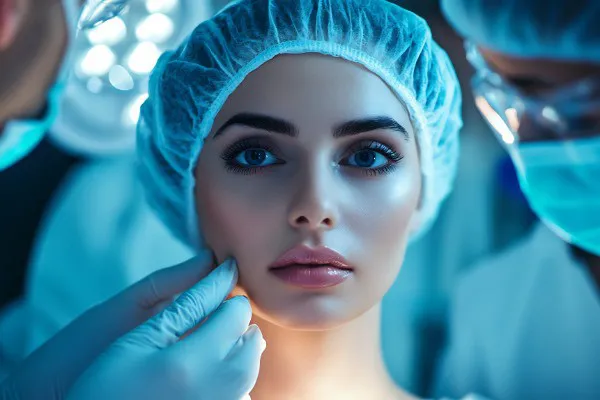
Fake expectations
The British Association of Aesthetic Plastic Surgeons (BAAPS) is warning of the growing influence of artificial intelligence on cosmetic surgery expectations, after a recent survey of its members found that 15% have seen patients arrive for consultations with AI-generated images of themselves that create distorted or unrealistic expectations of what can be achieved through surgery.
The findings come as plastic surgeons increasingly report patients using generative AI tools to create idealised versions of their own faces, often featuring flawless skin, exaggerated symmetry, sculpted cheekbones, altered noses and more defined jawlines. The trend, dubbed the “AI face”, has seen surgeons encountering patients who believe AI-enhanced versions of themselves can be recreated surgically.
Unlike traditional inspiration images, AI-generated photographs can be particularly powerful because they depict the patient themselves – creating the impression that the digitally altered result is an achievable version of their own face.
Ms Nora Nugent, president of BAAPS, said: “We are now seeing the impact of AI-generated images first-hand in the consultation room. Patients can arrive with an image of themselves that has been altered by AI and, because it is still recognisably them, it can feel like a realistic representation of what they could look like after surgery. But the image may bear very little relation to what is anatomically or surgically possible.
“The fact that 15% of our members surveyed have already encountered this issue is concerning, particularly given how quickly AI has become embedded in everyday life. I would expect this to become more common rather than less common.”
AI image generators can manipulate an image at a pixel level, creating near-perfect symmetry and features that may not be achievable through surgery. A surgeon, however, is working with an individual’s existing anatomy, including their bone structure, soft tissue, skin quality and the way their body will heal.
“One of the biggest challenges is that once a patient has seen an AI-generated image of themselves, that image can become their reference point,” said Nugent. “It can be very difficult to explain that surgery cannot simply reproduce every change that an algorithm has made to a photograph. We can improve and enhance features, but we cannot rewrite anatomy or guarantee a digitally perfect outcome.”
BAAPS says the findings underline the importance of a thorough consultation with a properly qualified plastic surgeon before deciding to undergo cosmetic surgery. A responsible consultation should establish what a patient hopes to achieve, assess whether those expectations are realistic and explain both the potential benefits and limitations of surgery.
The Association is also concerned that AI could increasingly influence perceptions of what constitutes a “normal” or desirable face, potentially contributing to a homogenised aesthetic in which highly symmetrical, digitally perfected features become the benchmark against which real faces are judged.
Nugent said: “AI can create an image without having to consider the individual behind it, their anatomy, their medical history, how they will heal or how they will age. A plastic surgeon must consider those things. The aim should never be to turn a real person into an AI-generated image; it should be to understand what that individual wants and establish what can safely and realistically be achieved.”
BAAPS is urging anyone considering cosmetic surgery who has used AI to alter their appearance to show both the original and AI-generated images to their surgeon, rather than assuming the latter represents an achievable surgical outcome.
The Association also stresses that patients should not feel pressured to undergo surgery simply because an AI tool has suggested or visualised a particular change.