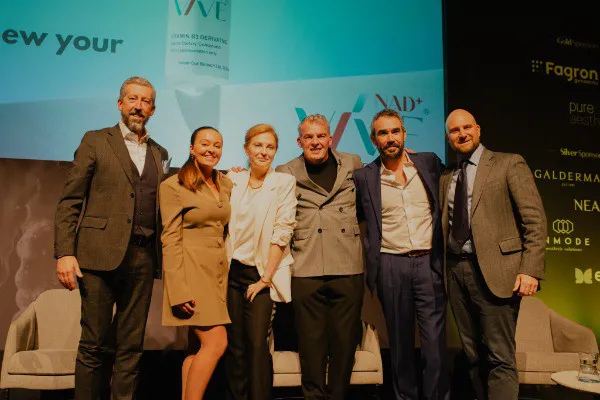
The Conference Defining the Future of Regenerative Medicine
Independent education for the next generation of aesthetic treatment
The questions facing regenerative medicine are becoming increasingly complex. How do we know whether we’re truly regenerating tissue? Is collagen stimulation still the right way to think about regenerative treatments? Why do patients respond so differently? And are we ready to move towards genuinely personalised regenerative medicine?
RAMCE 2026 has been built around answering those questions.
Building the scientific foundations
Developed by our Scientific Committee, this year’s programme moves beyond treatment protocols and product categories to explore the biology, evidence and clinical decision-making shaping the future of regenerative aesthetics. Through keynote presentations, expert panel discussions and audience debate, you’ll hear from leading clinicians and researchers tackling the issues that matter most to everyday practice.
The day begins by revisiting the biological foundations of regeneration, exploring how our understanding of cell signalling, tissue repair and extracellular communication has evolved since the first generation of regenerative injectables. From there, the programme asks one of the biggest questions in the speciality: are we actually changing tissue, and how should we measure it?
Sessions will explore objective ways to evaluate regeneration, including ultrasound imaging, biomechanics and biomarkers, before examining whether current clinical endpoints are sufficient to demonstrate meaningful biological change.
Challenging conventional thinking
The programme also challenges one of the most familiar concepts in aesthetics: collagen stimulation. Rather than focusing solely on collagen production, speakers will explore extracellular matrix organisation, tissue architecture, mechanotransduction and the wider biological changes that underpin tissue regeneration.
Personalisation is another major theme running throughout the conference. Experts will discuss why patients of the same age can respond so differently to treatment, considering the influence of genetics, hormones, metabolic health, mitochondrial function and chronic inflammation on regenerative capacity. The panel will ask whether standardised treatment protocols still reflect the biology of individual patients.
Alongside these sessions, delegates will hear the latest thinking on regenerative injectables, biological therapies, energy-based devices, longevity medicine and complication management.
Join the conversation
RAMCE has been designed to be highly interactive. Panel discussions and audience Q&As will give delegates the opportunity to question speakers, debate emerging evidence and hear a range of clinical perspectives from leaders across regenerative medicine.
Throughout the day, you’ll also have the opportunity to explore our exhibition and connect with fellow clinicians, researchers and industry partners who share a commitment to advancing evidence-based regenerative medicine.
Whether you’re looking to introduce new regenerative treatments, deepen your scientific understanding or connect with like-minded professionals, RAMCE 2026 offers an educational experience designed to inform, challenge and inspire.
Join us on Saturday, November 7, 2026, at the Pullman London St Pancras and be part of the event defining the future of regenerative medicine.
Speakers include:
Amy Bird, Professor Maurizio Cavallini, Mr George Christopoulous, Tracey Denninson, Professor Anton Enright, Dr Jordan Faulkner, Dr Kate Goldie, Dr Sabika Karim, Dr Olivia McCabe Robinson. Dr Bethany Rossington, Kate Monteith-Ross, Gustavo Torres de Souzas, Dr Lee Walker
For more information, please visit: https://ram-institute.com/