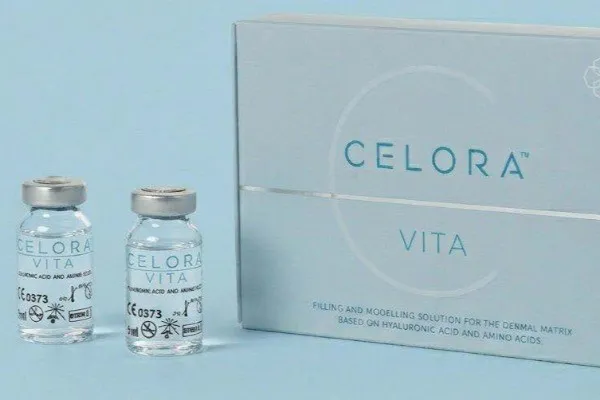
Exploring Substratebased Skin Rejuvenation With Celora™ Vita
How amino acids and low-molecular weight hyaluronic acid supports skin quality following fibrobast activation
As regenerative aesthetic medicine continues to evolve, there is increasing interest in treatments that support the skin’s biological environment. Celora™ Vita is a newly introduced injectable biorestorative treatment developed to provide substrate support through a combination of a targeted amino-acid complex and low-molecular-weight hyaluronic acid (LMWHA).

This case study reflects an exploratory clinical use of the product in practice. As a newly launched treatment, the objective was not only to improve skin quality, but also to better understand the visible changes that could be achieved through this biology-led approach alone.
Patient profile
Age: 42
Gender: Female
Fitzpatrick: Type II
Relevent Medical History: The patient had previously completed a course of Polynucleotides HPT® (Plinest® five to six months earlier.
Primary concern: Dehydration and mild pigmentation, alongside a generally dull skin appearance.
Clinically, baseline skin ageing changes were mild and there was no relevant medical history or contraindication to treatment.on pharmaceutical or laser based interventions, with little consideration given to lifestyle or nutritional factors.
The course of Plinest® made her a particularly suitable candidate for Celora™ Vita, which was selected to support the skin following fibroblast proliferation and activation induced by Polynucleotides HPT®. The case also provided an opportunity to evaluate the visible skin quality changes that could be achieved through a substrate-based approach.
Treatment rationale
Celora™ Vita combines a targeted amino acid complex with LMWHA to support fibroblast metabolism, complete extracellular matrix synthesis and overall skin quality.1-3 The treatment rationale in this case centred on providing the skin with substrates relevant to collagen production and tissue repair following previous fibroblast activation.
Structural amino acids such as glycine, proline and lysine are fundamental to collagen synthesis and matrix stability, while branched-chain amino acids including leucine, valine and isoleucine are involved in cellular protein synthesis and fibroblast activity through pathways including mTOR signalling.5-8 Ageing and environmentally stressed skin may demonstrate reduced efficiency in extracellular matrix renewal, even where viable fibroblasts remain present.4,5 Providing relevant substrates may therefore help support regenerative processes and dermal remodelling.
The inclusion of LMWHA was expected to support hydration and dermal signalling, while the amino acid component was intended to optimise the metabolic environment for collagen synthesis and skin regeneration. 1,2
At the outset, hydration improvement was the primary anticipated outcome. However, as this represented an early clinical experience with the product, broader changes in pigmentation, redness and overall dermal appearance were considered exploratory observations rather than predefined expectations.
The patient has completed:
A course of three Celora™ Vita treatment sessions. Treatments were performed on:
• 27 November 2025
• 18 December 2025
• 2 February 2026
One full 5mL vial of Celora™ Vita was administered at each session.
No additional injectable or device-based treatments were performed during the treatment period in order to better evaluate the isolated effects of the product.
Treatment protocol
A superficial multi-puncture injection technique was used with a needle, following a similar approach to standard polynucleotide delivery protocols. The product was placed superficially within the dermis to achieve even distribution across the treatment area.
Standard pre-treatment preparation included topical anaesthetic application to improve patient comfort during injection. Mild transient papules were observed immediately postprocedure, consistent with superficial intradermal placement, with resolution occurring within a few days.
The earliest and most noticeable change was an improvement in skin hydration, with the patient reporting that the skin both looked and felt more hydrated following treatment. As sessions progressed, additional visible improvements became apparent, including reductions in mild pigmentation and skin redness, alongside a more even and refreshed overall skin appearance.
These findings are consistent with the proposed role of amino acid and hyaluronic acid-based biorestorative approaches in supporting extracellular matrix function and visible rejuvenation without volumisation.1-3,9 Clinical improvements appeared to develop progressively throughout the treatment course, with continued enhancement visible on final assessment of photography following the third session.
Patient experience and tolerability
The patient reported a positive overall treatment experience and was satisfied with the final outcome achieved following the treatment course. Downtime was minimal and primarily consisted of temporary papules immediately following injection, alongside some minor bruising. These effects resolved within a few days and did not significantly impact normal daily activities.
Appropriate pre-treatment topical anaesthesia helped improve overall comfort during the procedure.
Positioning Celora™ Vita in clinical practice
This case highlights the valuable role of Celora™ Vita as a substrate-based biorestorative treatment within regenerative aesthetic practice. The treatment is positioned as a substrate-based approach to skin rejuvenation, designed to support dermal function and extracellular matrix renewal.1-3
The treatment may be appropriate for a broad range of patients seeking improvements in skin quality, hydration and overall dermal function, including those with early or mild signs of skin ageing. It may also have value both as a standalone regenerative treatment and as part of a broader treatment plan incorporating fibroblast-stimulating procedures.
In this case, Celora™ Vita was used following a previous course of Polynucleotides HPT®, based on the principle that activated fibroblasts may first benefit from additional substrate availability during regenerative processes. A potential treatment strategy within clinical practice may therefore involve alternating Celora™ Vita with fibroblast-stimulating treatments such as Polynucleotides HPT® every couple of weeks to support ongoing extracellular matrix remodelling and tissue repair.4,5 The product may also integrate well alongside other collagen-stimulating procedures, where optimisation of the biological environment may help support treatment outcomes and skin quality improvements.
Final reflections
This case provided an early insight into the potential role of substrate-based biorestoration within regenerative aesthetic medicine. While hydration improvement was the most anticipated outcome at the outset, progressive enhancements were also observed in pigmentation, redness and overall skin quality across the treatment course.
The case additionally demonstrated how Celora™ Vita may integrate within broader regenerative treatment strategies, particularly following fibroblast-stimulating procedures such as Polynucleotides HPT®.
Although further clinical evaluation is needed, this early experience suggests that substrate support may represent an important consideration within regenerative treatment planning, particularly as aesthetic medicine continues to move towards more biology-led approaches to skin rejuvenation.
For more information, please contact Dermafocus: