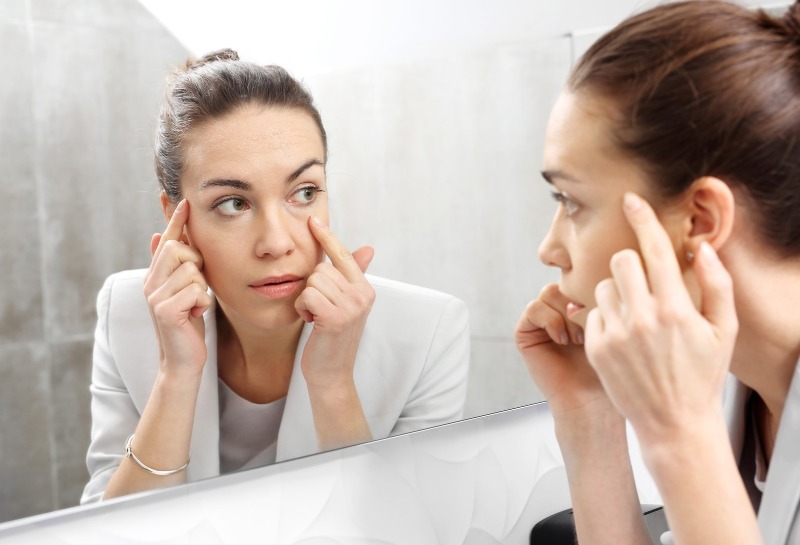
What Causes Tired Eyes?
It is commonly thought that dark circles and puffiness, 2 of the common symptoms of tired eyes, are caused solely by a lack of sleep. While this will have an impact on your appearance, it usually isn’t the root of your problems. To be able to manage and reduce the appearance of tired eyes, you must determine the cause.
One crucial factor is the fact that the area around your eyes is especially delicate as the skin here is at its thinnest. For this reason, the ageing process often impacts your eyes earlier than it would elsewhere on the body, leading to the early onset of laxity, fine lines and wrinkles. As well as this, external factors that impact the ageing process, such as sun exposure and air pollution, are imposed upon your skin
each day.
As we age, youthful collagen and elastin proteins that are responsible for the structure and texture of the skin gradually deplete. Not only that but the natural shape of your face can further a recessed look to the eyes. Sunken tear troughs and declining levels of soft tissue in the face can exaggerate dark circles, while dilated blood vessels can lead to puffy eyelids.
The Cold Takes Its Toll
While these issues are a constant concern for many people, they can be heightened throughout winter as the drop in temperature has several effects. According to research, 82% of women that were asked stated that dark circles were an issue during the colder months, compared to a much lower figure of 38% during the warmer months.
Skin tone plays a big role here, as we are less likely to have a tan at this time of year, which would make dark circles look much more noticeable. A lack of vitamin D from natural sunlight also leads to dullness and a paler complexion, while low temperatures dehydrate the skin and trigger swelling and puffiness.
Drinking plenty of water is a good way to combat dehydration, but how else can we minimise the symptoms of tired eyes at home?
My Top Tips
The first thing to consider is how you sleep at night. Try raising your head with an extra pillow to discourage fluid from accumulating beneath the eyes. This may even improve the quality of your sleep, allowing you to enjoy the recommended 7-9 hours of rest each night, therefore positively impacting your immune system, your mood and your productivity. Another way you could be unknowingly adding to your tired eyes is by overworking your skincare products. Use only an amount of eye cream the size of a grain of rice so as not to irritate the eyes and apply around the eye using your middle finger to very gently tap the product into the skin – we want to avoid stretching and pulling this delicate skin.
Sometimes, applying a cold compress as part of your evening regimen can help to constrict dilating blood vessels and minimise those pesky dark circles. However, the reason behind blood vessel dilation might be worth looking into, as it might be that you’re having an allergic reaction to something that you need to cut out. In any case, make a conscious effort not to rub your eyes as this will only make your symptoms worse and can cause some lasting damage.
In-Clinic Support
If you’re low on your favourite eye cream or you’re looking for a new one that offers genuine results, be sure to visit the ABM shop. I stock premium serums and creams from professional skincare brand iS Clinical. One of my favourites is the Youth Eye Complex and you can get yours here. Apply as directed, but be sure to remember my advice above – only a grain of rice-sized amount of product is needed and be gentle with your application. If you ever need further guidance, don’t hesitate to get in touch.
There are also ways to subtly lift the eye, such as very natural-looking dermal fillers for the cheeks and the tear troughs. I first assess your symptoms and the natural structure of your face before tailoring a completely bespoke treatment plan. It only takes a very small amount of filler to create the desired effect, leaving your face looking effortlessly youthful and bright. Schedule your consultation today