Hello Interloper!
Menu
[57] 50 - 60 characters.
[155] 50 - 160 characters.
In our previous blog we looked at healthy hair, what it is and how it grows. In this blog we consider hair loss: how to identify it and the initial considerations to make.
Our hair is one of the best ways to express identity.
We often cut, colour and style it in ways that improve our appearance, but on a deeper level, we change our hair to reflect the mood, personality and even career. Suffering from hair loss can therefore be a devastating prospect and with up to 50% of both men and women being affected by the age of 50, the issue is a common one.
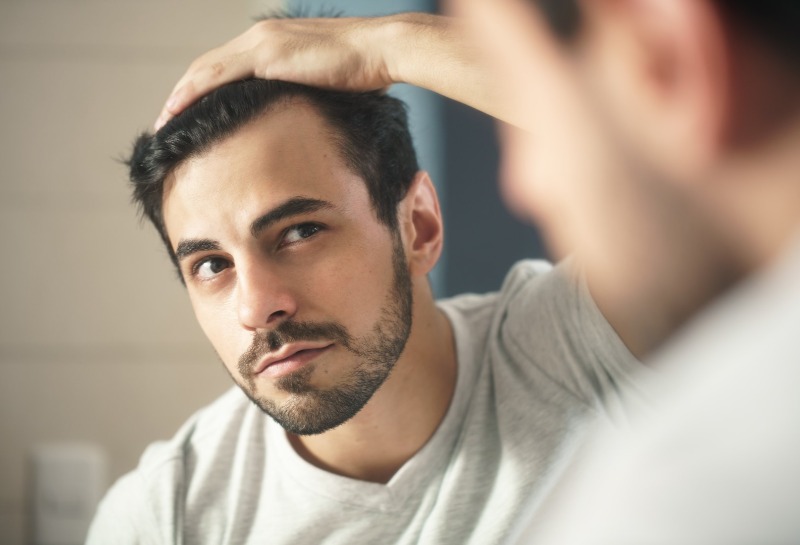
The start of our hair loss journey is usually a very personal experience. We may notice hairs falling out in the shower or stuck to the comb when grooming our hair.
Some people are unable to style their hair in the way they used to. Others don’t notice hair loss at all, whereby it is brought to their attention by a comment from a loved one or a photograph taken from an unsuspecting angle where hair loss is evident.
Whichever way it happens, it is important that we start our hair loss journey on the correct path. After establishing whether it is an issue in the first place, all possible causes of hair loss need to be considered, this will guide our decision in seeking treatments, professional advice, or even choosing to do nothing at all.
Our hair is one of the best ways to express identity. We often cut, colour and style it in ways that improve our appearance, but on a deeper level we change our hair to reflect mood, personality and even career. Suffering from hair loss can therefore be a devastating prospect and with up to 50% of both men and women being affected by the age of 50, the issue is a common one.
The start of our hair loss journey is usually a very personal experience. We may notice hairs falling out in the shower or stuck to the comb when grooming our hair. Some people are unable to style their hair in the way they used to. Others don’t notice hair loss at all, whereby it is brought to their attention by a comment from a loved one or a photograph taken from an unsuspecting angle where hair loss is evident.
When is our hair loss an issue?In our last blog, we saw how hairs goes through different stages of a life cycle, the last of which involves shedding of the hair shaft. Hair loss is therefore a normal part of healthy hair growth. In fact, we lose up to 100 hairs per day because of this routine process. If we lose more than 100 hairs per day, then this is where active hair loss takes over from healthy hair growth, also known as alopecia.
How do we know if we have hair loss?Although there are no hard and fast rules to test for hair loss, here are some simple checks we can do to assess our hair:
These are rough guides to check for hair loss, it’s important to remember that for each person this may vary. In some people hair loss is obvious, in others it can be insidious.
It may be helpful to look back at old photographs to see how hairline or density has changed with time. At this point, it is also a good idea to take some baseline photos at different angles to be able to monitor hair loss down the line.
Why do we lose our hair? There are many different factors which can contribute to hair loss. Simple lifestyle factors such as diet, smoking and stress play an important role in hair loss. Hormonal changes and genetics also have a key role in hair loss. In certain circumstances medical conditions or medications can cause hair loss too. Each of these factors will be considered in more detail in their very own blog to come.
How do we get to a diagnosis?In order for us to work out which of the above factors is causing hair loss, here are some questions to consider:
Do I need to see a hair loss specialist?When we consider the questions above, you may find it easy to describe the pattern of your baldness. However, identifying whether hair loss has occurred in combination with scarred or inflamed skin can be more challenging and may require a specialist eye. In such circumstances seeking professional help may be required. If you think your hair loss may be associated with other medical symptoms or medication, then you may want to discuss this with your general practitioner.
At this stage you may have read enough to want to seek specialist advice for hair loss. If not, our next blogs explore in more detail how certain patterns of balding associated with different symptoms can help lead to a diagnosis for your hair loss. Although many conditions are shared between men and women, we hope that having a separate 'female hair loss' and 'male hair loss' blog will help focus your path to treatment.
Please remove the banner below to add another.

Please remove the thumbnail below to add another.
YouTube: Share a video and copy the link e.g. https://youtu.be/mTFcjOAInO4
Vimeo: Open a video and copy the URL e.g. https://vimeo.com/63995850